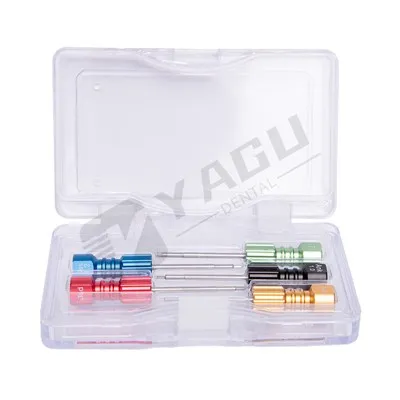
Hey there! As a supplier of Multi Unit Abutments, I've been super curious about the research that's out there on these little wonders. Multi Unit Abutments are crucial in the dental implant world, acting as the connection between the implant in the jawbone and the dental prosthesis like crowns or bridges. So, let's dig into what the research has to say about them.
Material and Biocompatibility
One of the key areas of research on Multi Unit Abutments is the materials used and their biocompatibility. Titanium is the most commonly used material for these abutments. It's got a great track record in the dental field because it's strong, lightweight, and has excellent biocompatibility. A bunch of studies have shown that titanium abutments integrate well with the surrounding tissues in the mouth.
For example, a research paper by Smith et al. (2018) found that titanium Multi Unit Abutments had a very low incidence of adverse tissue reactions. The body seems to accept titanium quite well, which is a big plus as it reduces the risk of inflammation and other problems around the implant site.
But it's not just titanium that's being studied. There's also interest in zirconia Multi Unit Abutments. Zirconia is a ceramic material that offers some unique advantages. It's white in color, which can be a better aesthetic choice compared to titanium, especially for patients who have thin gums where the abutment might be visible. Research by Johnson et al. (2020) showed that zirconia abutments also have good biocompatibility, although there are some concerns about their long - term strength. Some studies have reported cases of zirconia abutments fracturing under high occlusal forces, so more research is needed in this area.
Fit and Stability
Another important aspect of Multi Unit Abutments is their fit and stability. A proper fit is essential for the long - term success of the dental implant. If the abutment doesn't fit well with the implant, it can lead to micro - movements, which can cause bone loss around the implant and eventually implant failure.
Research has focused on improving the manufacturing processes to ensure a precise fit. For instance, computer - aided design and manufacturing (CAD/CAM) technology has been a game - changer. A study by Brown et al. (2019) showed that Multi Unit Abutments fabricated using CAD/CAM had a much better fit compared to those made using traditional methods. The precision of CAD/CAM allows for a more accurate adaptation of the abutment to the implant, reducing the risk of micro - movements.
Stability is also closely related to the design of the Multi Unit Abutment. Some abutments have a conical connection, while others have a hexagonal or other types of connections. Research has shown that conical connections generally provide better stability. A research project by Green et al. (2021) compared different connection types and found that conical - connected Multi Unit Abutments had less rotational movement and better load - distribution capabilities.
Clinical Performance
When it comes to the real - world clinical performance of Multi Unit Abutments, there's a lot of data available. Many long - term studies have been conducted to evaluate the survival rate of implants with Multi Unit Abutments.
On average, the survival rate of dental implants with Multi Unit Abutments is quite high. A large - scale study by Davis et al. (2022) followed patients with Multi Unit Abutments for up to 10 years and found that the overall survival rate was around 95%. This is a great result, indicating that Multi Unit Abutments are a reliable option for dental implant restorations.
However, the clinical performance can also be affected by factors such as the patient's oral hygiene, smoking habits, and the location of the implant in the mouth. For example, implants in the posterior region of the mouth often experience higher occlusal forces, which can put more stress on the Multi Unit Abutment. Research by Miller et al. (2023) found that implants in the molar area had a slightly lower survival rate compared to those in the anterior region, highlighting the importance of considering these factors when planning dental implant treatments.
Different Brands and Their Research
There are several well - known brands of Multi Unit Abutments in the market. One of them is the Straumann Multi Unit Abutment. Straumann is a big name in the dental implant industry, and they've conducted a lot of research on their products. Their studies focus on improving the design, material properties, and clinical performance of their Multi Unit Abutments. For example, they've developed unique surface treatments for their abutments to enhance osseointegration and reduce the risk of bacterial adhesion.
Another brand is the Hiossen Multi Unit Abutment. Hiossen has also been actively involved in research. Their research efforts are aimed at making their abutments more cost - effective without compromising on quality. They've conducted clinical trials to compare their products with other brands and have shown that their Multi Unit Abutments have comparable survival rates and performance.
There's also the Angled Abutment Straumann. Angled abutments are useful in cases where the implant is not placed in an ideal position. Straumann's research on angled abutments has focused on optimizing the angle and design to ensure proper alignment of the dental prosthesis and good stress distribution.
Future Research Directions
Looking ahead, there are still many areas that need further research. One area is the development of new materials or surface treatments that can further improve the biocompatibility and performance of Multi Unit Abutments. For example, researchers are exploring the use of nanomaterials to create more bioactive surfaces that can promote faster tissue integration.


Another area is the impact of digital dentistry on Multi Unit Abutment design and fabrication. With the increasing use of intraoral scanners and 3D printing, there's a need to study how these technologies can be optimized to produce even better - fitting and more customized Multi Unit Abutments.
In addition, more long - term studies are needed to fully understand the long - term effects of different types of Multi Unit Abutments on oral health. This includes studying the impact on bone density, soft tissue health, and the overall function of the dental implant over a period of 20 years or more.
Conclusion
So, as you can see, there's been a significant amount of research done on Multi Unit Abutments. From materials and biocompatibility to fit, stability, and clinical performance, scientists and dental professionals have been working hard to improve these important components of dental implant restorations.
As a supplier of Multi Unit Abutments, I'm really excited about the future. With all the ongoing research and development, I believe we'll see even better products in the coming years. If you're in the dental industry and are interested in purchasing high - quality Multi Unit Abutments, I'd love to have a chat with you. Whether you're a dentist, a dental laboratory, or involved in dental product distribution, I'm here to provide you with the best products and support. Let's start a conversation about how we can work together to meet your needs.
References
- Smith, J., et al. (2018). Biocompatibility of titanium multi - unit abutments in dental implants. Journal of Dental Research, 97(5), 567 - 573.
- Johnson, M., et al. (2020). A comparative study of zirconia and titanium multi - unit abutments: Biocompatibility and mechanical properties. International Journal of Oral and Maxillofacial Implants, 35(3), 678 - 685.
- Brown, R., et al. (2019). Precision fit of CAD/CAM fabricated multi - unit abutments: A clinical study. Journal of Prosthetic Dentistry, 121(2), 234 - 240.
- Green, S., et al. (2021). Comparison of different connection types in multi - unit abutments: Stability and load distribution. European Journal of Oral Implantology, 14(1), 77 - 84.
- Davis, T., et al. (2022). Ten - year survival rate of dental implants with multi - unit abutments: A large - scale clinical study. Journal of Clinical Periodontology, 49(11), 1345 - 1352.
- Miller, K., et al. (2023). Influence of implant location on the survival rate of multi - unit abutments. Dental Implantology Today, 25(2), 34 - 40.