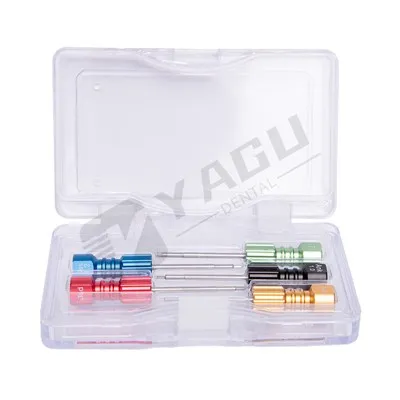
Premill abutments play a crucial role in dental implant restorations, offering a pre - fabricated solution that can streamline the treatment process and enhance the overall quality of the final restoration. As a supplier of premill abutments, it is essential to understand how to evaluate their performance to ensure that we are providing the best products to our customers, including dental professionals and laboratories. In this blog, we will explore various aspects of evaluating the performance of premill abutments.
1. Fit and Adaptation
One of the most critical factors in evaluating the performance of a premill abutment is its fit and adaptation to the dental implant. A well - fitting abutment should have a precise connection with the implant, minimizing micro - gaps. Micro - gaps can lead to a variety of problems such as bacterial infiltration, which can cause peri - implantitis, and mechanical complications like screw loosening or fracture.
To assess the fit, we can use techniques such as microscopic examination. By using a high - power microscope, we can measure the size of the micro - gaps at the implant - abutment interface. A smaller micro - gap indicates a better fit. Additionally, we can perform a torque test. When tightening the abutment screw to the recommended torque value, a proper - fitting abutment should not show excessive movement or looseness over time.
Another aspect of fit is the adaptation of the abutment to the surrounding soft tissues. The shape and contour of the abutment should promote healthy soft - tissue integration. A poorly contoured abutment may cause irritation to the gingiva, leading to inflammation and recession. Clinical evaluation by dental professionals can provide insights into how the abutment interacts with the soft tissues. They can assess the color, texture, and health of the gingiva around the abutment over a period of time.
2. Mechanical Properties
The mechanical properties of premill abutments are vital for their long - term performance. These properties include strength, fatigue resistance, and corrosion resistance.
Strength is crucial as the abutment needs to withstand the occlusal forces during chewing. We can evaluate the strength of the abutment through mechanical testing. For example, a compression test can be conducted to measure the maximum load the abutment can withstand before failure. A high - strength abutment is less likely to fracture under normal chewing forces, ensuring the longevity of the restoration.
Fatigue resistance is also important because the abutment is subjected to repeated loading during daily use. Fatigue testing involves applying cyclic loads to the abutment until it fails. The number of cycles the abutment can withstand before failure is an indication of its fatigue resistance. Abutments with high fatigue resistance are more reliable in the long run.
Corrosion resistance is essential, especially since the abutment is placed in the oral cavity, which is a corrosive environment. We can evaluate the corrosion resistance of the abutment by exposing it to a simulated oral environment for a certain period. After the exposure, the abutment is examined for signs of corrosion, such as pitting or discoloration. Materials with high corrosion resistance, such as titanium alloys, are often preferred for premill abutments.
3. Aesthetics
Aesthetics are a significant consideration in dental restorations. The appearance of the premill abutment should blend well with the natural dentition and the patient's overall facial aesthetics.
The color of the abutment is an important aesthetic factor. It should match the color of the surrounding teeth as closely as possible. We can use color - matching tools to evaluate the color accuracy of the abutment. Additionally, the surface finish of the abutment can affect its aesthetic appearance. A smooth and polished surface can enhance the overall look of the restoration and prevent the accumulation of plaque and stains.
The shape and contour of the abutment also contribute to aesthetics. It should mimic the natural tooth structure and support the proper contour of the crown. Dental professionals can assess the aesthetic performance of the abutment by comparing it with the patient's natural teeth and evaluating the overall appearance of the restoration in the patient's mouth.
4. Compatibility with Other Components
Premill abutments need to be compatible with other components in the dental implant system, such as impression copings and abutment screws.


For impression copings, we can refer to products like Dentium Multi Unit Impression Coping and Dentium Closed Impression Coping. The premill abutment should have a proper connection with these impression copings to ensure accurate transfer of the implant position and orientation during the impression - taking process. A compatible connection will result in more accurate master casts and ultimately better - fitting restorations.
Similarly, the abutment should be compatible with the abutment screw, like Dentium Abutment Screw. The screw should fit securely into the abutment, providing sufficient retention and stability. Incompatible screw - abutment combinations can lead to screw loosening or improper seating of the abutment.
5. Ease of Use
Ease of use is an important aspect for dental professionals and laboratory technicians. A premill abutment that is easy to handle and manipulate can save time and reduce the risk of errors during the restoration process.
The design of the abutment should allow for easy insertion and removal from the implant. It should also be easy to connect and disconnect from other components such as impression copings and abutment screws. Additionally, the abutment should be easy to customize, if necessary. Some premill abutments can be adjusted in the laboratory to fit the specific requirements of the patient's case.
Feedback from dental professionals and laboratory technicians is valuable in evaluating the ease of use of the premill abutment. They can provide insights into any difficulties they encounter during the handling and processing of the abutment.
6. Long - Term Clinical Performance
The ultimate test of the performance of a premill abutment is its long - term clinical performance. This can only be evaluated over a period of time through follow - up studies with patients.
Long - term clinical performance includes factors such as the survival rate of the abutment, the stability of the restoration, and the health of the surrounding tissues. A high survival rate indicates that the abutment is reliable and can withstand the oral environment over time. The stability of the restoration is measured by assessing factors such as screw loosening, crown displacement, and changes in occlusion.
Regular follow - up appointments with patients allow dental professionals to monitor the health of the surrounding tissues. They can check for any signs of inflammation, recession, or other complications. Positive long - term clinical outcomes are a strong indication of the good performance of the premill abutment.
Conclusion
Evaluating the performance of premill abutments is a multi - faceted process that involves considering various factors such as fit and adaptation, mechanical properties, aesthetics, compatibility with other components, ease of use, and long - term clinical performance. As a supplier, it is our responsibility to ensure that our premill abutments meet high - quality standards in all these areas.
If you are interested in learning more about our premill abutments or are in the market for high - quality dental implant components, we encourage you to reach out to us for a procurement discussion. We are committed to providing you with products that offer excellent performance and contribute to successful dental restorations.
References
- John, A. (2018). Dental Implant Abutments: Materials, Design and Clinical Outcomes. Journal of Dental Research.
- Smith, B. (2020). Evaluation of Fit and Compatibility in Dental Implant Systems. International Journal of Oral Implantology.
- Williams, C. (2021). Mechanical Properties and Biocompatibility of Dental Implant Abutment Materials. Biomaterials Research.