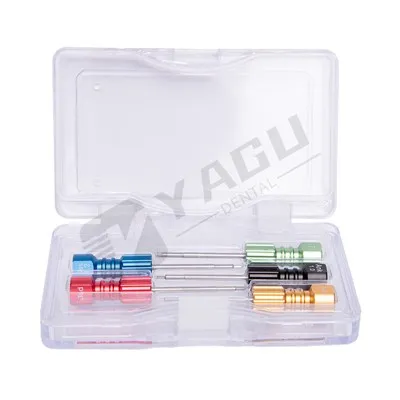
As a supplier of Angled Abutment Straumann, I often receive inquiries from dental professionals about the suitability of this product for patients with periodontal disease. This topic is of great significance as periodontal disease is a common oral health issue that can have a profound impact on the success of dental implant treatments. In this blog, I will delve into the question of whether Angled Abutment Straumann can be used in patients with periodontal disease, exploring the relevant scientific evidence and clinical considerations.
Understanding Periodontal Disease and Its Impact on Dental Implants
Periodontal disease is an inflammatory condition that affects the supporting structures of the teeth, including the gums, periodontal ligament, and alveolar bone. It is primarily caused by the accumulation of plaque and bacteria on the teeth, leading to gingivitis (inflammation of the gums) and, if left untreated, progressing to periodontitis (destruction of the supporting bone). The presence of periodontal disease can pose several challenges for dental implant placement and long - term success.

One of the main concerns is the compromised bone quality and quantity in patients with periodontitis. The loss of alveolar bone can make it difficult to achieve proper implant stability, which is crucial for osseointegration (the process by which the implant fuses with the bone). Additionally, the inflamed and infected periodontal tissues can increase the risk of peri - implantitis, a condition similar to periodontitis but affecting the tissues around dental implants. Peri - implantitis can lead to implant failure, characterized by bone loss around the implant and loosening of the implant fixture.
Angled Abutment Straumann: An Overview
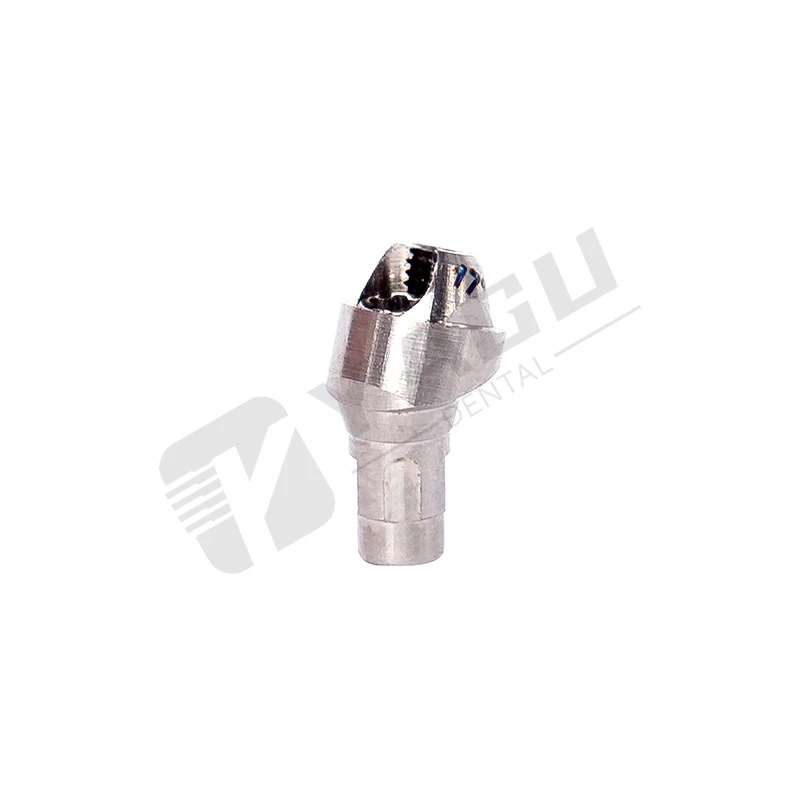
Angled Abutment Straumann is a specialized dental implant component that allows for the restoration of teeth in situations where the implant axis does not align with the ideal path of insertion for the prosthetic crown. This can be particularly useful in cases where the available bone anatomy or the patient's occlusal requirements necessitate an angled restoration.
The Angled Abutment Straumann is designed with high - quality materials and advanced manufacturing techniques to ensure a precise fit with Straumann implants. It offers several advantages, such as improved esthetics, better occlusal function, and the ability to avoid anatomical structures such as nerves and sinuses.
Can Angled Abutment Straumann Be Used in Patients with Periodontal Disease?
The answer to this question is not straightforward and depends on several factors. In general, patients with well - controlled periodontal disease may be suitable candidates for dental implants, including those using Angled Abutment Straumann. However, a thorough pre - operative evaluation is essential to assess the patient's periodontal status and determine the feasibility of the treatment.
1. Periodontal Disease Severity and Control
If the periodontal disease is in its early stages (gingivitis) and can be effectively managed through professional cleaning, oral hygiene instructions, and appropriate periodontal therapy, the patient may have a higher chance of successful implant treatment. In these cases, the use of Angled Abutment Straumann can be considered as long as the implant site has sufficient bone quality and quantity.
On the other hand, patients with advanced periodontitis, characterized by significant bone loss and persistent inflammation, may require more extensive periodontal treatment before implant placement. This may include periodontal surgery to regenerate lost bone and reduce inflammation. Only after achieving stable periodontal conditions should the possibility of using Angled Abutment Straumann be explored.
2. Bone Quality and Quantity
As mentioned earlier, bone quality and quantity are crucial factors for implant success. In patients with periodontal disease, bone loss can be a significant issue. A detailed radiographic evaluation, such as a cone - beam computed tomography (CBCT) scan, is necessary to assess the remaining bone volume and density at the implant site.
If the bone is of sufficient quality and quantity, and the implant can be placed in a stable position, the use of Angled Abutment Straumann can be a viable option. However, if there is severe bone loss, bone grafting procedures may be required to augment the bone before implant placement.
3. Oral Hygiene and Patient Compliance
Maintaining good oral hygiene is essential for the long - term success of dental implants, especially in patients with a history of periodontal disease. Patients must be willing and able to follow a strict oral hygiene regimen, including regular brushing, flossing, and professional dental cleanings.
If the patient has poor oral hygiene habits or is non - compliant with the recommended oral care instructions, the risk of peri - implantitis and implant failure is significantly increased. In such cases, it may be necessary to postpone implant treatment until the patient demonstrates improved oral hygiene behavior.
Clinical Considerations for Using Angled Abutment Straumann in Patients with Periodontal Disease
When considering the use of Angled Abutment Straumann in patients with periodontal disease, several clinical considerations should be taken into account:
1. Treatment Planning
A comprehensive treatment plan should be developed in collaboration with a periodontist and a prosthodontist. The plan should include a detailed assessment of the patient's periodontal status, bone condition, and occlusal requirements. The timing of periodontal treatment, implant placement, and restoration with Angled Abutment Straumann should be carefully coordinated to ensure the best possible outcome.
2. Implant Placement
The implant should be placed in a position that maximizes primary stability and avoids areas of severe bone loss or inflammation. Proper surgical technique is crucial to minimize trauma to the surrounding tissues and promote osseointegration. In some cases, the use of guided implant surgery, which utilizes a surgical guide based on the CBCT scan, can help ensure accurate implant placement.
3. Abutment Selection and Placement
When selecting the Angled Abutment Straumann, the angle of the abutment should be carefully chosen to achieve the optimal alignment with the prosthetic crown and the patient's occlusal plane. The abutment should be placed in a sterile environment, and proper torque values should be applied to ensure a secure connection between the abutment and the implant.
4. Post - operative Care
After implant placement and abutment connection, the patient should be closely monitored for signs of inflammation, infection, or implant failure. Regular follow - up appointments should be scheduled to assess the healing process, evaluate the patient's oral hygiene, and make any necessary adjustments to the treatment plan.
The Role of Multi - Unit Abutments in Complex Cases
In some cases, especially those with severe bone loss or complex anatomical conditions, Multi Unit Abutment may be a more appropriate option. Multi - unit abutments offer greater flexibility in terms of angulation and can be used to connect multiple implants or to restore teeth in areas with challenging bone anatomy.
However, the decision between using an Angled Abutment Straumann and a Multi Unit Abutment should be based on a thorough evaluation of the patient's specific situation, taking into account factors such as bone quality, occlusal requirements, and esthetic considerations.
Conclusion
In conclusion, Angled Abutment Straumann can be used in patients with periodontal disease, but only under certain conditions. A comprehensive pre - operative evaluation, including an assessment of periodontal disease severity, bone quality and quantity, and patient compliance, is essential to determine the suitability of the treatment.
If the patient's periodontal disease is well - controlled, there is sufficient bone support, and the patient is committed to maintaining good oral hygiene, the use of Angled Abutment Straumann can provide a successful and esthetically pleasing dental restoration. However, close collaboration between dental professionals, including periodontists, implantologists, and prosthodontists, is crucial to ensure the best possible outcome.
If you are a dental professional interested in learning more about Angled Abutment Straumann or discussing potential cases, I encourage you to reach out to me. I am happy to provide more information and support in the procurement process. Whether you are looking to purchase Angled Abutment Implant for your practice or need advice on treatment planning, I am here to assist you.
References
- Albrektsson T, Zarb G A, Worthington P, Eriksson A R. The long - term efficacy of currently used dental implants: a review and proposed criteria of success. Int J Oral Maxillofac Implants. 1986;1(1):11 - 25.
- Renvert S, Polyzois G, Heitz - Mayfield L J. Peri - implant diseases: Consensus report of workgroup 4 of the 2017 World Workshop on the Classification of Periodontal and Peri - implant Diseases and Conditions. J Clin Periodontol. 2018;45 Suppl 19:S282 - S289.
- Buser D, Martin W, Belser U C. Optimizing esthetics for implant restorations with short clinical crowns: anatomic and technical considerations. Int J Oral Maxillofac Implants. 2004;19 Suppl:43 - 61.