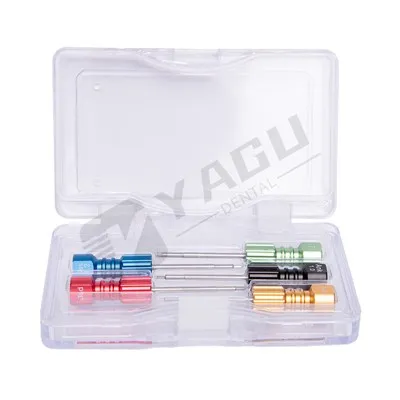
Nobel Temporary Abutments are essential components in modern dental implantology, playing a crucial role in the overall success of dental implant procedures. As a supplier of these high - quality abutments, I have witnessed firsthand the significance of understanding how they interact with the surrounding tissues. In this blog, we will delve into the complex relationship between Nobel Temporary Abutments and the tissues in the oral cavity.
1. Anatomical and Physiological Context of the Oral Tissues
The oral cavity is a dynamic environment filled with various types of tissues, including gingival tissue, alveolar bone, and the periodontal ligament. The gingiva, or gums, forms a protective barrier around the teeth and implants. It is composed of epithelial and connective tissues. The epithelial layer acts as a seal against bacteria and other foreign substances, while the connective tissue provides support and nourishment.
The alveolar bone is the part of the jawbone that supports the teeth and implants. It is a highly dynamic tissue that undergoes constant remodeling in response to mechanical forces and biological signals. The periodontal ligament is a fibrous tissue that connects the tooth root or implant to the alveolar bone, providing shock absorption and sensory feedback.
2. Initial Interaction: Placement of Nobel Temporary Abutments
When a Nobel Temporary Abutment is placed, it first comes into contact with the gingival tissue. The initial interaction is critical as it sets the stage for the long - term stability and health of the implant. The design of the abutment, including its shape, surface texture, and diameter, plays a significant role in this interaction.
A well - designed abutment should fit snugly into the implant fixture, creating a stable connection. The surface of the abutment can be either smooth or textured. A smooth surface may reduce the adhesion of bacteria, while a textured surface can promote the attachment of gingival fibroblasts, which are essential for the formation of a healthy gingival seal.
During the placement process, the surgeon must ensure that the abutment is positioned at the correct height and angle. Incorrect placement can lead to excessive pressure on the surrounding tissues, which may cause inflammation, tissue damage, or even implant failure.
3. Gingival Tissue Response
After the placement of the Nobel Temporary Abutment, the gingival tissue begins to respond to the presence of the foreign object. In the initial days, there may be some degree of inflammation as the body's immune system recognizes the abutment as a potential threat. However, if the abutment is well - designed and properly placed, this inflammation should subside within a few days.
Gingival fibroblasts play a key role in the long - term integration of the abutment. These cells attach to the surface of the abutment and secrete extracellular matrix proteins, such as collagen, which help to form a tight seal around the abutment. This seal is essential for preventing bacteria from entering the implant - tissue interface and causing peri - implantitis, a common complication in dental implantology.
Over time, the gingival tissue will adapt to the shape of the abutment, forming a natural - looking collar around it. This process is known as gingival contouring, and it is influenced by factors such as the abutment's shape, the patient's oral hygiene, and the overall health of the gingiva.
4. Alveolar Bone Interaction
The Nobel Temporary Abutment also has an impact on the alveolar bone. When a dental implant is placed, the bone around the implant undergoes a process called osseointegration, where the bone cells attach to the surface of the implant and form a strong bond. The temporary abutment can influence this process in several ways.
The mechanical forces transmitted through the abutment to the surrounding bone can stimulate bone remodeling. If the forces are within the physiological range, they can promote bone growth and maintenance. However, excessive or uneven forces can lead to bone resorption, which is a loss of bone mass around the implant.
The presence of the abutment can also affect the blood supply to the alveolar bone. A well - designed abutment allows for adequate blood flow to the surrounding tissues, which is essential for the delivery of nutrients and oxygen to the bone cells.


5. Microbiological Considerations
The oral cavity is home to a diverse community of microorganisms, and the Nobel Temporary Abutment can serve as a surface for bacterial colonization. Bacteria can form biofilms on the abutment surface, which can lead to inflammation and infection if not properly managed.
The surface properties of the abutment, such as its roughness and hydrophobicity, can influence the adhesion of bacteria. Smooth and hydrophobic surfaces tend to have less bacterial adhesion compared to rough and hydrophilic surfaces. Additionally, proper oral hygiene practices, such as brushing and flossing, are essential for preventing the accumulation of bacteria on the abutment.
6. Comparison with Other Dental Components
In the field of dental implantology, there are various other components available, such as the Dentium Multi Unit Screw, Premill Abutment, and Dentium Closed Impression Coping. Each of these components has its own unique characteristics and interactions with the surrounding tissues.
The Dentium Multi Unit Screw is used to connect different parts of the implant system, and its proper tightening is crucial for the stability of the entire structure. The Premill Abutment is pre - milled to a specific shape, which can save time during the implant procedure. The Dentium Closed Impression Coping is used to take accurate impressions of the implant, which are essential for the fabrication of the final restoration.
Compared to these components, Nobel Temporary Abutments are specifically designed to provide a temporary connection between the implant and the oral environment, while also promoting the health and integration of the surrounding tissues.
7. Long - Term Effects and Maintenance
The long - term success of a dental implant with a Nobel Temporary Abutment depends on proper maintenance. Regular dental check - ups are essential to monitor the health of the surrounding tissues, including the gingiva and the alveolar bone. The dentist may perform periodontal probing, radiographs, and other diagnostic tests to detect any signs of inflammation, infection, or bone loss.
Patients should also maintain good oral hygiene practices, including brushing at least twice a day and flossing daily. In some cases, the use of antimicrobial mouthwashes may be recommended to reduce the risk of bacterial infection.
If any problems are detected, such as excessive inflammation or bone resorption, appropriate treatment measures should be taken promptly. This may include adjusting the abutment, performing periodontal therapy, or in severe cases, replacing the abutment or the entire implant.
8. Conclusion and Call to Action
Understanding how Nobel Temporary Abutments interact with the surrounding tissues is essential for the success of dental implant procedures. As a supplier of these high - quality abutments, we are committed to providing products that are designed to promote optimal tissue integration and long - term stability.
If you are a dental professional or involved in the dental industry and are interested in learning more about our Nobel Temporary Abutments or discussing potential procurement opportunities, we encourage you to reach out. We are here to provide you with the latest information, technical support, and high - quality products to meet your needs.
References
- Armitage GC. Development of a classification system for periodontal diseases and conditions. Ann Periodontol. 1999;4(1):1 - 6.
- Buser D, Martin W, Belser UC. Optimizing esthetics for implant restorations with short clinical crowns: anatomic and surgical considerations. Int J Oral Maxillofac Implants. 2004;19 Suppl:43 - 61.
- Cochran DL. The bone - implant interface. Dent Clin North Am. 2001;45(3):291 - 303.