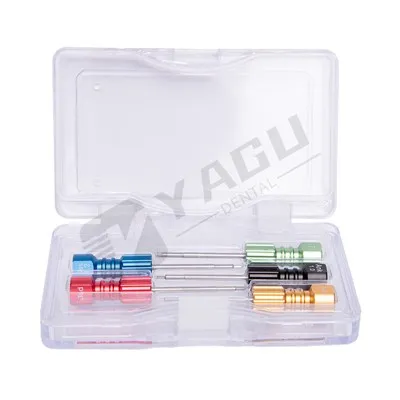
In the dynamic field of dental implants, the Straumann Ti Base stands as a cornerstone product, renowned for its precision, durability, and compatibility with a wide range of dental restoration solutions. As a dedicated supplier of Straumann Ti Base, I am often confronted with a pivotal question from dental professionals and clinics: Can Straumann Ti Base be customized? This blog post aims to explore this query in depth, shedding light on the customization possibilities, benefits, and considerations associated with Straumann Ti Base.
Understanding Straumann Ti Base
Before delving into the customization aspect, it's essential to understand what Straumann Ti Base is. Straumann, a global leader in dental implant technology, has developed the Ti Base as a crucial component in implant - supported restorations. Made from high - quality titanium, it offers excellent biocompatibility, which is vital for long - term success in dental implants. The Ti Base serves as a connection between the dental implant fixture and the final restoration, such as a crown or a bridge.
Customization: Is It Possible?
The answer is a resounding yes. Straumann Ti Base can indeed be customized to meet the unique needs of each patient. Dental professionals often encounter cases where standard components may not be sufficient due to factors such as anatomical variations, specific aesthetic requirements, or functional demands. Customization of the Straumann Ti Base allows for a more personalized approach to dental restoration.
Anatomical Customization
One of the primary reasons for customization is to adapt to the patient's oral anatomy. Every patient has a unique jawbone structure, gum contour, and bite alignment. A customized Straumann Ti Base can be designed to fit precisely into the patient's mouth, ensuring optimal stability and comfort. For example, in cases where the implant is placed in a non - standard position or there are irregularities in the bone or soft tissue, a custom - made Ti Base can be fabricated to compensate for these differences. This results in a better - fitting restoration that is less likely to cause discomfort or complications over time.
Aesthetic Customization
Aesthetics play a significant role in modern dentistry. Patients often have high expectations regarding the appearance of their dental restorations. Customization of the Straumann Ti Base can address these aesthetic concerns. The base can be designed to blend seamlessly with the surrounding teeth and gums, mimicking the natural shape and color of the patient's dentition. This not only enhances the overall appearance of the restoration but also boosts the patient's confidence. For instance, a custom - colored Ti Base can be used to match the shade of the adjacent teeth, creating a more natural and harmonious smile.
Functional Customization
In addition to anatomical and aesthetic considerations, functional customization is also possible. The Straumann Ti Base can be tailored to meet the specific functional requirements of the patient. This may involve adjusting the height, angulation, or occlusal surface of the base to ensure proper bite function. For patients with special chewing or speaking needs, a customized Ti Base can be engineered to optimize these functions. For example, in cases where the patient has a history of bruxism (teeth grinding), a more robust and customized Ti Base can be designed to withstand the increased forces.
The Customization Process
The process of customizing a Straumann Ti Base typically involves close collaboration between the dental professional, the dental laboratory, and the patient.


Patient Assessment
The first step is a comprehensive patient assessment. The dentist will conduct a detailed examination of the patient's oral cavity, including taking X - rays, impressions, and photographs. These records are used to gather information about the patient's anatomy, bite, and aesthetic preferences. Based on this assessment, the dentist can determine the specific customization requirements for the Straumann Ti Base.
Laboratory Design
Once the customization requirements are determined, the dentist sends the patient's records to a specialized dental laboratory. The laboratory technicians use advanced digital technologies, such as CAD/CAM (Computer - Aided Design/Computer - Aided Manufacturing), to design the custom Straumann Ti Base. CAD software allows for precise 3D modeling of the base, taking into account all the anatomical, aesthetic, and functional specifications. The CAM process then uses this digital model to fabricate the actual Ti Base with high precision.
Fitting and Adjustment
After the custom Straumann Ti Base is fabricated, it is sent back to the dentist for fitting. The dentist will carefully place the base on the implant and make any necessary adjustments to ensure a perfect fit. This may involve minor modifications to the base or the surrounding tissues. Once the fit is satisfactory, the final restoration, such as a crown or a bridge, can be attached to the Ti Base.
Benefits of Customized Straumann Ti Base
Improved Patient Satisfaction
Customized Straumann Ti Base offers a higher level of patient satisfaction. Since the base is tailored to the patient's specific needs, it provides a better - fitting, more comfortable, and aesthetically pleasing restoration. Patients are more likely to be satisfied with the outcome of their dental treatment, which can lead to better long - term compliance and overall oral health.
Enhanced Clinical Outcomes
From a clinical perspective, customized Ti Base can improve the success rate of dental implant restorations. A well - fitting base reduces the risk of complications such as implant failure, peri - implantitis, and bone loss. It also improves the stability and function of the restoration, leading to better long - term results.
Competitive Advantage for Dental Practices
For dental practices, offering customized Straumann Ti Base can be a competitive advantage. It allows them to provide a more personalized and high - quality service to their patients, setting them apart from other practices. This can attract more patients and enhance the reputation of the practice in the dental community.
Considerations and Alternatives
While customization of Straumann Ti Base offers many benefits, there are also some considerations. Customization can be more time - consuming and expensive compared to using standard components. The process involves additional steps, such as laboratory design and fitting adjustments, which can add to the overall cost and treatment time.
In some cases, alternative solutions may be considered. For example, Castable Abutments can be a cost - effective option for certain patients. They offer some degree of customization and can be fabricated in the dental laboratory. Another alternative is the Dentium Multi Unit Screw, which provides flexibility in connecting multiple implants. Additionally, the Megagen Ti Base is another product in the market that offers customization options and may be suitable for some patients.
Conclusion
In conclusion, the Straumann Ti Base can be customized to meet the diverse needs of patients in dental implant restorations. Customization offers numerous benefits, including improved patient satisfaction, enhanced clinical outcomes, and a competitive edge for dental practices. However, it also comes with some considerations, such as increased cost and time. As a supplier of Straumann Ti Base, I am committed to providing the highest quality products and supporting dental professionals in their customization needs. If you are interested in learning more about customized Straumann Ti Base or exploring other dental implant solutions, I encourage you to reach out for a procurement discussion. We can work together to find the best solution for your patients.
References
- Brånemark, P. I., Zarb, G. A., & Albrektsson, T. (1985). Tissue - integrated prostheses: osseointegration in clinical dentistry. Quintessence Pub. Co.
- Misch, C. E. (2010). Dental implant prosthetics. Elsevier Health Sciences.
- Tarnow, D. P., Magner, A. W., & Fletcher, P. (1992). The effect of the distance from the contact point to the crest of bone on the presence or absence of the interproximal dental papilla. Journal of Periodontology, 63(2), 99 - 102.