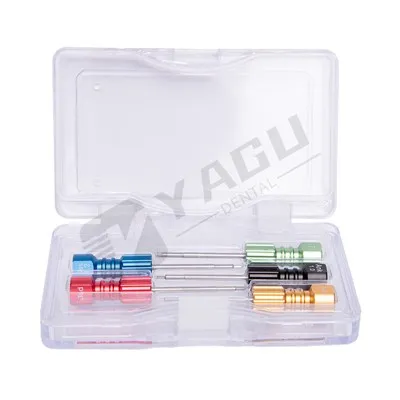
Hey there! As a supplier of straight abutments, I often get asked about the installation tools required for these crucial dental components. In this blog post, I'm gonna break down all the necessary tools to ensure a smooth and successful installation of straight abutments.
Let's start with the basics. A straight abutment is a key part in dental implant procedures. It connects the implant fixture in the jawbone to the dental prosthesis, like a crown or a bridge. Getting the right tools for its installation is super important to make sure everything fits just right and functions properly.
1. Implant Handpiece
The implant handpiece is like the workhorse of the installation process. It's used to drive the straight abutment onto the implant fixture. You need a handpiece that's reliable and has the right torque settings. A high - quality handpiece can make the difference between a well - seated abutment and one that's loose or misaligned. You can adjust the speed and torque according to the type of implant and abutment you're working with. This tool is usually powered by air or electricity, and it comes with different attachments to fit various abutment designs.
2. Torque Wrench
A torque wrench is an absolute must - have. It ensures that the straight abutment is tightened to the correct torque value. Over - tightening can damage the implant or the abutment, while under - tightening can lead to loosening over time. Different manufacturers specify different torque values for their straight abutments. For example, some might require 15 Ncm, while others could need 20 Ncm. A good torque wrench will give you an accurate reading and help you achieve the perfect fit every time.
3. Abutment Placement Tool
This tool is specifically designed to place the straight abutment onto the implant fixture. It has a tip that fits precisely into the abutment, allowing you to position it correctly. The placement tool helps you align the abutment with the implant, ensuring that it's centered and perpendicular. This is crucial for the long - term stability and function of the dental prosthesis. Some placement tools also have a locking mechanism to hold the abutment in place during installation.
4. Abutment Removal Tool
Just as important as the placement tool is the removal tool. There might come a time when you need to remove the straight abutment, whether it's for maintenance, replacement, or adjustment. The removal tool is designed to safely and easily detach the abutment from the implant fixture. It's usually a specialized instrument that fits into the abutment's removal slot and allows you to apply the right amount of force to loosen it.
5. Implant Level Impression Copings
Implant level impression copings are used to take an accurate impression of the implant and the straight abutment. This impression is then used to create the dental prosthesis. These copings come in different sizes and shapes to match various implant and abutment systems. They are placed on the straight abutment during the impression - taking process, and they help capture the exact position and orientation of the abutment. This ensures that the final dental restoration fits perfectly onto the abutment.
6. Healing Abutments
Healing abutments are used during the initial healing phase after implant placement. Although they're not directly involved in the final installation of the straight abutment, they play a crucial role in the overall process. Healing abutments help the soft tissue around the implant heal properly and form a healthy seal. They come in different heights and diameters to accommodate different patient anatomies. Once the healing is complete, the healing abutments are removed, and the straight abutments are installed.
7. Cleaning and Maintenance Tools
After the straight abutment is installed, it's important to keep it clean. Tools like brushes, ultrasonic scalers, and cleaning solutions are essential for maintaining the abutment's integrity. Brushes can be used to remove plaque and debris from the surface of the abutment, while ultrasonic scalers can be used to clean hard - to - reach areas. Cleaning solutions help disinfect the abutment and prevent the growth of bacteria.
Now, let's talk about some of the popular straight abutment products out there. If you're interested in high - quality options, you might want to check out the Nobel Multi Unit Abutment, Osstem Angled Abutment, and Straumann Multi Unit Abutment. These products are known for their durability and precision.
As a straight abutment supplier, I understand the importance of having the right tools for the job. Whether you're a dentist, a dental technician, or someone involved in the dental implant industry, having access to high - quality installation tools can make your work easier and more efficient.


If you're in the market for straight abutments or the installation tools we've discussed, I'd love to talk to you. We offer a wide range of products at competitive prices, and our team is always ready to provide you with the support and advice you need. Don't hesitate to reach out if you have any questions or if you're interested in starting a purchase. We're here to help you achieve the best results in your dental implant procedures.
References
- Dental Implantology Handbook, 3rd Edition
- Journal of Oral Implantology - various issues on abutment installation
- Manufacturer's guides for straight abutments and related tools