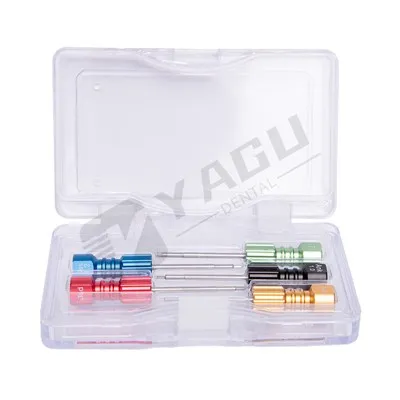
Straumann, a globally recognized leader in dental implant systems, offers a variety of abutments to meet the diverse needs of dental treatments. Among their offerings, angled abutments have attracted significant attention due to their unique design and functionality. In this blog post, we will explore the compatibility of Angled Abutment Straumann with dental implants from multiple perspectives, which is crucial not only for dental professionals but also for achieving the best treatment results for patients. As a reliable supplier of Angled Abutment Straumann, we are committed to providing in - depth knowledge about this product.
Understanding Straumann Dental Implants
Before delving into the compatibility of angled abutments, it's essential to understand Straumann's dental implant systems. Straumann implants are renowned for their high - quality materials, precision engineering, and long - term success rates. They are designed to integrate with the patient's bone tissue through a process called osseointegration, which provides a stable foundation for the restoration.
Straumann offers different implant designs and sizes to accommodate various anatomical conditions, such as bone quality and quantity. These implants are made from titanium, a biocompatible material that is well - tolerated by the human body. The surface treatment of Straumann implants also plays a vital role in promoting osseointegration, with different surface textures and coatings available to enhance the interaction between the implant and the bone.
The Role of Angled Abutments
Angled abutments are specifically designed to address the challenges that arise when the implant axis does not align with the ideal prosthetic path. This misalignment can occur due to various reasons, including anatomical limitations, previous dental extractions, or the patient's specific dental conditions.
By using an angled abutment, dental professionals can create a more natural - looking and functional restoration. It allows for a better alignment of the prosthesis with the adjacent teeth, improving aesthetics and occlusion. Additionally, angled abutments can reduce stress on the implant and the surrounding bone tissue, which may contribute to the long - term stability of the implant - supported restoration.
Compatibility Factors between Angled Abutment Straumann and Dental Implants
1. Connection Design
One of the most critical factors determining the compatibility of angled abutments with dental implants is the connection design. Straumann utilizes a conical connection system in many of its implants, which offers excellent stability and a precise fit between the implant and the abutment. The conical connection ensures a tight seal, preventing bacteria from entering the implant - abutment interface, which can reduce the risk of peri - implantitis.
When choosing an angled abutment for a Straumann implant, it is crucial to select an abutment with a compatible connection design. Straumann offers a range of angled abutments that are specifically designed to fit their different implant models, ensuring a secure and stable connection.
2. Material Compatibility
As mentioned earlier, Straumann implants are typically made of titanium. The angled abutments should be made of materials that are compatible with titanium to ensure a good chemical and mechanical interaction. Most Angled Abutment Straumann products are also made of titanium or titanium - based alloys, which have similar mechanical properties and biocompatibility.
The use of compatible materials helps to prevent galvanic corrosion, which can occur when two different metals come into contact in a moist environment. Galvanic corrosion can weaken the implant - abutment connection and potentially lead to implant failure.
3. Angle and Size Matching
The angle of the angled abutment must be carefully selected to match the specific requirements of the case. Straumann offers angled abutments with different angulation degrees, typically ranging from 15° to 30°. The choice of angle depends on the amount of implant - prosthetic misalignment and the desired outcome of the restoration.
In addition to the angle, the size of the angled abutment also needs to be compatible with the implant. Straumann provides a variety of abutment sizes to ensure a proper fit with different implant diameters and lengths. A well - matched abutment size helps to distribute the occlusal forces evenly, reducing the risk of overloading the implant.
Comparison with Other Abutment Types
1. Straight Abutments
Straight Abutment are the most basic type of abutments. They are used when the implant axis aligns with the ideal prosthetic path. In contrast, angled abutments are used for cases where there is a misalignment. While straight abutments are simpler in design and may be more cost - effective in some cases, angled abutments offer greater flexibility in restoring teeth in challenging anatomical positions.


2. Osstem Angled Abutment
The Osstem Angled Abutment is another popular option in the market. However, compared to the Angled Abutment Straumann, Straumann's products are often associated with a longer - standing reputation for quality and precision. Straumann has a more extensive research and development background, which may translate into better - designed and more reliable products. Additionally, Straumann offers a wider range of angled abutment options in terms of angles and sizes, providing more choices for dental professionals.
Clinical Applications and Success Stories
In clinical practice, the use of Angled Abutment Straumann has shown excellent results in various cases. For example, in patients with posterior dental implants where the implant axis may deviate from the ideal path, angled abutments can be used to create a functional and aesthetically pleasing restoration.
There have been numerous success stories where the use of angled abutments has improved the patient's quality of life. Patients who previously struggled with chewing or had self - esteem issues due to their dental appearance have reported significant improvements after receiving implant - supported restorations with angled abutments.
Our Role as a Supplier
As a supplier of Angled Abutment Straumann, we understand the importance of providing high - quality products and reliable service. We work closely with dental professionals to ensure that they have access to the right abutment products for their cases. Our team of experts can provide technical support and guidance on the selection and use of angled abutments.
We source our products directly from Straumann, ensuring that they meet the highest quality standards. We also offer competitive pricing and fast delivery to meet the needs of our customers. Whether you are a small dental clinic or a large dental hospital, we can provide you with the quantity and variety of angled abutments you require.
Conclusion
The compatibility of Angled Abutment Straumann with dental implants is a complex but well - understood topic. By considering factors such as connection design, material compatibility, and angle and size matching, dental professionals can ensure a successful implant - supported restoration. Compared to other abutment types, Angled Abutment Straumann offers unique advantages in terms of flexibility and quality.
If you are a dental professional interested in learning more about our Angled Abutment Straumann products or would like to discuss potential procurement, please feel free to reach out. We are eager to start a conversation and help you find the best solutions for your patients.
References
- Misch CE. Contemporary Implant Dentistry. Mosby; 2008.
- Zarb GA, Albrektsson T. Textbook of Oral Implantology. Blackwell Munksgaard; 2004.
- Straumann official product documentation.