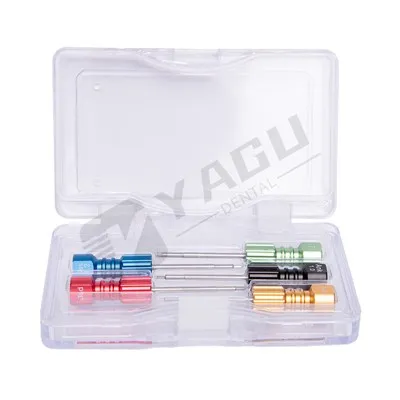
Multi angled abutments play a crucial role in the field of dental implants, offering significant improvements in both the functionality and aesthetics of the implant restoration. As a trusted supplier of multi angled abutments, I have witnessed firsthand how these innovative components enhance the overall success of dental implant procedures. In this blog, I will delve into the various ways multi angled abutments improve dental implants, highlighting their benefits and applications.
Enhanced Prosthetic Design
One of the primary advantages of multi angled abutments is their ability to accommodate complex prosthetic designs. In many cases, the natural alignment of the jawbone and adjacent teeth may not be ideal for a straight implant abutment. Multi angled abutments allow dentists to adjust the angle of the abutment to match the anatomical requirements of the patient's mouth. This flexibility enables the creation of a more natural-looking and functional restoration, ensuring optimal fit and occlusion.
For example, in situations where the implant is placed at an angle due to limited bone availability or anatomical constraints, a multi angled abutment can be used to correct the alignment and provide a stable foundation for the crown. By adjusting the angle of the abutment, the dentist can ensure that the crown is properly positioned in relation to the surrounding teeth, improving both the aesthetics and the functionality of the restoration.
Improved Implant Placement
Multi angled abutments also offer greater flexibility in implant placement. In some cases, it may be difficult or impossible to place an implant in a straight position due to anatomical limitations or the presence of adjacent teeth. Multi angled abutments allow dentists to place the implant at an angle that is more favorable for the patient, while still maintaining a stable and functional restoration.


For instance, in the posterior regions of the mouth, where the available bone may be limited or the adjacent teeth may be in close proximity, multi angled abutments can be used to place the implant at an angle that avoids interference with the neighboring structures. This not only improves the success rate of the implant procedure but also reduces the risk of complications such as nerve damage or sinus perforation.
Enhanced Patient Comfort
Another significant benefit of multi angled abutments is their ability to improve patient comfort. Traditional straight abutments may cause discomfort or irritation to the soft tissues in the mouth, especially if the implant is placed at an angle. Multi angled abutments are designed to conform to the natural contours of the patient's mouth, reducing the risk of soft tissue irritation and improving overall patient comfort.
In addition, multi angled abutments can also help to reduce the amount of force exerted on the implant and the surrounding bone. By adjusting the angle of the abutment, the dentist can distribute the forces more evenly, reducing the risk of implant failure and improving the long-term stability of the restoration.
Compatibility with Different Implant Systems
Multi angled abutments are available in a variety of designs and sizes, making them compatible with different implant systems. This versatility allows dentists to choose the abutment that best suits the specific needs of the patient and the implant system being used.
For example, the Osstem Angled Abutment is designed to be used with Osstem implants, offering a precise fit and excellent stability. Similarly, the Hiossen Multi Unit Abutment is compatible with Hiossen implants, providing a reliable solution for multi-unit restorations. The Straumann Multi Unit Abutment is another popular option, offering a wide range of angulations and configurations to meet the diverse needs of patients.
Cost-Effective Solution
Multi angled abutments offer a cost-effective solution for dental implant restorations. By allowing dentists to use existing implants and abutments, multi angled abutments can help to reduce the overall cost of the treatment. In addition, the improved success rate and long-term stability of multi angled abutments can also help to reduce the need for additional procedures or replacements, further reducing the cost of treatment for the patient.
Conclusion
In conclusion, multi angled abutments offer numerous benefits for dental implant restorations. From enhanced prosthetic design and improved implant placement to enhanced patient comfort and compatibility with different implant systems, multi angled abutments are a valuable tool in the field of dental implantology. As a supplier of high-quality multi angled abutments, I am committed to providing dentists with the products and support they need to achieve the best possible outcomes for their patients.
If you are a dentist or a dental professional interested in learning more about multi angled abutments or would like to discuss your specific needs, please do not hesitate to contact me. I would be happy to provide you with more information and answer any questions you may have.
References
- Misch CE. Contemporary Implant Dentistry. Mosby; 2008.
- Zarb GA, Albrektsson T, Carlsson GE, et al. Textbook of Oral Implantology. Quintessence Publishing Co; 2012.
- Tarnow DP, Elian N, Fletcher P, et al. The effect of the distance from the contact point to the crest of bone on the presence or absence of the interproximal papilla. J Periodontol. 2003;74(11):1786-1791.