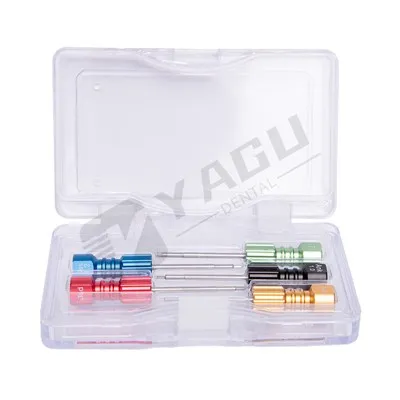
Can Multi Unit Abutment be used in patients with bruxism?
Hey there, dental enthusiasts! I'm here as a supplier of Multi Unit Abutments, and today we're diving into a hot topic: Can Multi Unit Abutments be used in patients with bruxism?
First off, let's quickly go over what bruxism is. Bruxism is the involuntary grinding or clenching of teeth, usually during sleep. It can cause a whole bunch of problems, like tooth wear, jaw pain, headaches, and even damage to dental restorations. Now, Multi Unit Abutments are pretty cool. They're used in implant dentistry to connect multiple implants to a single restoration, like a dental bridge or a denture. They offer flexibility and can adapt to different clinical situations.


So, the big question is, can these Multi Unit Abutments hold up in patients who grind their teeth? Well, it's a bit of a mixed bag.
On one hand, there are some reasons why Multi Unit Abutments might work in bruxism cases. For starters, modern Multi Unit Abutments are made from high - quality materials. Many are crafted from titanium or zirconia, which are known for their strength and durability. Titanium, for example, has excellent biocompatibility and can withstand a fair amount of stress. Zirconia, on the other hand, is not only strong but also has a more aesthetically pleasing appearance, which is a plus for patients.
Another advantage is that the design of Multi Unit Abutments can distribute the occlusal forces more evenly. When a patient grinds their teeth, the forces are spread out over multiple abutments and implants rather than being concentrated on a single point. This can potentially reduce the risk of overloading and damage to the implants and the surrounding bone.
However, there are also some concerns. Bruxism generates extremely high forces. Even the strongest materials can be pushed to their limits over time. The constant grinding and clenching can cause micro - movements at the interface between the Multi Unit Abutment and the implant. These micro - movements can lead to loosening of the abutment screws, which is a major problem. If the screws become loose, it can affect the stability of the entire restoration and may even cause the restoration to fail.
Moreover, the wear and tear on the Multi Unit Abutments themselves can be an issue. The surface of the abutment can start to wear down, which can not only affect the fit of the restoration but also potentially lead to corrosion in some cases. This is especially true if the patient has a particularly severe form of bruxism.
Now, let's talk about some specific types of Multi Unit Abutments. We have Angled Multi Unit Abutments. These are great when you need to adjust the angulation of the restoration to fit the patient's mouth better. They can be very useful in complex cases, but in bruxism patients, the angled design might introduce additional stress points. The forces from grinding might be more concentrated at the angle, increasing the risk of damage.
Then there are Angled Abutment Straumann. Straumann is a well - known brand in the dental industry, and their angled abutments are designed with precision. But again, in a bruxism situation, the angled part could be vulnerable to the high forces generated by grinding.
And of course, Straumann Multi Unit Abutment is another option. Straumann's multi - unit abutments are known for their quality and reliability. They have a good track record in many dental cases, but when it comes to bruxism, extra precautions need to be taken.
So, what can we do if we want to use Multi Unit Abutments in bruxism patients? First of all, a thorough assessment of the patient's bruxism is crucial. Dentists need to determine the severity of the grinding and clenching. This can be done through a combination of patient history, clinical examination, and possibly the use of bite splints to measure the forces.
If the bruxism is mild to moderate, using Multi Unit Abutments might be a viable option. But some modifications might be necessary. For example, using a more rigid connection between the abutment and the implant can help reduce micro - movements. Dentists can also use anti - loosening mechanisms for the abutment screws to prevent them from coming loose.
In cases of severe bruxism, it might be more challenging. In some situations, it might be better to consider alternative treatment options. However, if the patient really wants to use Multi Unit Abutments, a combination of strategies can be employed. This could include using a night guard to reduce the forces during sleep, and closely monitoring the patient's oral health over time.
As a supplier of Multi Unit Abutments, I understand the importance of providing products that can meet the needs of different patients, including those with bruxism. We're constantly working on improving the design and materials of our abutments to make them more resistant to the high forces associated with bruxism.
If you're a dentist or a dental professional and you're considering using Multi Unit Abutments in your bruxism cases, I'd love to have a chat with you. We can discuss the different options available, and I can provide you with more detailed information about our products. Whether you're dealing with a simple case or a complex one, we're here to support you.
In conclusion, while Multi Unit Abutments can potentially be used in patients with bruxism, it's not a one - size - fits - all solution. A careful assessment of the patient's condition and the use of appropriate strategies are essential to ensure the long - term success of the restoration.
If you're interested in learning more about our Multi Unit Abutments or have any questions regarding their use in bruxism cases, don't hesitate to reach out. We're always happy to help you make the best decision for your patients.
References
- Smith, J. (2018). Dental Implant Abutments: Materials and Design Considerations. Journal of Dental Research.
- Johnson, M. (2019). Bruxism: Diagnosis and Management. Dental Clinics of North America.
- Brown, T. (2020). The Impact of Bruxism on Dental Restorations. International Journal of Oral and Maxillofacial Implants.