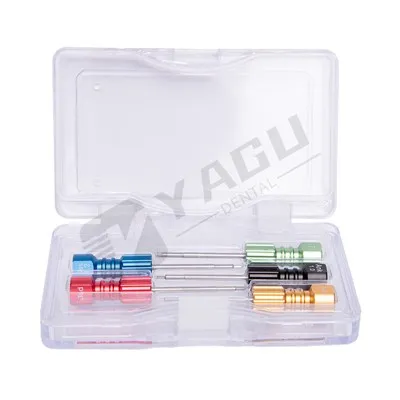
In the field of modern dentistry, dental implants have revolutionized the way we approach tooth replacement, offering a durable and natural - looking solution for patients with missing teeth. At the heart of a successful dental implant procedure lies the implant abutment, a crucial component that connects the dental implant fixture in the jawbone to the dental restoration, such as a crown, bridge, or denture. As an implant abutment supplier, I often encounter the question: Are implant abutments compatible with all types of dental implants? This blog post aims to delve into this topic in detail, exploring the factors that influence compatibility and the types of abutments available in the market.
Understanding Dental Implants and Abutments
Before we discuss compatibility, it's essential to understand the basic components of a dental implant system. A dental implant typically consists of three main parts: the implant fixture, the abutment, and the dental restoration. The implant fixture is surgically placed into the jawbone, where it integrates with the bone over time through a process called osseointegration. The abutment is then attached to the implant fixture, protruding through the gum tissue, and serves as a connector to support the final dental restoration.
Factors Affecting Abutment - Implant Compatibility
1. Connection Type
One of the most significant factors determining the compatibility between an implant abutment and a dental implant is the connection type. There are several types of connections, including internal and external connections. Internal connections are located inside the implant fixture, providing a more stable and esthetic solution. External connections, on the other hand, are located on the outside of the implant fixture. Different implant manufacturers use unique connection designs, and an abutment must be specifically designed to fit the connection type of a particular implant. For example, a Nobel Biocare implant has a proprietary internal connection system, and only abutments designed for Nobel Biocare implants will be compatible.
2. Diameter and Height
The diameter and height of the implant and the abutment also play a crucial role in compatibility. Implants come in various diameters and lengths to accommodate different patient anatomies and clinical situations. The abutment must match the diameter of the implant fixture to ensure a proper fit. Additionally, the height of the abutment should be selected based on the position of the implant in the jawbone and the amount of soft tissue covering it. If the abutment is too short or too long, it can lead to problems such as improper occlusion, gum recession, or difficulty in placing the dental restoration.
3. Material Compatibility
The materials used in the implant and the abutment can also affect compatibility. Dental implants are commonly made of titanium or titanium alloys due to their biocompatibility and strength. Abutments can be made of different materials, including titanium, zirconia, and gold alloys. While titanium abutments are widely used and generally compatible with titanium implants, zirconia abutments are becoming increasingly popular due to their esthetic properties. However, it's important to ensure that the material of the abutment is compatible with the implant to prevent issues such as corrosion or allergic reactions.
Types of Implant Abutments and Their Compatibility
1. Straight Abutment
Straight Abutment are the most basic type of abutments. They are used when the implant is placed in an ideal position and the dental restoration can be directly attached to the abutment without the need for angulation. Straight abutments are available in different sizes and materials and are typically compatible with implants that have a straight - line path from the implant fixture to the occlusal surface. However, they may not be suitable for implants placed at an angle or in areas with limited space.
2. Angled Multi Unit Abutments
Angled Multi Unit Abutments are designed to compensate for implants placed at an angle or in non - ideal positions. They allow for greater flexibility in the placement of the dental restoration and can be adjusted to achieve the desired angulation. These abutments are compatible with a wide range of implant systems, but it's important to select an abutment with the correct angulation and connection type for the specific implant.
3. Nobel Multi Unit Abutment
Nobel Multi Unit Abutment are specifically designed for Nobel Biocare implants. They offer a high level of precision and compatibility with Nobel Biocare's implant systems. These abutments are available in different configurations and can be used for single - tooth restorations, multiple - tooth restorations, or overdentures. Their compatibility with Nobel Biocare implants ensures a reliable and long - lasting connection between the implant and the dental restoration.
Ensuring Compatibility in Clinical Practice
In clinical practice, dentists and dental technicians must carefully select the appropriate abutment for each patient's dental implant. This involves a thorough assessment of the patient's oral anatomy, the position and type of the implant, and the desired outcome of the dental restoration. Before placing the abutment, it's important to verify its compatibility with the implant through proper testing and verification. This may include using a compatibility chart provided by the implant manufacturer or conducting a trial fit of the abutment on the implant fixture.


The Role of an Implant Abutment Supplier
As an implant abutment supplier, our role is to provide high - quality abutments that are compatible with a wide range of dental implant systems. We work closely with implant manufacturers to ensure that our abutments meet the strictest quality and compatibility standards. Our product catalog includes a variety of abutments, such as straight abutments, angled multi - unit abutments, and Nobel multi - unit abutments, to meet the diverse needs of our customers.
We also offer technical support and guidance to dentists and dental technicians to help them select the most appropriate abutment for each case. Our team of experts is available to answer any questions regarding abutment - implant compatibility and to provide assistance in the clinical use of our products.
Conclusion
In conclusion, implant abutments are not compatible with all types of dental implants. Compatibility depends on several factors, including the connection type, diameter and height, and material of the implant and the abutment. Dentists and dental technicians must carefully consider these factors when selecting an abutment to ensure a successful dental implant procedure.
As an implant abutment supplier, we are committed to providing our customers with high - quality, compatible abutments that meet their clinical needs. If you are a dental professional interested in learning more about our products or discussing abutment - implant compatibility, we invite you to contact us for a procurement discussion. We look forward to working with you to provide the best solutions for your patients.
References
- Misch CE. Contemporary Implant Dentistry. Mosby; 2018.
- Buser D, Martin W, Belser UC. Optimizing esthetics for implant restorations with high - esthetic demands: anatomic and surgical considerations. Int J Oral Maxillofac Implants. 2004;19 Suppl:43 - 61.
- Tarnow DP, Magner AW, Fletcher P. The dimensions of the zone of keratinized mucosa adjacent to endosseous implants. J Periodontol. 1992;63(10):995 - 998.