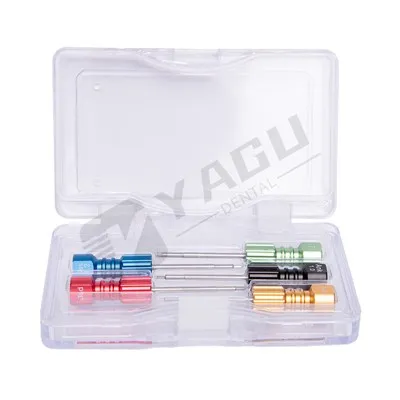
Hey there! As a supplier of temporary abutments, I often get asked about the materials used in these dental components. So, I thought I'd share some insights on what goes into making a temporary abutment.
First off, let's understand what a temporary abutment is. It's a crucial part in the dental implant process. After an implant is placed in the jawbone, a temporary abutment is attached to the implant. This helps in the healing process and also serves as a guide for the final restoration, like a crown or a bridge.
Now, let's dive into the materials. There are several types of materials commonly used for temporary abutments, each with its own set of pros and cons.
1. Acrylic Resin
Acrylic resin is one of the most popular materials for temporary abutments. It's a type of plastic that's easy to work with. Dentists can easily shape and modify it during the dental procedure. This is a big plus because it allows for a customized fit for each patient's mouth.
Another advantage of acrylic resin is its cost - it's relatively inexpensive compared to some other materials. This makes it a great option for patients on a budget or for cases where a temporary solution is needed quickly.
However, acrylic resin does have its drawbacks. It's not as strong as some other materials, so it may wear down over time. Also, it can absorb moisture from the mouth, which might lead to discoloration or a change in its mechanical properties.
2. Composite Resin
Composite resin is another material used for temporary abutments. It's made up of a mixture of resin and filler particles. This combination gives it some unique properties.
Composite resin is known for its good aesthetic qualities. It can be color - matched to the patient's natural teeth, making it a more visually appealing option. It also has better wear resistance compared to acrylic resin.
But composite resin also has limitations. It can be more difficult to work with than acrylic resin, and it may require special equipment and techniques for proper placement. Additionally, it can be more expensive.
3. Metal Alloys
Metal alloys, such as titanium and its alloys, are also used in temporary abutments. Titanium is a biocompatible metal, which means it's well - tolerated by the human body. It has high strength and corrosion resistance, making it a durable option.


One of the great things about titanium abutments is their stability. They can withstand the forces of chewing and biting without deforming easily. This makes them suitable for cases where there will be significant stress on the abutment.
However, metal alloys have some aesthetic disadvantages. They are not tooth - colored, so they may not be the best choice for patients who are concerned about the appearance of their teeth. Also, they can be more expensive than resin - based materials.
4. Zirconia
Zirconia is a ceramic material that has gained popularity in recent years for use in temporary abutments. It has excellent aesthetic properties, as it can be made to look very similar to natural teeth. It's also strong and wear - resistant, like titanium.
Zirconia is biocompatible, which means it doesn't cause any adverse reactions in the mouth. It's also resistant to staining and discoloration, making it a long - lasting and attractive option.
But zirconia abutments can be quite expensive. The manufacturing process is complex, which adds to the cost. Also, they can be brittle, and if not properly designed and placed, they may fracture.
Choosing the Right Material
When it comes to choosing the right material for a temporary abutment, several factors need to be considered. The patient's budget, the length of time the abutment will be in place, the aesthetic requirements, and the amount of stress the abutment will experience are all important.
For example, if a patient needs a quick and inexpensive solution for a short - term period, acrylic resin might be the best choice. On the other hand, if the patient wants a more durable and aesthetically pleasing option, zirconia or composite resin could be considered.
As a supplier, I offer a wide range of temporary abutments made from different materials. We also have some great products like the Straumann Pre Milled Abutment, which is known for its high - quality and precise fit. The Dentium Multi Unit Screw is another great product that can be used in conjunction with our temporary abutments for a more secure and stable setup. And for the healing phase, the Osstem Healing Cap is an essential accessory.
If you're a dentist or a dental clinic looking for high - quality temporary abutments, we'd love to hear from you. We can provide you with detailed information about our products, their materials, and how they can best suit your patients' needs. Whether you're looking for a budget - friendly option or a top - of - the - line aesthetic solution, we've got you covered.
Contact us today to start a conversation about your temporary abutment needs. We're here to help you make the best choice for your patients and your practice.
References
- Dental Materials: Properties and Manipulation, 11th Edition, by John M. Powers and William R. Wataha
- Contemporary Fixed Prosthodontics, 5th Edition, by John J. McGlumphy, Craig A. Goodacre, and Charles J. Shillingburg