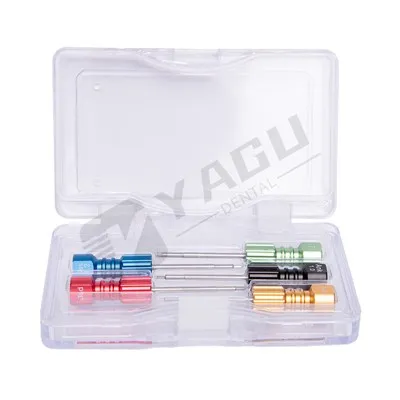
Hey there! I'm super stoked to talk about something that's been a big part of my business - Multi Unit Abutments and their effect on gingival tissue. As a supplier of Multi Unit Abutments, I've seen firsthand how these little guys can make a huge difference in dental implants.
First off, let's get into what Multi Unit Abutments are. They're essentially connectors that link dental implants to the prosthetic teeth. They come in different shapes and sizes, like Osstem Angled Abutment and Angled Abutment Implant, and Straight Abutment. Each type has its own unique features and is designed to meet different clinical needs.
Now, onto the main topic - the effect of Multi Unit Abutments on gingival tissue. Gingival tissue, or the gum tissue, is super important in the oral cavity. It provides protection to the underlying bone and teeth, and also plays a key role in the overall aesthetics of a patient's smile. When it comes to dental implants, the interaction between the abutment and the gingival tissue is crucial for the long - term success of the implant.
One of the major effects of Multi Unit Abutments on gingival tissue is the formation of a biological seal. This seal acts as a barrier between the oral environment and the implant site, preventing bacteria from entering and causing infections. A well - designed Multi Unit Abutment can promote the development of a tight and healthy biological seal. For example, the surface characteristics of the abutment, such as its roughness and texture, can influence the attachment of gingival cells. A smoother surface may allow for better cell adhesion, which in turn helps in the formation of a more effective biological seal.
Another aspect is the contour of the Multi Unit Abutment. The shape of the abutment should mimic the natural contours of the tooth and the surrounding gingival tissue. If the abutment has an improper contour, it can cause irritation to the gingival tissue. This irritation can lead to inflammation, redness, and even bleeding of the gums. On the other hand, a properly contoured abutment can support the gingival tissue, maintaining its health and normal appearance. For instance, an abutment that is too bulky can displace the gingival tissue, while one that is too narrow may not provide enough support.
The material of the Multi Unit Abutment also matters a great deal. Common materials used include titanium and zirconia. Titanium is a popular choice because of its biocompatibility, which means it is well - tolerated by the body. It doesn't cause any major allergic reactions in most patients. Zirconia, on the other hand, is known for its aesthetic properties. It has a tooth - like color, which can blend in well with the natural teeth. Both materials have different effects on the gingival tissue. Titanium may have a slightly different interaction with the gingival cells compared to zirconia, but overall, when properly used, they can both support healthy gingival tissue.
In some cases, the installation process of the Multi Unit Abutment can also impact the gingival tissue. During the placement of the abutment, if there is excessive force or trauma to the gingival tissue, it can lead to immediate damage. This can delay the healing process and increase the risk of complications. That's why it's so important for dental professionals to have the right skills and techniques when installing Multi Unit Abutments.
Let's talk about the long - term effects. Over time, a well - placed and well - designed Multi Unit Abutment can help maintain the health and stability of the gingival tissue. It can prevent the recession of the gums, which is a common problem in dental implant patients. Gum recession not only affects the aesthetics but can also expose the implant and the underlying bone, increasing the risk of bone loss and implant failure.
However, if the Multi Unit Abutment is not properly maintained, it can have negative long - term effects on the gingival tissue. Poor oral hygiene around the abutment can lead to the accumulation of plaque and tartar. This can cause chronic inflammation of the gingival tissue, which may progress to periodontitis, a more severe form of gum disease. Periodontitis can lead to the destruction of the supporting bone and eventually the failure of the dental implant.
Now, as a supplier of Multi Unit Abutments, I've worked closely with dental professionals to ensure that they have access to high - quality abutments. We offer a wide range of Multi Unit Abutments, each designed with the latest research and technology in mind. Our abutments are carefully crafted to have the right surface characteristics, contours, and are made from top - notch materials.
If you're a dental professional looking for reliable Multi Unit Abutments, I'd love to talk to you. Whether you're dealing with a simple single - tooth implant or a more complex multi - tooth restoration, our products can meet your needs. We're always here to provide support and guidance on choosing the right abutment for your patients. You can reach out to us to discuss your requirements and start a procurement process. We're confident that our Multi Unit Abutments can make a positive difference in your patients' oral health.
References


- Arun, J., & Sivakumar, P. (2017). Influence of abutment design on peri - implant soft tissue health. Journal of Clinical and Diagnostic Research, 11(6), ZC01 - ZC04.
- Derks, J., & Tomasi, C. (2015). A systematic review of the incidence of biological and technical complications in implant dentistry reported in prospective longitudinal studies with a mean follow - up of at least 5 years. Journal of Clinical Periodontology, 42(S16), S176 - S189.
- Romeo, E., & Iezzi, G. (2012). The influence of abutment materials on the peri - implant soft tissue: a systematic review. Clinical Oral Implants Research, 23(11), 1135 - 1142.