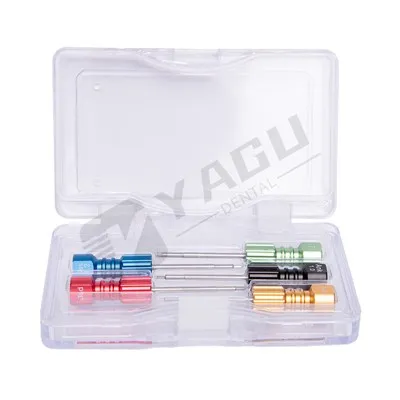
Premill abutments are crucial components in dental implant systems, playing a vital role in connecting the implant fixture to the dental restoration. They are pre - milled to specific shapes and sizes, which can significantly reduce the chair - side time for dentists and improve the overall efficiency of the implant restoration process. However, like any dental component, premill abutments can get damaged. The question then arises: Can a damaged premill abutment be repaired?
Understanding Premill Abutments
Before delving into the repair aspect, it's essential to understand what premill abutments are. Premill abutments are made from high - quality materials such as titanium, zirconia, or other biocompatible metals. These materials are chosen for their strength, durability, and ability to integrate well with the oral environment. They come in various designs to accommodate different implant systems and patient needs.
For example, the Nobel Ti Base is a well - known type of premill abutment. It is designed to work seamlessly with Nobel Biocare implant systems. Its precise design ensures a stable connection between the implant and the crown, providing long - term functionality and esthetics. Another example is the Dentium Multi Unit Scanbody, which is not only a premill abutment but also serves as a scanbody for digital impressions, adding an extra layer of versatility to the dental implant process. The Megagen Ti Base is also a popular choice, known for its high - quality titanium construction and compatibility with Megagen implant systems.
Causes of Premill Abutment Damage
There are several reasons why a premill abutment might get damaged. One of the most common causes is excessive occlusal forces. When a patient has a habit of clenching or grinding their teeth (bruxism), the premill abutment can be subjected to forces that exceed its design limits. This can lead to fractures, cracks, or deformation of the abutment.
Improper installation is another significant factor. If the abutment is not tightened to the correct torque during placement, it can loosen over time. Loose abutments are more likely to be damaged as they can move within the implant, causing uneven stress distribution. Additionally, during the manufacturing process, if there are any defects in the material or machining, it can weaken the abutment and make it more prone to damage.
Assessing the Damage
When a premill abutment is suspected to be damaged, a thorough assessment is necessary. The dentist will first conduct a visual examination to look for obvious signs of damage such as cracks, fractures, or deformation. They may also use dental instruments to check for looseness or instability. In some cases, advanced imaging techniques like cone - beam computed tomography (CBCT) may be used to get a more detailed view of the abutment and the surrounding tissues.
The type and extent of damage will determine whether the abutment can be repaired. Minor damage, such as surface scratches or small chips, may be more likely to be repairable. However, if the abutment has a major fracture or is severely deformed, repair may not be a viable option.


Repair Options for Damaged Premill Abutments
Minor Surface Damage
If the damage is limited to the surface, such as small scratches or minor discoloration, it may be possible to repair the abutment. For titanium abutments, surface scratches can sometimes be polished out using dental polishing tools. This process restores the smooth surface of the abutment, which is important for preventing plaque accumulation and maintaining the esthetics of the restoration.
Minor Chip Repair
In cases where there is a small chip on the abutment, it may be possible to repair it using dental composite materials. The dentist will first clean the chipped area thoroughly to ensure proper adhesion. Then, a dental composite resin is applied and shaped to match the original contour of the abutment. After that, the composite is cured using a dental curing light. This method can be effective for small chips, but it may not be suitable for larger or more structural chips.
Weld Repair
For some types of metal abutments, welding may be an option for repairing fractures. However, this requires specialized equipment and expertise. The dentist or a dental technician will need to carefully align the fractured parts of the abutment and use a welding process to join them together. After welding, the abutment will need to be re - machined and polished to restore its original shape and surface finish.
Limitations of Repair
While some damage to premill abutments can be repaired, there are limitations. Major fractures that compromise the structural integrity of the abutment are often difficult to repair effectively. Welding or using composite materials to repair a large fracture may not provide sufficient strength, and the repaired abutment may fail again under normal occlusal forces.
In addition, if the damage is in a critical area of the abutment, such as the connection interface with the implant or the area where the crown is attached, repair may not be advisable. Any repair in these areas can affect the fit and stability of the restoration, leading to potential complications such as loosening of the crown or damage to the implant.
When to Replace Instead of Repair
In many cases, it may be more practical and reliable to replace a damaged premill abutment rather than attempting to repair it. If the damage is extensive, or if the repair process is likely to be complex and time - consuming, replacement is often the better option. A new abutment will ensure a proper fit, optimal strength, and long - term functionality.
Moreover, if the abutment is part of a digital implant system and the damage affects its compatibility with digital scanning or manufacturing processes, replacement may be necessary to maintain the accuracy and efficiency of the overall restoration.
As a Premill Abutment Supplier
As a supplier of premill abutments, we understand the importance of providing high - quality products that are less likely to get damaged. Our manufacturing process adheres to strict quality control standards to ensure the strength and durability of our abutments. We use advanced machining techniques and high - grade materials to produce abutments that can withstand normal occlusal forces.
In addition to supplying new abutments, we also offer technical support to dentists and dental technicians. If they encounter a damaged abutment, we can provide guidance on whether repair is a viable option and offer advice on the best repair methods. We also keep a wide range of abutment models in stock to ensure quick replacement if needed.
Conclusion
In conclusion, whether a damaged premill abutment can be repaired depends on the type and extent of the damage. Minor surface damage or small chips may be repairable using methods such as polishing, composite resin repair, or welding. However, major fractures or severe deformation often require replacement of the abutment.
As a trusted premill abutment supplier, we are committed to providing high - quality products and excellent customer service. If you are in the dental industry and are looking for reliable premill abutments or need assistance with damaged abutments, we invite you to contact us for further discussion and potential procurement. We are here to help you achieve the best outcomes for your patients' dental implant restorations.
References
- ADA Council on Scientific Affairs. (20XX). Guidelines for Dental Implant Prostheses. Journal of the American Dental Association.
- Renouard, F., & Nisand, D. (20XX). Dental implant success, survival, and failure: The International Congress of Oral Implantologists (ICOI) Pisa Consensus Conference. Implant Dentistry.
- Tarnow, D. P., et al. (20XX). The effect of the distance from the contact point to the crest of bone on the presence or absence of the interproximal dental papilla. Journal of Periodontology.