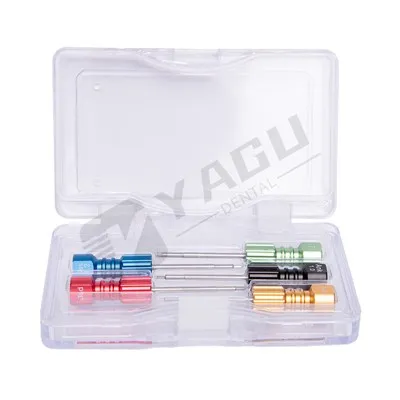
Hey there! As a supplier of straight abutments, I often get asked, "How much does a straight abutment cost?" Well, it's not a one - size - fits - all answer, and in this blog, I'll break down the factors that influence the price and give you a better idea of what to expect.
First off, let's understand what a straight abutment is. A straight abutment is a crucial component in dental implant systems. It connects the dental implant, which is placed in the jawbone, to the dental restoration, like a crown or a bridge. Its straight design makes it suitable for a variety of clinical situations where the implant is placed in an ideal position.
Now, onto the cost. The price of a straight abutment can vary widely, usually ranging from a few dollars to several hundred dollars. There are several reasons for this significant price difference.
Material Quality
One of the biggest factors affecting the cost is the material used to make the straight abutment. The most common materials are titanium and zirconia.
Titanium is a popular choice because it's strong, biocompatible, and relatively affordable. Titanium straight abutments can cost anywhere from around $50 to $200. It has been used in dental implants for a long time and has a proven track record of success. However, some patients may prefer a more aesthetic option, especially for front teeth.
That's where zirconia comes in. Zirconia straight abutments are known for their excellent aesthetics. They can be color - matched to the patient's natural teeth, providing a more seamless look. But this quality comes at a price. Zirconia abutments typically cost between $150 and $350. The higher cost is due to the more complex manufacturing process and the cost of the raw material itself.
Brand and Manufacturer
The brand and manufacturer also play a big role in determining the price. Well - known brands with a long - standing reputation for quality often charge more for their straight abutments. These brands have invested heavily in research and development, ensuring that their products meet the highest standards of safety and performance.
For example, some premium brands may offer straight abutments that are precision - engineered to fit perfectly with their specific implant systems. These high - end products can cost upwards of $300. On the other hand, there are also lesser - known brands that offer more budget - friendly options. These may cost as little as $30 to $100, but you need to be careful. Cheaper products may not have the same level of quality control or long - term reliability.
Customization
Another factor that can affect the cost is customization. Standard straight abutments come in a range of pre - determined sizes and shapes. These are usually the most affordable option. However, in some cases, a patient may require a custom - made straight abutment.


Customization can involve adjusting the length, diameter, or angulation of the abutment to fit the patient's unique oral anatomy. This requires additional time and resources from the manufacturer, which is reflected in the price. Custom straight abutments can cost significantly more than standard ones, sometimes double or even triple the price.
Market Competition
The level of competition in the market also impacts the cost of straight abutments. In areas where there are many suppliers, prices tend to be more competitive. Suppliers may offer discounts or special promotions to attract customers. On the other hand, in regions with limited competition, prices may be higher.
Comparing with Other Abutment Types
It's also interesting to compare the cost of straight abutments with other types of abutments. For instance, the Nobel Multi Unit Abutment is designed to connect multiple implants, which is useful in cases where a patient needs a more complex restoration. These multi - unit abutments are generally more expensive than straight abutments, often costing between $200 and $500 due to their more complex design and functionality.
Angled Abutment Implant is another type. They are used when the implant is placed at an angle, which can happen in some anatomical situations. Angled abutments are more difficult to manufacture than straight ones, so they usually cost more, typically in the range of $150 to $300.
The Multi Angled Abutment offers even more flexibility in terms of angulation. It allows for more precise adjustment to fit the patient's needs. These multi - angled abutments can cost between $250 and $400.
Making a Decision
When it comes to choosing a straight abutment, cost is an important factor, but it shouldn't be the only one. You need to consider the quality of the product, the reputation of the manufacturer, and the specific needs of the patient. A cheaper abutment may save you money in the short term, but if it fails or causes problems in the long run, it could end up costing you more.
As a supplier, I understand that dentists and patients are looking for a balance between quality and cost. That's why I offer a range of straight abutments to suit different budgets and requirements. Whether you're looking for an affordable titanium option or a high - end zirconia abutment, I've got you covered.
If you're a dentist or a dental clinic looking to purchase straight abutments, I'd love to have a chat with you. We can discuss your specific needs, the best options for your patients, and work out a price that works for you. Contact me, and let's start the conversation about getting the right straight abutments for your practice.
References
- Dental Implant Abutment: Materials and Clinical Considerations. Journal of Oral Implantology.
- A Comparative Study of Different Abutment Materials in Dental Implants. International Journal of Dentistry.