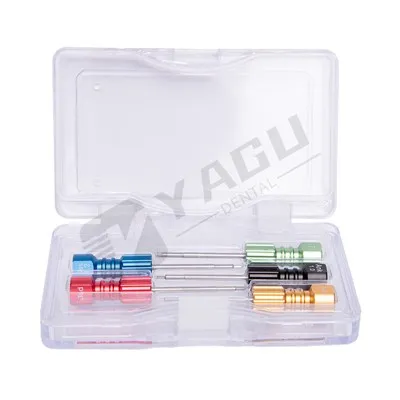
In the realm of dental implantology, the choice of appropriate abutments is crucial for the long - term success of dental implants, especially when dealing with patients who have different gingival biotypes. One product that has been a subject of interest is the Osstem Temporary Abutment. In this blog, we will explore whether the Osstem Temporary Abutment can be effectively used in patients with a thin gingival biotype.
Understanding the Thin Gingival Biotype
The gingival biotype is generally classified into two main types: thick and thin. A thin gingival biotype is characterized by a relatively thin layer of keratinized gingiva, a scalloped gingival margin, and a reduced amount of connective tissue. Patients with a thin gingival biotype are more prone to gingival recession, marginal bone loss, and less favorable aesthetic outcomes compared to those with a thick biotype. This is because the thin gingiva provides less support and protection to the underlying dental implant and bone structure.
Features of Osstem Temporary Abutment
As a supplier of Osstem Temporary Abutments, I can attest to its many features. The Osstem Temporary Abutment is designed to provide a stable connection between the dental implant and the provisional restoration. It is made from high - quality materials that ensure biocompatibility, which is essential to avoid any adverse reactions in the patient's oral cavity.
The abutment comes in various shapes and sizes, allowing for a customized fit based on the patient's specific needs. Its surface finish is carefully engineered to promote soft tissue attachment, which is vital for maintaining the health of the surrounding gingiva. Additionally, the Osstem Temporary Abutment has a precise connection with the implant, which helps in achieving proper occlusion and reducing stress on the implant - bone interface.
Can Osstem Temporary Abutment be Used in Patients with a Thin Gingival Biotype?
Advantages
One of the main advantages of using the Osstem Temporary Abutment in patients with a thin gingival biotype is its ability to support the soft tissue. The well - designed shape of the abutment can help in maintaining the gingival contour, even in patients with a thin gingiva. By providing proper support, it can potentially reduce the risk of gingival recession.
The biocompatible materials used in the Osstem Temporary Abutment also play a significant role. Since patients with a thin gingival biotype are more sensitive, a biocompatible abutment is less likely to cause inflammation or irritation in the surrounding tissue. This can contribute to better long - term soft tissue health.
Moreover, the ability to customize the abutment based on the patient's anatomy is beneficial. In patients with a thin gingival biotype, a properly - sized and shaped abutment can be selected to ensure that it fits well within the oral cavity and provides optimal support to the provisional restoration.
Challenges
However, there are also some challenges when using the Osstem Temporary Abutment in patients with a thin gingival biotype. The thin gingiva may not provide sufficient support for the abutment in some cases. This can lead to instability, which may affect the fit of the provisional restoration and the overall function of the implant.
Another challenge is the potential for increased visibility of the abutment through the thin gingiva. This can have aesthetic implications, especially if the patient has high aesthetic expectations. The color and translucency of the abutment may need to be carefully considered to minimize this issue.
Clinical Considerations
When considering using the Osstem Temporary Abutment in patients with a thin gingival biotype, several clinical factors need to be taken into account.
Pre - operative Assessment
A thorough pre - operative assessment of the patient's gingival biotype, bone quality, and the position of the implant is essential. This can be done through clinical examination, radiographs, and intra - oral scans. By accurately assessing these factors, the dentist can determine whether the Osstem Temporary Abutment is a suitable option for the patient.
Surgical Technique
The surgical technique used to place the abutment is also crucial. In patients with a thin gingival biotype, a more conservative approach may be required to minimize trauma to the surrounding tissue. The dentist should ensure that the abutment is placed at the correct depth and angulation to optimize soft tissue support.
Provisional Restoration
The design and fabrication of the provisional restoration also play a role in the success of using the Osstem Temporary Abutment in patients with a thin gingival biotype. The restoration should be properly contoured to support the soft tissue and provide a natural - looking appearance. It should also fit well with the abutment to ensure stability.
Comparison with Other Products
In the market, there are other products similar to the Osstem Temporary Abutment. For example, the Dentium Multi Unit Impression Coping is another option that can be used in dental implant procedures. While the Dentium Multi Unit Impression Coping is mainly used for taking impressions, it is important to note that the overall treatment process often involves multiple components working together.
The Ti Base Abutment is also a well - known product. It has its own set of features and advantages, but the Osstem Temporary Abutment offers unique benefits such as its customized fit and soft tissue support capabilities, which may be more suitable for patients with a thin gingival biotype in some cases.


The Dentium Abutment Screw is an important component for securing the abutment to the implant. When using the Osstem Temporary Abutment, the appropriate abutment screw should be selected to ensure a stable connection.
Conclusion
In conclusion, the Osstem Temporary Abutment can be used in patients with a thin gingival biotype, but it requires careful consideration of the patient's individual circumstances. While it offers several advantages such as soft tissue support and biocompatibility, there are also challenges that need to be addressed.
As a supplier of the Osstem Temporary Abutment, we are committed to providing high - quality products and supporting dental professionals in making the best decisions for their patients. If you are a dental professional interested in learning more about the Osstem Temporary Abutment or wish to discuss potential procurement, we encourage you to reach out. We are here to assist you in providing the best possible care for your patients.
References
- Salama H, Salama MA. The esthetic zone: The soft tissue challenge. Compend Contin Educ Dent. 2005;26(4):286 - 293.
- Tarnow DP, Magner AW, Fletcher P. The effect of the distance from the contact point to the crest of bone on the presence or absence of the interproximal dental papilla. J Periodontol. 1992;63(12):995 - 996.
- Zitzmann NU, Marinello CP. Aesthetic outcomes of implant therapy with different types of abutments. Int J Oral Maxillofac Implants. 2004;19 Suppl:113 - 122.