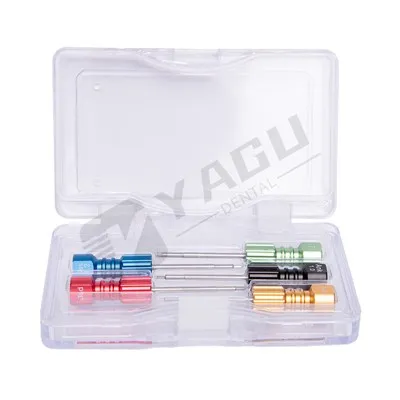
Pre milled abutments play a pivotal role in the field of implant - supported hybrid prostheses. As a pre milled abutment supplier, I've witnessed firsthand the significance of understanding how these components interact with implant - supported hybrid prostheses. This blog aims to delve deep into this interaction, exploring the mechanics, benefits, and challenges involved.
The Basics of Pre Milled Abutments and Implant - Supported Hybrid Prostheses
Pre milled abutments are pre - fabricated components that are designed to fit onto dental implants. They serve as the connection between the implant, which is placed in the jawbone, and the hybrid prosthesis, which is the visible part of the dental restoration. These abutments are typically made from materials such as titanium, zirconia, or a combination of both, offering different levels of strength, biocompatibility, and aesthetics.

Implant - supported hybrid prostheses, on the other hand, are fixed dental restorations that are supported by dental implants. They are often used in cases where multiple teeth are missing, providing a stable and long - lasting solution. Hybrid prostheses can be made from various materials, including acrylic, porcelain, or a combination of these, depending on the patient's needs and preferences.
Interaction Mechanisms
1. Mechanical Fit
The mechanical fit between pre milled abutments and implants is crucial. A precise fit ensures stability and reduces the risk of micro - movements, which can lead to implant failure over time. Pre milled abutments are designed to match the specific dimensions and connection types of different implant systems. For example, some implants use a Morse taper connection, while others use a screw - retained connection. The pre milled abutment must be compatible with the chosen implant system to ensure a proper fit.
The mechanical fit also affects the distribution of occlusal forces. When a patient bites down, the forces are transmitted from the hybrid prosthesis to the abutment and then to the implant. A well - fitting abutment distributes these forces evenly, reducing the stress on the implant and the surrounding bone. This helps to maintain the long - term stability of the implant and the overall success of the restoration.
2. Biological Compatibility
Biological compatibility is another important aspect of the interaction between pre milled abutments and implant - supported hybrid prostheses. The abutment material should be biocompatible to avoid any adverse reactions in the patient's body. Titanium is a commonly used material for pre milled abutments due to its excellent biocompatibility. It forms a strong bond with the surrounding tissues, promoting osseointegration and reducing the risk of inflammation.
Zirconia is also gaining popularity as an abutment material because of its high strength, aesthetics, and biocompatibility. It has a low risk of causing allergic reactions and provides a more natural - looking appearance compared to titanium. However, proper surface treatment of zirconia abutments is necessary to enhance their biological performance.
3. Aesthetic Considerations
The appearance of the pre milled abutment can have a significant impact on the overall aesthetics of the implant - supported hybrid prosthesis. The abutment should blend in seamlessly with the surrounding teeth and gums. Titanium abutments, although strong and biocompatible, may show through the gingival tissue, especially in patients with thin gingiva. In such cases, zirconia abutments are often preferred due to their tooth - colored appearance.

The shape and contour of the pre milled abutment also play a role in aesthetics. A well - designed abutment can help to create a natural - looking emergence profile, which is the way the tooth emerges from the gum tissue. This contributes to a more harmonious and esthetically pleasing smile.
Benefits of Using Pre Milled Abutments in Implant - Supported Hybrid Prostheses
1. Time - Saving
One of the main advantages of using pre milled abutments is the time saved during the treatment process. Unlike custom - made abutments, which require additional laboratory work and multiple appointments, pre milled abutments are ready to use. This reduces the overall treatment time and allows patients to receive their hybrid prostheses more quickly.
2. Cost - Effective
Pre milled abutments are generally more cost - effective than custom - made abutments. The pre - fabrication process allows for mass production, which reduces the manufacturing costs. This cost savings can be passed on to the patients, making implant - supported hybrid prostheses more accessible.
3. Standardization
Pre milled abutments offer a high level of standardization. They are manufactured to strict specifications, ensuring consistent quality and performance. This makes it easier for dental professionals to work with these components and reduces the risk of errors during the treatment process.
Challenges and Solutions
1. Limited Customization
One of the challenges of using pre milled abutments is the limited customization options. Since they are pre - fabricated, they may not fit every patient's unique anatomical requirements perfectly. However, many pre milled abutment systems offer a range of sizes and shapes to accommodate different situations. Additionally, some abutments can be modified slightly in the laboratory to achieve a better fit.
2. Compatibility Issues
Ensuring compatibility between the pre milled abutment, the implant, and the hybrid prosthesis can be a challenge. Different implant systems have different connection types and dimensions, and not all pre milled abutments are compatible with every implant system. Dental professionals need to carefully select the appropriate abutment based on the implant system being used.
To address this issue, as a pre milled abutment supplier, we offer a wide range of abutments that are compatible with various implant systems. We also provide detailed information and technical support to help dental professionals make the right choices.
Role of Related Products in the Process
In addition to pre milled abutments, other products such as Dentium Titanium Scanbody and Dentium Lab Model Analog play important roles in the process of creating implant - supported hybrid prostheses.

The Dentium Titanium Scanbody is used during the digital scanning process. It allows for accurate measurement and visualization of the implant position in the patient's mouth. This information is then used to design the pre milled abutment and the hybrid prosthesis.
The Dentium Lab Model Analog is used in the laboratory to replicate the implant in the patient's mouth. It provides a stable base for the fabrication of the pre milled abutment and the hybrid prosthesis, ensuring a precise fit.
Conclusion
The interaction between pre milled abutments and implant - supported hybrid prostheses is a complex but crucial aspect of modern dental implantology. By understanding the mechanical fit, biological compatibility, and aesthetic considerations, dental professionals can ensure the success of these restorations. Pre milled abutments offer many benefits, including time - saving, cost - effectiveness, and standardization. However, challenges such as limited customization and compatibility issues need to be addressed.
As a Premill Abutment supplier, we are committed to providing high - quality products and excellent technical support. We understand the importance of these components in the dental restoration process and strive to meet the needs of dental professionals and their patients.
If you are interested in purchasing pre milled abutments or have any questions about their interaction with implant - supported hybrid prostheses, please feel free to contact us for a detailed discussion and procurement negotiation.
References
- Misch, C. E. (2018). Dental Implant Prosthetics. Elsevier.
- Salama, H., & Salama, M. A. (2016). The Esthetic Implant Restoration. Quintessence Publishing.
- Tarnow, D. P., & Fletcher, P. (2015). Implant Dentistry: A Comprehensive Approach. Wiley Blackwell.