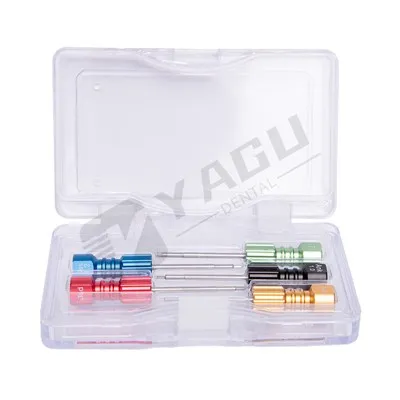
Nobel Temporary Abutments are a crucial component in modern dental implantology. As a dedicated supplier of these high - quality abutments, I've delved deep into understanding how they interact with the saliva in the mouth. This interaction is not only fundamental to the success of dental implants but also affects the overall oral health of patients.
Composition and Structure of Nobel Temporary Abutments
Nobel Temporary Abutments are typically made from biocompatible materials such as titanium. Titanium is well - known for its excellent biocompatibility, corrosion resistance, and mechanical properties. The surface of these abutments is carefully engineered to promote osseointegration and minimize adverse reactions within the oral environment.
The design of Nobel Temporary Abutments allows for a proper fit with the dental implant and the prosthetic restoration. They come in various shapes and sizes to accommodate different clinical situations. The smooth and polished surface of the abutment not only provides a stable foundation for the dental prosthesis but also influences the way saliva interacts with it.
The Role of Saliva in the Oral Cavity
Saliva is a complex biological fluid that plays multiple roles in the oral cavity. It contains water, electrolytes, enzymes, proteins, and various other substances. One of the primary functions of saliva is lubrication. It helps in chewing, swallowing, and speaking by reducing friction between the oral tissues and food particles.
Saliva also has antibacterial and antifungal properties. Enzymes such as lysozyme and peroxidase in saliva can break down the cell walls of bacteria and inhibit their growth. Additionally, saliva contains immunoglobulins that help in the immune defense of the oral cavity. Another important role of saliva is maintaining the pH balance in the mouth. It neutralizes the acids produced by bacteria, which helps prevent tooth decay.
Interaction between Nobel Temporary Abutments and Saliva
Initial Contact
When a Nobel Temporary Abutment is placed in the mouth, it immediately comes into contact with saliva. The first interaction is physical. Saliva forms a thin film on the surface of the abutment. This film acts as a lubricant, reducing the friction between the abutment and the surrounding soft tissues. It also helps in creating a seal around the abutment, preventing the ingress of bacteria and other foreign substances.
The chemical composition of saliva can also have an impact on the surface of the abutment. The electrolytes in saliva, such as sodium, potassium, and chloride, can interact with the titanium surface of the abutment. This interaction may lead to the formation of a passive oxide layer on the titanium surface, which further enhances its corrosion resistance.
Formation of the Salivary Pellicle
Within minutes of contact, a salivary pellicle starts to form on the surface of the Nobel Temporary Abutment. The salivary pellicle is a thin, acellular layer composed of proteins, glycoproteins, and other organic substances from saliva. This pellicle serves as a protective barrier for the abutment surface. It can prevent the direct adhesion of bacteria to the abutment, reducing the risk of biofilm formation.
However, the salivary pellicle can also act as a substrate for the attachment of certain bacteria. Some bacteria have specific receptors that can bind to the proteins in the salivary pellicle. Once attached, these bacteria can start to multiply and form a biofilm. The composition of the salivary pellicle can vary depending on factors such as diet, oral hygiene, and the overall health of the patient. For example, a diet high in sugars can lead to changes in the salivary composition, which may affect the formation and properties of the salivary pellicle on the abutment surface.
Biofilm Formation
If the oral hygiene is not maintained properly, bacteria can start to accumulate on the surface of the Nobel Temporary Abutment. The biofilm that forms on the abutment consists of multiple layers of bacteria embedded in a matrix of extracellular polymeric substances. This biofilm can cause inflammation of the surrounding soft tissues, known as peri - implant mucositis.
The interaction between the abutment and saliva can influence the rate and extent of biofilm formation. A smooth surface of the abutment may reduce the initial attachment of bacteria, while a rough surface can provide more sites for bacterial adhesion. Additionally, the flow of saliva around the abutment can affect the removal of bacteria from its surface. Adequate saliva flow can help in washing away the bacteria and preventing their accumulation.
Impact on Oral Microbiota
The presence of a Nobel Temporary Abutment can also have an impact on the oral microbiota. The oral microbiota is a complex community of bacteria, fungi, and viruses that live in the mouth. The introduction of an abutment can change the local environment in the mouth, which may lead to alterations in the composition of the oral microbiota.
Some studies have shown that the presence of dental implants and abutments can increase the prevalence of certain types of bacteria, such as Porphyromonas gingivalis and Aggregatibacter actinomycetemcomitans, which are associated with periodontal diseases. However, proper oral hygiene and the use of antibacterial mouthwashes can help in maintaining a healthy balance of the oral microbiota.
Clinical Significance of the Interaction
Understanding the interaction between Nobel Temporary Abutments and saliva is of great clinical significance. It can help in improving the design of the abutments to reduce the risk of biofilm formation and peri - implant diseases. For example, surface modifications of the abutment, such as micro - texturing or the application of antibacterial coatings, can be used to prevent bacterial adhesion.
Proper patient education about oral hygiene is also crucial. Patients should be instructed to brush their teeth and the abutment regularly, use interdental brushes, and rinse with an antibacterial mouthwash. This can help in maintaining a healthy oral environment around the abutment and ensuring the long - term success of the dental implant.
Related Products and Their Interaction with Saliva
In addition to Nobel Temporary Abutments, there are other related products in the field of dental implants, such as Ti Base Abutment, Dentium Titanium Scanbody, and Pre Milled Abutment. These products also interact with saliva in the mouth.
Ti Base Abutments, like Nobel Temporary Abutments, are made of titanium and are in contact with saliva. The interaction between Ti Base Abutments and saliva is similar in terms of the formation of the salivary pellicle and the potential for biofilm formation. However, the design and surface characteristics of Ti Base Abutments may be different, which can affect the rate and extent of these interactions.
Dentium Titanium Scanbodies are used for digital impressions in dental implantology. They are also exposed to saliva during the scanning process. The saliva can form a film on the surface of the scanbody, which may affect the accuracy of the digital impression. Therefore, proper cleaning and drying of the scanbody before scanning are essential.
Pre Milled Abutments are pre - fabricated abutments that are customized to fit the patient's dental implant. The interaction between Pre Milled Abutments and saliva is similar to that of other abutments. However, the milling process can affect the surface roughness of the abutment, which can influence the adhesion of bacteria and the formation of biofilm.
Conclusion
The interaction between Nobel Temporary Abutments and saliva in the mouth is a complex process that involves physical, chemical, and biological factors. Understanding this interaction is crucial for the success of dental implants and the maintenance of oral health. As a supplier of Nobel Temporary Abutments, I am committed to providing high - quality products and promoting research in this area to improve the clinical outcomes of dental implant treatments.
If you are interested in purchasing Nobel Temporary Abutments or other related dental implant products, I encourage you to reach out for a procurement discussion. We can provide you with detailed product information, pricing, and technical support to meet your specific needs.


References
- Armitage GC. Development of a classification system for periodontal diseases and conditions. Ann Periodontol. 1999;4(1):1 - 6.
- Lang NP, Karring T. Clinical periodontology and implant dentistry. Blackwell Munksgaard; 2005.
- Quirynen M, van Steenberghe D. Microbiology of implant - related infections. Clin Oral Implants Res. 1999;10(5):391 - 401.