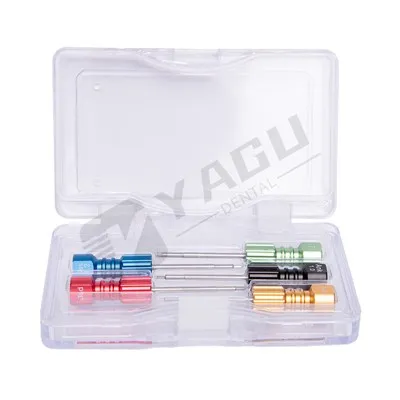
Nobel Temporary Abutments are essential components in dental implant procedures, playing a crucial role in the overall success of the implant treatment. As a leading supplier of Nobel Temporary Abutments, I have witnessed firsthand the significant influence these abutments have on the gingival health around the implant. In this blog post, I will delve into the various ways in which Nobel Temporary Abutments impact gingival health and why they are a preferred choice for many dental professionals.
The Importance of Gingival Health in Implant Dentistry
Gingival health is of utmost importance in implant dentistry as it directly affects the long - term success and stability of dental implants. Healthy gingiva provides a biological seal around the implant, protecting it from bacteria and other harmful substances in the oral cavity. This seal helps prevent peri - implantitis, a common complication in implant dentistry that can lead to bone loss and eventual implant failure.
The gingiva also plays a role in the esthetics of the implant restoration. Well - maintained gingival tissue can enhance the natural appearance of the implant, making it blend seamlessly with the surrounding teeth. Therefore, any factor that can positively influence gingival health is highly valuable in implant treatment.
How Nobel Temporary Abutments Influence Gingival Health
1. Material Compatibility
Nobel Temporary Abutments are typically made from high - quality materials such as titanium or zirconia. Titanium is a biocompatible material that has been widely used in dental implants for decades. It has excellent corrosion resistance and can integrate well with the surrounding tissues. When in contact with the gingiva, titanium abutments are less likely to cause an allergic reaction or inflammation, which helps maintain the health of the gingival tissue.
Zirconia, on the other hand, is a ceramic material that offers good esthetics in addition to biocompatibility. It has a white color similar to natural teeth, which can be beneficial for the esthetic outcome of the implant restoration. Zirconia abutments also have a smooth surface, which can reduce the accumulation of plaque and bacteria on the abutment, thereby promoting better gingival health.
2. Design Features
The design of Nobel Temporary Abutments is carefully engineered to promote gingival health. These abutments often have a smooth transition from the implant body to the abutment surface. This smooth transition helps prevent food debris and bacteria from getting trapped in the area between the implant and the abutment, reducing the risk of inflammation and infection.
Moreover, the shape of the Nobel Temporary Abutments is designed to mimic the natural contours of the teeth and gingiva. This anatomical design allows the gingival tissue to adapt well to the abutment, forming a tight seal around it. A well - fitting abutment can also help guide the proper growth and development of the gingival tissue, leading to better long - term gingival health.
3. Ease of Placement and Removal
Proper placement and removal of the temporary abutment are crucial for maintaining gingival health. Nobel Temporary Abutments are designed to be easily placed and removed by dental professionals. During the placement process, the abutment can be accurately positioned, minimizing trauma to the surrounding gingival tissue.
When it is time to remove the temporary abutment, the process is also relatively straightforward. Minimizing the trauma during removal helps prevent damage to the gingiva, allowing it to heal quickly and maintain its healthy state. This ease of use ensures that the gingival tissue is not subjected to unnecessary stress during the implant treatment process.
4. Compatibility with Other Implant Components
Nobel Temporary Abutments are designed to be compatible with other implant components, such as Dentium Multi Unit Impression Coping and Dentium Abutment Screw. This compatibility ensures a proper fit and connection between different parts of the implant system.
A well - connected implant system reduces the risk of micro - leakage, which can allow bacteria to penetrate into the peri - implant area. By preventing micro - leakage, Nobel Temporary Abutments help maintain a healthy environment around the implant, protecting the gingiva from potential infections.
Comparison with Other Temporary Abutments
When compared to other temporary abutments in the market, such as Straumann Temporary Abutment, Nobel Temporary Abutments offer several advantages in terms of gingival health.
While Straumann Temporary Abutments also have their own features and benefits, Nobel Temporary Abutments are known for their high - quality materials and precise design. The material compatibility and smooth surface of Nobel Temporary Abutments can lead to better long - term gingival health outcomes. Additionally, the wide range of available sizes and shapes of Nobel Temporary Abutments allows for a more customized fit, which is beneficial for the gingival tissue.


Conclusion
In conclusion, Nobel Temporary Abutments have a significant influence on the gingival health around the implant. Their material compatibility, design features, ease of placement and removal, and compatibility with other implant components all contribute to maintaining a healthy gingival environment. By promoting gingival health, these abutments help improve the long - term success and esthetics of dental implant treatments.
If you are a dental professional looking for high - quality Nobel Temporary Abutments to enhance your implant procedures, I encourage you to reach out to me for more information. We are committed to providing the best products and services to meet your needs. Whether you have questions about product specifications, pricing, or delivery, I am here to assist you. Let's start a conversation and explore how our Nobel Temporary Abutments can make a difference in your dental practice.
References
- Armitage GC. Development of a classification system for periodontal diseases and conditions. Ann Periodontol. 1999;4(1):1 - 6.
- Buser D, Martin W, Belser UC. Optimizing esthetics for implant restorations with short clinical crowns: anatomic and surgical considerations. Int J Oral Maxillofac Implants. 2004;19 Suppl:43 - 61.
- Cochran DL. The biology of implant - surface interactions. Periodontol 2000. 2001;26:73 - 99.