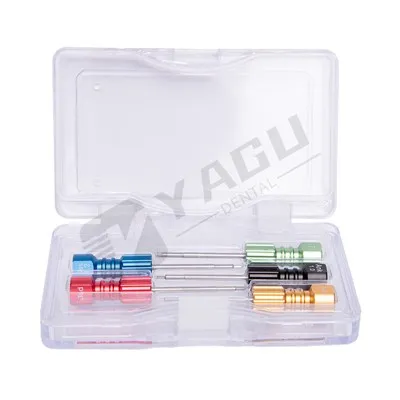
As a supplier of Nobel Ti Base, I've often encountered inquiries regarding its applicability in pediatric dentistry. This topic is not only relevant but also crucial for dental professionals seeking the best solutions for young patients. In this blog, we'll explore the potential use of Nobel Ti Base in pediatric dentistry, considering its properties, advantages, and limitations.
Understanding Nobel Ti Base
Nobel Ti Base is a high - quality titanium - based dental component. Titanium is well - known in the dental industry for its excellent biocompatibility. It has the ability to integrate well with the surrounding bone tissue, a process known as osseointegration. This property is fundamental for the long - term success of dental implants. The surface of Nobel Ti Base is often treated to enhance this osseointegration process, promoting faster and more stable bonding with the bone.
The base also offers good mechanical properties. It can withstand the forces exerted during chewing and biting, ensuring the durability of the dental restoration. Its precise design allows for a proper fit with other dental components, such as abutments and crowns, which is essential for achieving a functional and aesthetically pleasing dental prosthesis.
Pediatric Dentistry: Special Considerations
Pediatric dentistry presents unique challenges compared to adult dentistry. Children's teeth and jaws are still in the process of development. Their bone structure is more dynamic, with ongoing growth and remodeling. This means that any dental intervention in children needs to be carefully planned to avoid interfering with normal growth.
Another important aspect is the psychological factor. Children may be more anxious and less cooperative during dental procedures compared to adults. Therefore, dental treatments should be as minimally invasive and comfortable as possible.
Potential Use of Nobel Ti Base in Pediatric Dentistry
In cases of congenital tooth absence
Some children are born with missing teeth, a condition known as congenital tooth absence. In such cases, dental implants can be a viable option to restore the function and aesthetics of the dentition. Nobel Ti Base, with its excellent osseointegration properties, can potentially be used as part of the implant system.
However, the timing of implant placement is critical. In children, the growth of the jaws and the eruption of permanent teeth need to be taken into account. Implant placement should be delayed until the jaws have reached a sufficient level of development. This usually occurs in the late teenage years, but it can vary depending on the individual child's growth pattern.


For traumatic tooth loss
Children are more prone to accidents, which can result in tooth loss. If a permanent tooth is lost due to trauma, and the surrounding bone is in good condition, a dental implant with a Nobel Ti Base could be considered. The biocompatibility of titanium reduces the risk of rejection and inflammation, which is especially important in the developing oral environment of a child.
In combination with other dental components
Nobel Ti Base can be used in conjunction with other high - quality dental parts. For example, Osstem Healing Cap can be used during the healing phase after implant placement. It helps to protect the implant site and guide the soft tissue healing. Dentium Multi Unit Analog and Dentium Multi Unit Impression Coping can also be used in the process of fabricating a custom - made dental prosthesis, ensuring a precise fit and optimal functionality.
Limitations and Challenges
Growth interference
One of the main concerns when using Nobel Ti Base or any dental implant in pediatric patients is the potential interference with jaw growth. Since the implant becomes integrated with the bone, it may act as a fixed point that could restrict the normal growth and movement of the jaws. This could lead to malocclusion or other orthodontic problems in the future.
Long - term follow - up
Children require long - term follow - up after implant placement. As they grow, the position of the implant may need to be adjusted to accommodate the changes in the jaws. This requires a high level of expertise and regular monitoring by a pediatric dentist or an orthodontist.
Cost and accessibility
Dental implant procedures, including the use of Nobel Ti Base, can be expensive. This may pose a financial burden on some families. Additionally, not all dental clinics may have the necessary equipment and expertise to perform implant procedures in pediatric patients.
Conclusion
The use of Nobel Ti Base in pediatric dentistry is a complex issue with both potential benefits and significant challenges. While it can offer a solution for some cases of congenital tooth absence or traumatic tooth loss, careful consideration of the child's growth stage, long - term follow - up requirements, and potential risks is essential.
As a supplier of Nobel Ti Base, I understand the importance of providing high - quality products and relevant information to dental professionals. If you are a dentist interested in exploring the use of Nobel Ti Base in pediatric dentistry or have any questions about our products, I encourage you to contact us for a procurement discussion. We are committed to working with you to find the best dental solutions for your young patients.
References
- American Academy of Pediatric Dentistry. Guidelines for care in pediatric dentistry.
- Journal of Pediatric Dentistry. Various articles on dental implant use in children.
- Textbooks on dental implantology and pediatric dentistry.