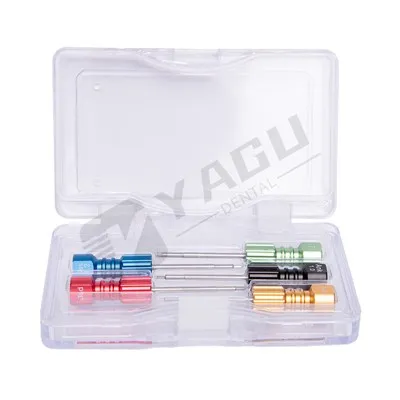
Ensuring the proper fit of an implant abutment is a critical aspect in the field of dental implantology. As a supplier of implant abutments, I understand the significance of this process and the impact it has on the overall success of dental implant procedures. In this blog, I will share some key considerations and strategies to ensure the proper fit of an implant abutment.
Understanding the Importance of Proper Fit
The proper fit of an implant abutment is essential for several reasons. Firstly, it ensures the stability and longevity of the dental implant. A well - fitting abutment distributes the occlusal forces evenly across the implant and the surrounding bone, reducing the risk of implant failure due to overloading. Secondly, it affects the esthetics of the final restoration. A precisely fitting abutment allows for the creation of a natural - looking crown or prosthesis that blends seamlessly with the patient's existing teeth. Finally, a proper fit is crucial for maintaining oral hygiene. A tight seal between the abutment and the implant prevents the ingress of bacteria, which can lead to peri - implantitis and other complications.
Pre - operative Planning
One of the first steps in ensuring a proper fit is thorough pre - operative planning. This involves a detailed assessment of the patient's oral condition, including the bone quality, quantity, and anatomy. Advanced imaging techniques such as cone - beam computed tomography (CBCT) can provide valuable information about the implant site, allowing for accurate implant placement.
During the planning phase, it is also important to select the appropriate implant system and abutment type. Different implant systems have specific requirements for abutment connection, and choosing the wrong abutment can lead to a poor fit. For example, some implants use a Morse taper connection, while others use a screw - retained or cement - retained connection. At our company, we offer a wide range of abutments, including Straight Abutment, which is suitable for many straightforward cases, and multi - unit abutments like Straumann Multi Unit Abutment and Nobel Multi Unit Abutment for more complex restorations.
Implant Placement
Accurate implant placement is fundamental to achieving a proper fit of the abutment. The implant should be placed at the correct depth, angulation, and position within the bone. This requires the use of surgical guides, which can be fabricated based on the pre - operative planning. Surgical guides help the surgeon to place the implant precisely according to the planned parameters, reducing the margin of error.
During the implant placement procedure, it is important to ensure that the implant is inserted with the correct torque. Over - tightening or under - tightening the implant can affect its stability and the subsequent fit of the abutment. Our abutments are designed to work in harmony with a variety of implant systems, and we provide detailed instructions on the recommended torque values for each connection type.
Abutment Selection and Customization
Once the implant has been successfully placed, the next step is to select the appropriate abutment. In addition to considering the implant system, factors such as the patient's occlusal requirements, gingival height, and esthetic goals should also be taken into account.
In some cases, a standard abutment may be sufficient. However, for patients with unique anatomical features or specific esthetic needs, a customized abutment may be necessary. Customized abutments can be fabricated using CAD/CAM technology, which allows for precise design and manufacturing based on the patient's individual requirements. This ensures a better fit and a more natural - looking restoration.
Verification of Fit
Before finalizing the restoration, it is crucial to verify the fit of the abutment. This can be done using a variety of methods. One common approach is the use of a try - in abutment, which is a temporary abutment that can be placed on the implant to check the fit and alignment. The try - in abutment allows the dentist to make any necessary adjustments before proceeding with the final restoration.
Another method is the use of a torque wrench to measure the tightening torque of the abutment. A consistent and appropriate torque value indicates a proper fit. Additionally, visual inspection and radiographic evaluation can be used to assess the fit of the abutment. Any signs of misalignment, gaps, or improper seating should be addressed before the final restoration is placed.
Post - operative Monitoring
After the final restoration has been placed, post - operative monitoring is essential to ensure the long - term success of the implant and the proper fit of the abutment. Regular follow - up appointments should be scheduled to assess the patient's oral health, including the condition of the implant, abutment, and surrounding tissues.
During these appointments, the dentist can check for any signs of complications, such as peri - implant inflammation, loosening of the abutment, or wear of the restoration. Early detection and intervention can prevent more serious problems from developing and ensure the continued proper fit of the abutment.
Conclusion
Ensuring the proper fit of an implant abutment is a multi - step process that requires careful planning, accurate implant placement, appropriate abutment selection, and thorough verification. As a supplier of implant abutments, we are committed to providing high - quality products and comprehensive support to dental professionals. Our range of abutments, including Straight Abutment, Straumann Multi Unit Abutment, and Nobel Multi Unit Abutment, is designed to meet the diverse needs of dental implant procedures.
If you are a dental professional looking for reliable implant abutments and expert advice on ensuring proper fit, we invite you to contact us for procurement and further discussion. Our team of experts is ready to assist you in achieving the best possible outcomes for your patients.


References
- Misch, C. E. (2018). Contemporary Implant Dentistry. Quintessence Publishing.
- Buser, D., Martin, W., & Belser, U. C. (2004). Optimized planning and placement of implant restorations. Quintessence Publishing.
- Tarnow, D. P., & Elian, N. (2012). Dental Implant Prosthetics. Wiley - Blackwell.