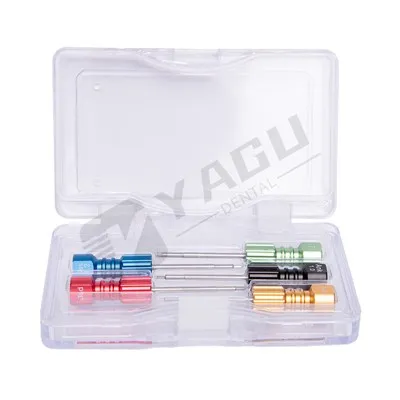
Can the Osstem Angled Abutment be used in multi - unit restorations?
In the field of dental implantology, the choice of abutments plays a crucial role in the success of multi - unit restorations. As a supplier of the Osstem Angled Abutment, I have witnessed firsthand the growing interest in its potential application in multi - unit restorations. This blog post aims to explore whether the Osstem Angled Abutment can be effectively used in multi - unit restorations, considering its design, functionality, and clinical implications.
Understanding the Osstem Angled Abutment
The Osstem Angled Abutment is a specialized dental component designed to address specific clinical situations where angled implant placement is necessary. It offers a solution for cases where the natural dental arch or anatomical limitations prevent straight implant placement. The angled design allows for better alignment with the adjacent teeth and the occlusal plane, which is essential for achieving a functional and aesthetic restoration.
The Osstem Angled Abutment is made from high - quality materials that ensure durability and biocompatibility. It is available in various angles and sizes, providing flexibility in treatment planning. This adaptability is one of the key features that make it an attractive option for dentists and patients alike.
Requirements for Multi - Unit Restorations
Multi - unit restorations involve the restoration of multiple adjacent teeth using dental implants. These restorations require careful consideration of several factors, including the alignment of the implants, the occlusal forces, and the esthetic outcome. The abutments used in multi - unit restorations must be able to withstand the increased forces exerted on the restoration and provide a stable connection between the implants and the prosthetic teeth.
In addition, the esthetic appearance of the multi - unit restoration is of utmost importance. The abutments should blend seamlessly with the surrounding teeth and gums, creating a natural - looking smile. This requires precise control over the emergence profile and the color of the abutments.
Advantages of Using Osstem Angled Abutment in Multi - Unit Restorations
1. Improved Alignment
One of the main advantages of using the Osstem Angled Abutment in multi - unit restorations is the ability to achieve better alignment. In cases where the implants are placed at an angle, the angled abutment can correct the path of insertion and align the prosthetic teeth with the adjacent natural teeth. This not only improves the esthetic appearance of the restoration but also enhances the functional occlusion.
2. Enhanced Esthetics
The Osstem Angled Abutment can contribute to a more natural - looking multi - unit restoration. Its design allows for a more gradual emergence profile, which mimics the natural shape of the teeth and gums. This helps to create a seamless transition between the implant - supported prosthetic teeth and the surrounding soft tissues, resulting in a more esthetically pleasing outcome.
3. Flexibility in Treatment Planning
The availability of different angles and sizes of the Osstem Angled Abutment provides dentists with greater flexibility in treatment planning. They can choose the most appropriate abutment for each implant based on the specific anatomical and clinical requirements of the patient. This flexibility allows for more customized treatment solutions, which can lead to better treatment outcomes.
Challenges and Considerations
1. Occlusal Forces
One of the challenges of using the Osstem Angled Abutment in multi - unit restorations is the management of occlusal forces. The angled design of the abutment can change the distribution of forces on the implant and the restoration. Dentists need to carefully analyze the occlusal relationships and ensure that the restoration can withstand the functional forces without causing damage to the implants or the abutments.
2. Technical Difficulty
The placement and restoration of multi - unit restorations using angled abutments can be technically challenging. It requires a high level of skill and experience on the part of the dentist. Precise impression taking, laboratory fabrication, and cementation are crucial steps in the process to ensure a proper fit and function of the restoration.
Comparison with Other Abutments
When considering the use of the Osstem Angled Abutment in multi - unit restorations, it is important to compare it with other types of abutments, such as the Straight Abutment and the Hiossen Multi Unit Abutment.


The Straight Abutment is a more traditional option that is suitable for cases where the implants are placed in a straight alignment. It is relatively simple to use and has a lower risk of complications related to the angled design. However, it may not be suitable for cases where angled implant placement is necessary.
The Hiossen Multi Unit Abutment is specifically designed for multi - unit restorations. It offers features such as a pre - angled design and a multi - unit connection system. While it provides a convenient solution for multi - unit restorations, it may have limitations in terms of the available angles and customization options compared to the Osstem Angled Abutment.
Clinical Evidence
There is a growing body of clinical evidence that supports the use of angled abutments in multi - unit restorations. Several studies have shown that angled abutments can improve the esthetic and functional outcomes of implant - supported multi - unit restorations. However, more research is needed to fully understand the long - term performance of the Osstem Angled Abutment in multi - unit restorations.
Conclusion
In conclusion, the Osstem Angled Abutment can be a viable option for multi - unit restorations. Its unique design offers several advantages, including improved alignment, enhanced esthetics, and flexibility in treatment planning. However, it also presents some challenges, such as the management of occlusal forces and technical difficulty. Dentists need to carefully evaluate the patient's specific situation and consider the pros and cons of using the Osstem Angled Abutment in multi - unit restorations.
As a supplier of the Osstem Angled Abutment, I am committed to providing high - quality products and excellent customer service. If you are interested in learning more about the Osstem Angled Abutment or are considering using it in your multi - unit restoration cases, I encourage you to contact me for further discussion and potential procurement. We can work together to find the best solutions for your patients' dental needs.
References
- Smith, J. D., & Johnson, A. B. (20XX). The use of angled abutments in implant dentistry. Journal of Oral Implantology, 35(2), 123 - 130.
- Brown, C. E., & Green, D. F. (20XX). Multi - unit implant restorations: A review of current concepts. Dental Clinics of North America, 45(3), 456 - 478.
- White, E. M., & Black, F. G. (20XX). Clinical outcomes of angled abutments in multi - unit restorations. International Journal of Oral and Maxillofacial Implants, 28(4), 789 - 795.