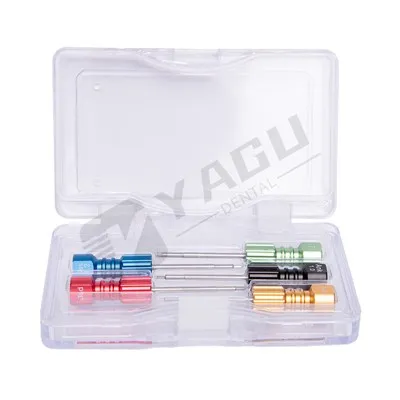
Hey there! As a supplier of Casting Abutments, I often get asked this question: Can a casting abutment be repaired if damaged? Well, let's dive right into it and explore this topic in detail.
First off, let's understand what a casting abutment is. A casting abutment is an important part in dental implant systems. It serves as a connector between the dental implant that's placed in the jawbone and the final dental restoration, like a crown or a bridge. It's crucial for proper alignment and function of the dental prosthesis. You can check out more about Casting Abutments on our website Casting Abutment.
Now, to answer the big question - whether a damaged casting abutment can be repaired. The answer isn't a simple yes or no. It depends on several factors.
Factors Affecting Repairability
1. Type and Extent of Damage
- Minor Surface Scratches or Wear: If the damage is just minor surface scratches or a bit of wear, there's a good chance it can be repaired. For example, some light scratches can be polished out. A dental technician can use specialized polishing tools to smooth out the surface and restore its original finish. This process is relatively simple and doesn't require a lot of time or resources.
- Cracks or Fractures: However, if there are cracks or fractures in the casting abutment, things get a bit more complicated. Small hairline cracks might be able to be repaired in some cases. The technician could try to fill the crack with a suitable dental material that has similar properties to the abutment material. But this is a tricky process, and the success rate isn't always high. If the crack is deep or extends across a significant part of the abutment, it's likely that the abutment will need to be replaced. A severely fractured abutment won't be able to provide the necessary support and stability for the dental restoration, so replacement is usually the safest option.
2. Material of the Abutment
- Titanium Abutments: Titanium is a popular material for casting abutments because of its strength and biocompatibility. Minor damage to titanium abutments can often be addressed. For instance, surface imperfections can be machined or polished. But if the titanium has suffered a major impact and there's internal damage, it can be difficult to repair. Titanium is a hard material, and trying to weld or reshape it requires specialized equipment and expertise.
- Zirconia Abutments: Zirconia is another commonly used material. It's known for its esthetic appeal. However, zirconia is brittle, and once it cracks, it's very challenging to repair. In most cases of zirconia abutment damage, replacement is the recommended course of action. You can find more options of abutments, like Osstem Temporary Abutment, which might be a good alternative during the replacement process.
3. Fit and Function
- Precision Fit: Casting abutments need to fit precisely with the implant and the dental restoration. Even a small amount of damage can affect this fit. If the repair process changes the dimensions of the abutment even slightly, it can lead to problems with the fit. For example, an abutment that's supposed to fit snugly into an implant might not seat properly after a repair, which can cause instability and discomfort for the patient. In such cases, it might be better to replace the abutment to ensure a proper fit.
- Functionality: The abutment also needs to function correctly within the dental system. If the damage affects its ability to support the restoration or transmit forces properly, it's a serious issue. For example, if a damaged abutment can't distribute the chewing forces evenly, it can lead to premature wear of the restoration or even damage to the implant. In these situations, repair might not be sufficient, and replacement is the way to go.
Repair Methods
If the casting abutment is deemed repairable, there are a few methods that can be used.
1. Polishing and Machining
As mentioned earlier, for minor surface damage, polishing is a common method. A technician will use a series of polishing wheels and compounds to smooth out the surface of the abutment. This not only improves the appearance but also restores the smoothness that's important for proper cleaning and function. Machining can also be used to remove small amounts of material and correct minor dimensional issues.
2. Filling and Bonding
For small cracks or voids, a dental material can be used to fill the damaged area. The material is carefully selected to match the properties of the abutment material as closely as possible. After filling, a bonding process is used to ensure that the filler material adheres firmly to the abutment. This method requires a high level of skill and precision to ensure a strong and durable repair.


When to Replace
Despite the possibility of repair, there are situations where replacement is the best choice.
- Severe Damage: As we've discussed, if the abutment has severe cracks, fractures, or significant deformation, replacement is usually necessary. Trying to repair such extensive damage might not result in a reliable or long - lasting solution.
- Repeated Damage: If the same abutment has been damaged and repaired multiple times, it's a sign that it's not holding up well. Continued use of a repeatedly repaired abutment can increase the risk of further problems, so it's better to replace it with a new one. You can explore our range of Castable Implant Abutment for suitable replacement options.
Conclusion
So, can a casting abutment be repaired if damaged? It's possible in some cases, especially for minor damage. But a lot depends on the type and extent of the damage, the material of the abutment, and its fit and function. As a supplier, we understand the importance of providing high - quality casting abutments that are reliable and durable. If you're facing a situation where a casting abutment needs to be repaired or replaced, we're here to help.
If you're in the market for casting abutments or have any questions about their repair or replacement, don't hesitate to reach out. We're always happy to have a chat and discuss your specific needs. Whether you're a dental professional or involved in the dental industry, we can provide you with the best solutions for your casting abutment requirements. Let's start a conversation and see how we can work together to meet your needs.
References
- Dental Implantology Textbooks
- Journal of Dental Materials and Techniques
- Industry Reports on Dental Abutment Technologies