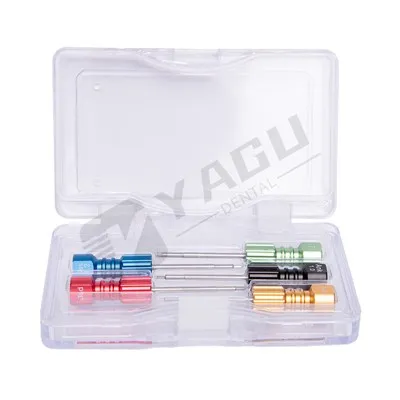
As a supplier of Osstem Temporary Abutment, ensuring the quality of our products is of utmost importance. The Osstem Temporary Abutment plays a crucial role in the dental implant process, providing a stable connection between the implant and the prosthetic restoration during the healing phase. In this blog post, I will share some key methods and considerations on how to check the quality of Osstem Temporary Abutment.
1. Visual Inspection
The first step in checking the quality of an Osstem Temporary Abutment is a thorough visual inspection. Begin by examining the surface finish of the abutment. A high - quality Osstem Temporary Abutment should have a smooth and even surface. Any visible scratches, pits, or irregularities can be a sign of poor manufacturing quality or damage during handling.
Look closely at the shape of the abutment. It should conform precisely to the design specifications. Deviations in shape can affect the fit with the implant and the prosthetic restoration, leading to instability and potential complications. Check for proper alignment of any grooves or channels on the abutment, which are designed to ensure correct seating and function.
2. Material Quality
The material used in the Osstem Temporary Abutment is a critical factor in determining its quality. Osstem typically uses high - grade titanium or titanium alloys for its abutments. Titanium is known for its biocompatibility, corrosion resistance, and strength.
To verify the material quality, you can request material certificates from the manufacturer. These certificates provide detailed information about the composition and properties of the material. You can also perform simple tests, such as checking for magnetic properties. Titanium is non - magnetic, so if the abutment shows any magnetic attraction, it may indicate the presence of incorrect or low - quality materials.
3. Fit and Compatibility
One of the most important aspects of an Osstem Temporary Abutment is its fit with the implant. A proper fit ensures a stable connection and optimal function. To check the fit, you can use a torque wrench to measure the tightening torque. The tightening torque should fall within the recommended range specified by Osstem. If the torque is too low, the abutment may become loose, leading to micro - movements that can cause bone resorption and implant failure. If the torque is too high, it can damage the implant or the abutment.


In addition to the fit with the implant, the Osstem Temporary Abutment should also be compatible with other dental components, such as the Tibase, Osstem Healing Cap, and Dentium Multi Unit Screw. You can test the compatibility by trying to assemble the components together. They should fit snugly without any excessive force or gaps.
4. Dimensional Accuracy
Dimensional accuracy is essential for the proper function of the Osstem Temporary Abutment. The abutment should have the correct diameter, length, and angulation. You can use precision measuring tools, such as calipers and micrometers, to measure the dimensions of the abutment. Compare the measured values with the manufacturer's specifications. Any significant deviations can affect the fit with the implant and the prosthetic restoration.
5. Surface Hardness
The surface hardness of the Osstem Temporary Abutment is an important property that affects its wear resistance and durability. A harder surface is less likely to be scratched or damaged during normal use. You can use a hardness tester to measure the surface hardness of the abutment. The hardness should be within the range specified by the manufacturer.
6. Sterility
Since the Osstem Temporary Abutment is used in a surgical environment, it must be sterile. Check the packaging of the abutment to ensure that it is intact and has not been tampered with. The packaging should also indicate the sterilization method used and the expiration date of the sterility. If possible, you can also request sterilization certificates from the manufacturer.
7. Documentation and Traceability
Good quality Osstem Temporary Abutments come with proper documentation. This includes product specifications, material certificates, sterilization certificates, and lot numbers. The lot number is particularly important as it allows for traceability. In case of any quality issues or recalls, the lot number can be used to identify the specific batch of abutments.
8. Performance Testing
In addition to the above - mentioned checks, performance testing can also be carried out. This can involve simulating the actual clinical conditions to evaluate the performance of the Osstem Temporary Abutment. For example, you can test the abutment's resistance to fatigue by subjecting it to cyclic loading. You can also test its resistance to corrosion by exposing it to a simulated oral environment.
Conclusion
Checking the quality of Osstem Temporary Abutment is a comprehensive process that involves multiple aspects. By following the methods and considerations outlined in this blog post, you can ensure that the abutments you supply or use are of high quality. This not only helps to ensure the success of dental implant procedures but also builds trust with your customers.
If you are interested in purchasing high - quality Osstem Temporary Abutments or have any questions about our products, please feel free to contact us for procurement discussions. We are committed to providing you with the best products and services.
References
- Osstem Product Manuals
- Dental Implant Standards and Guidelines
- Research Papers on Dental Implant Materials and Components