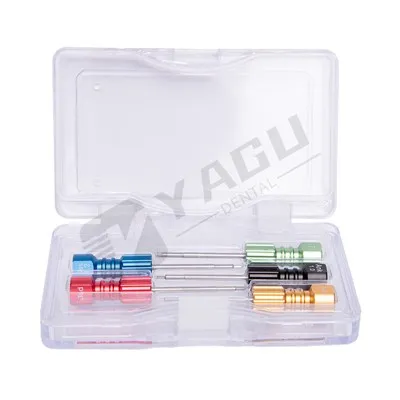
When it comes to dental implants, angled abutment implants play a crucial role in achieving optimal aesthetic and functional outcomes. As a leading supplier of Angled Abutment Implant, I've witnessed firsthand the significance of choosing the right angle for these implants. In this blog post, we'll explore the most commonly used angles for angled abutment implants and understand why they are so popular in the dental industry.
Understanding Angled Abutment Implants
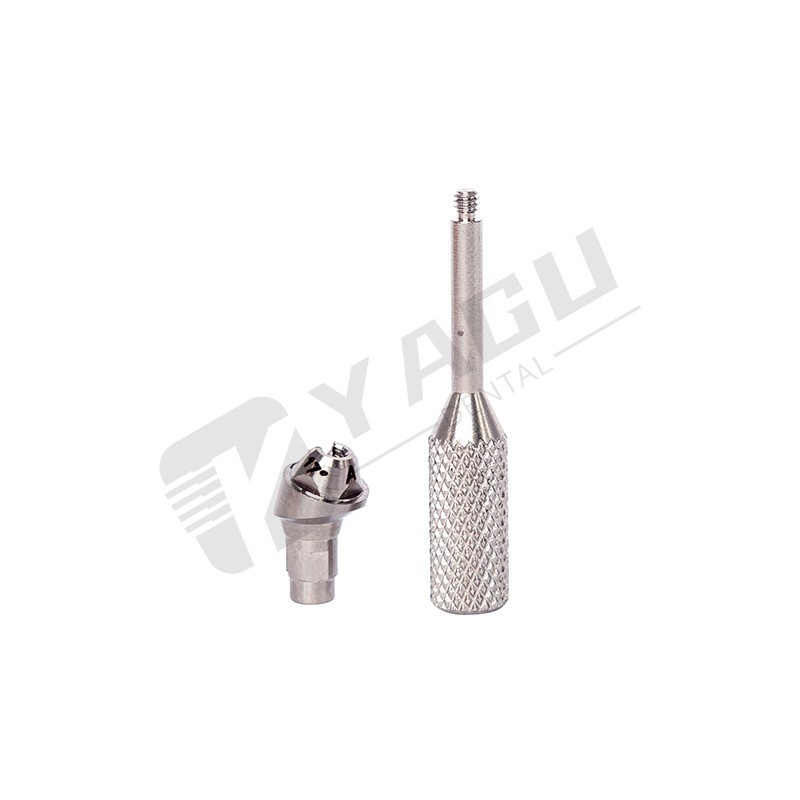
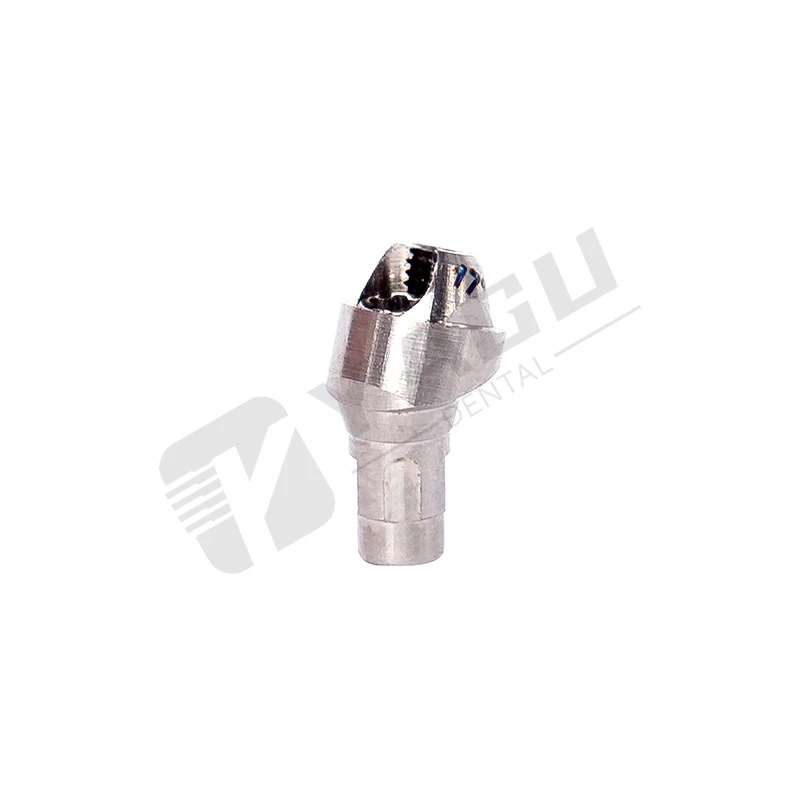
Before delving into the commonly used angles, it's essential to understand what angled abutment implants are. An abutment is a small connector that attaches the dental implant (which is placed in the jawbone) to the artificial tooth or crown. Angled abutments, as the name suggests, have a specific angle built into them. This angling is designed to correct for misaligned implant placement, improve the emergence profile of the restoration, and enhance the overall fit and function of the dental prosthesis.
Commonly Used Angles
15 - Degree Angled Abutments
The 15 - degree angled abutment is one of the most frequently used angles in dental implantology. This relatively small angle provides a subtle correction, making it ideal for minor misalignments. For instance, if an implant is placed slightly off - axis, a 15 - degree angled abutment can help align the crown properly with the adjacent teeth. It also allows for a more natural emergence of the restoration, which is crucial for achieving a seamless aesthetic result.
In cases where the implant position is only slightly deviated from the ideal, using a 15 - degree angled abutment can save time and resources. Instead of re - implanting the fixture, which can be a more invasive procedure, the 15 - degree angled abutment can be used to correct the alignment without significant disruption to the patient's oral health.
30 - Degree Angled Abutments
The 30 - degree angled abutment is another popular choice. It offers a more substantial correction compared to the 15 - degree angle. This angle is often used when there is a moderate misalignment of the implant. For example, in cases where the implant has been placed at an angle due to anatomical limitations such as the presence of nerve canals or sinuses, a 30 - degree angled abutment can be used to bring the crown into proper alignment with the occlusal plane.
From a functional perspective, a 30 - degree angled abutment can help distribute the occlusal forces more evenly. When the crown is properly aligned, it can function more effectively during chewing, reducing the risk of premature wear and damage to the restoration.
45 - Degree Angled Abutments
The 45 - degree angled abutment is used for more severe misalignments. In complex cases where the implant placement has been significantly off - target, this angle can provide the necessary correction. However, using a 45 - degree angled abutment requires careful consideration. The greater the angle, the more stress is placed on the implant - abutment connection and the surrounding bone. Therefore, proper planning and assessment of the patient's bone quality and occlusal forces are essential before using a 45 - degree angled abutment.
In some cases, a 45 - degree angled abutment may be combined with other restorative techniques to ensure the long - term success of the implant. For example, it may be used in conjunction with a custom - made crown to optimize the fit and function of the restoration.
Factors Influencing Angle Selection
Several factors influence the choice of the angle for angled abutment implants.
Implant Placement
The initial placement of the implant is a primary factor. If the implant is placed close to the ideal position, a smaller - angled abutment may be sufficient. However, if there are anatomical limitations or surgical challenges during implant placement, a larger - angled abutment may be required.
Aesthetic Requirements
Aesthetics play a significant role in dental restorations. The angle of the abutment should be chosen to ensure that the crown emerges in a natural and harmonious way with the surrounding teeth. A well - chosen angle can help create a seamless smile, enhancing the patient's overall appearance.
Occlusal Forces
The distribution of occlusal forces is crucial for the long - term success of the implant. Larger - angled abutments may require more careful consideration of occlusal forces. In cases where the patient has a high - force bite, a smaller - angled abutment may be preferred to reduce the stress on the implant - abutment complex.
Our Product Range
As a supplier of Angled Abutment Implant, we offer a wide range of angled abutments to meet the diverse needs of dental professionals. Our product line includes Multi Angled Abutment options, which provide even more flexibility in achieving the desired alignment. These multi - angled abutments can be adjusted to different angles, allowing for precise customization of the restoration.
We also offer Angled Abutment Straumann, which is compatible with Straumann implants. These abutments are designed to meet the high - quality standards of Straumann products, ensuring a reliable and long - lasting restoration.
Conclusion
In conclusion, the 15 - degree, 30 - degree, and 45 - degree angled abutments are the most commonly used angles for angled abutment implants. The choice of angle depends on various factors such as implant placement, aesthetic requirements, and occlusal forces. As a leading supplier of angled abutment implants, we understand the importance of providing high - quality products that meet the specific needs of dental professionals and their patients.
If you are interested in learning more about our angled abutment implants or would like to discuss your procurement needs, we encourage you to reach out to us. Our team of experts is ready to assist you in finding the right solutions for your dental practice.
References
- Misch CE. Contemporary Implant Dentistry. Mosby; 2010.
- Zarb GA, Bolender CL, et al. Prosthodontic Treatment for Edentulous Patients. Elsevier; 2013.
- Brånemark PI, Zarb GA, Albrektsson T. Tissue - Integrated Prostheses: Osseointegration in Clinical Dentistry. Quintessence Publishing; 1985.