When it comes to the field of dental implants, the choice of materials for implant parts is a critical factor that significantly influences the success and longevity of the treatment. As a trusted implant parts supplier, I've had the privilege of working closely with dental professionals and staying abreast of the latest advancements in implant materials. In this blog, I'll delve into the common materials used for implant parts, their properties, and their applications.
Titanium and Its Alloys
Titanium is the most widely used material for dental implant parts, and for good reason. It is biocompatible, which means it can integrate well with the human body without causing adverse reactions. This property is crucial for osseointegration, the process by which the implant fuses with the surrounding bone. Titanium has excellent corrosion resistance, ensuring that the implant can withstand the harsh oral environment, which includes saliva, bacteria, and various chemical substances.
One of the main types of titanium used in implantology is commercially pure titanium (CP Ti). It is known for its high purity and good mechanical properties. CP Ti is often used for the implant body, which is the part that is inserted into the jawbone. Its smooth surface allows for a stable connection with the bone, promoting long - term stability of the implant.
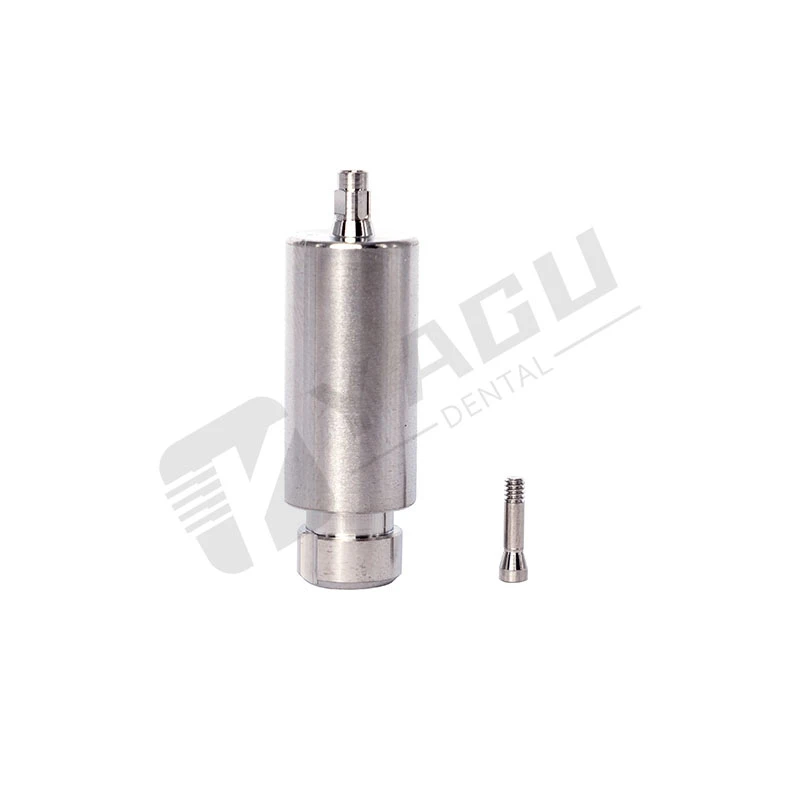
Titanium alloys, such as Ti - 6Al - 4V (titanium alloyed with 6% aluminum and 4% vanadium), are also popular. These alloys offer enhanced mechanical strength compared to pure titanium. They are commonly used in situations where the implant needs to withstand higher loads, such as in the posterior regions of the mouth where chewing forces are greater. For example, the Premill Abutment in our product line, which is designed to support the dental crown, may be made from titanium alloys to ensure durability under normal biting and chewing pressures.
Zirconia
Zirconia has emerged as a popular alternative to titanium in recent years. It is a ceramic material that offers several advantages. One of the most significant benefits of zirconia is its aesthetic appeal. It has a tooth - like appearance, which makes it an ideal choice for visible areas of the mouth. Patients who are concerned about the cosmetic aspect of their dental implants often prefer zirconia parts.
Zirconia also has good biocompatibility. It is less likely to cause allergic reactions compared to some metals, which is beneficial for patients with metal sensitivities. In addition, zirconia has excellent wear resistance, meaning it can maintain its integrity over time even with regular use.
Our Straumann Pre Milled Abutment is available in zirconia options. These abutments can be customized to match the patient's natural teeth, providing a seamless and attractive smile. However, it's important to note that zirconia may have lower fracture toughness compared to titanium alloys, so it needs to be carefully designed and used in appropriate clinical situations.
Cobalt - Chromium Alloys
Cobalt - chromium alloys have been used in dentistry for a long time. They are known for their high strength and good corrosion resistance. These alloys are often used in removable implant - supported prostheses, such as implant - retained dentures.
The high strength of cobalt - chromium alloys allows them to withstand the forces associated with the movement and function of removable prostheses. They can also be cast into complex shapes, which is useful for creating custom - made components that fit precisely in the oral cavity.
In some cases, cobalt - chromium alloys may be used for implant parts that require a combination of strength and the ability to be fabricated into detailed designs. However, they are not as commonly used for permanent implants placed directly in the bone as titanium and zirconia, due to potential concerns about long - term biocompatibility and the need for a more invasive removal process if necessary.
Gold Alloys
Gold alloys have a long history in dentistry. They are highly biocompatible and have excellent malleability, which means they can be easily shaped into the desired form. Gold alloys are often used for custom - made abutments and small - scale implant parts.
The malleability of gold alloys allows for a precise fit between the implant and the restoration. They also have good corrosion resistance, ensuring the longevity of the implant part. However, gold alloys are relatively expensive compared to other materials, which may limit their widespread use.
Polyetheretherketone (PEEK)
PEEK is a thermoplastic polymer that has gained attention in the field of implantology. It has good biocompatibility and is lightweight. PEEK can mimic the mechanical properties of bone to some extent, which may reduce the stress shielding effect that can occur with stiffer materials like titanium.
Stress shielding occurs when the implant is much stiffer than the surrounding bone, causing the bone to lose density over time due to reduced mechanical stress. PEEK's more bone - like elasticity may help maintain bone health around the implant. It can also be used as a component in implant parts, such as temporary abutments or spacers.

Selecting the Right Material for Implant Parts
As an implant parts supplier, I understand that the choice of material depends on multiple factors. The patient's oral condition, including the quality and quantity of the bone, the location of the implant in the mouth, and the patient's aesthetic preferences, all play a role in the decision - making process.
For example, in cases where the patient has a strong preference for a natural - looking restoration and is in good general health, zirconia may be a suitable choice. On the other hand, if the implant is placed in an area with high chewing forces, titanium or titanium alloys may be more appropriate.
Dental professionals also need to consider the long - term prognosis of the implant. They must weigh the advantages and disadvantages of each material in terms of biocompatibility, mechanical properties, and cost - effectiveness.
Get in Touch for Your Implant Part Needs
If you're a dental professional looking for high - quality implant parts, I invite you to reach out to us. We offer a wide range of implant parts made from different materials to meet your specific clinical requirements. Whether you need Premill Abutment, Megagen Ti Base, or Straumann Pre Milled Abutment, we have the expertise and products to support your practice. Let's start a conversation about how we can work together to provide the best implant solutions for your patients.
References
- Buser D, Martin W, Belser UC. Optimizing esthetics for implant restorations with short dental implants in the anterior maxilla: A systematic review. The International Journal of Oral & Maxillofacial Implants. 2009;24(Suppl):212 - 226.
- Wennerberg A, Albrektsson T. Effects of titanium surface characteristics on osteoblast adhesion, proliferation, and differentiation. International Journal of Oral & Maxillofacial Implants. 2009;24(Suppl):28 - 34.
- Hammerle CH, Buser D, Sailer I. Zirconia implants: A systematic review of the literature. Clinical Oral Implants Research. 2011;22(Suppl 5):118 - 130.