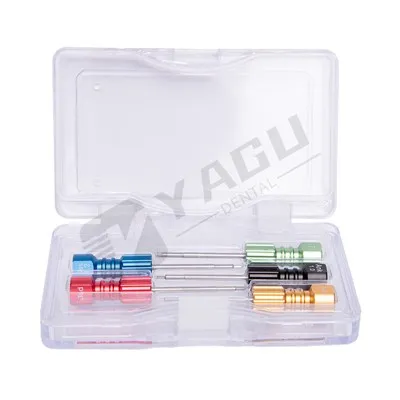
As a supplier of Straumann Ti Base, I've witnessed firsthand the high - precision and strict requirements of its manufacturing standards. In this blog, I'll delve into what these standards entail, from the raw materials to the final product.
Raw Material Selection
The journey of creating a Straumann Ti Base begins with the careful selection of raw materials. Titanium is the primary material used, and for good reason. Titanium is known for its excellent biocompatibility, which means it can integrate well with the human body without causing adverse reactions. When we source titanium for Straumann Ti Bases, we look for materials that meet international standards such as ASTM (American Society for Testing and Materials).
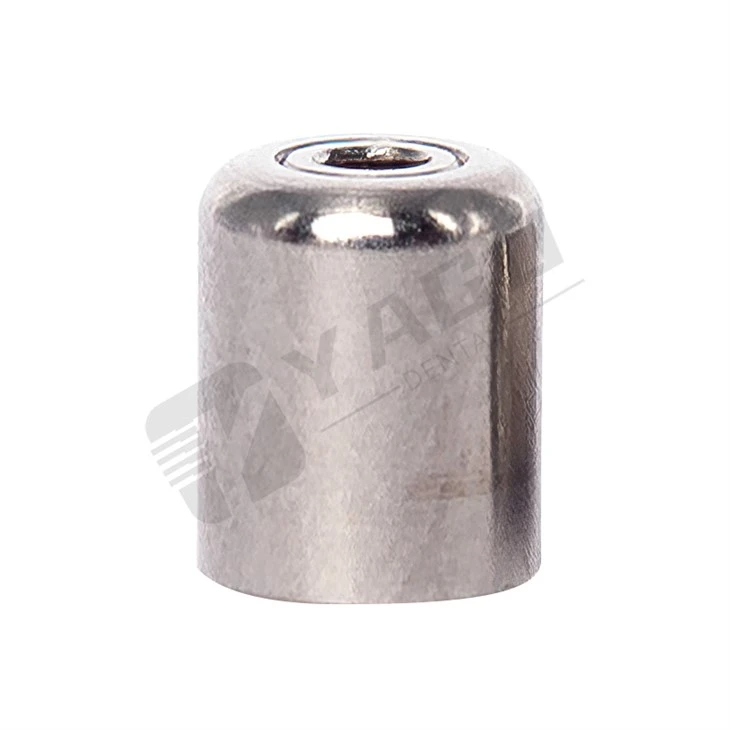

The purity of the titanium is of utmost importance. High - purity titanium reduces the risk of corrosion and ensures the long - term stability of the implant. We work closely with trusted suppliers who can provide us with titanium that has a purity level of at least 99.5%. This high - grade titanium also has good mechanical properties, including high strength and low density, which are crucial for an implant that needs to withstand the forces of chewing over an extended period.
Precision Machining
Once the raw titanium is acquired, the next step is precision machining. Straumann Ti Bases are manufactured using state - of - the - art CNC (Computer Numerical Control) machining technology. CNC machining allows for extremely accurate and repeatable manufacturing processes.
The machining process starts with a solid titanium block. The block is first rough - machined to remove excess material and bring the part close to its final shape. This is followed by a series of fine - machining operations. Each dimension of the Straumann Ti Base is carefully controlled to within a tolerance of just a few micrometers. For example, the diameter of the base, the height, and the thread pitch all need to be precisely machined to ensure proper fit with other dental implant components.
During the machining process, we use advanced measuring tools such as coordinate measuring machines (CMMs) to verify the dimensions of the parts. These tools can detect even the slightest deviation from the design specifications, allowing us to make immediate adjustments if necessary.
Surface Treatment
Surface treatment is a critical step in the manufacturing of Straumann Ti Bases. The surface of the base plays a vital role in its interaction with the surrounding bone tissue and other dental components.
One of the most common surface treatments for Straumann Ti Bases is sandblasting and acid - etching. Sandblasting creates a micro - rough surface on the titanium, which increases the surface area available for bone integration. The acid - etching process further modifies the surface at a microscopic level, creating a more bioactive surface. This enhanced surface promotes faster and more stable osseointegration, which is the process by which the implant fuses with the surrounding bone.
In addition to promoting osseointegration, the surface treatment also affects the connection between the Straumann Ti Base and other dental parts. A well - treated surface ensures a tight and stable connection with components like Dentium Healing Cap, Osstem Transfer Impression Coping, and Castable Abutments.
Quality Control
Quality control is an ongoing process throughout the manufacturing of Straumann Ti Bases. Every step, from raw material inspection to the final product testing, is subject to strict quality checks.
When the raw materials arrive at our facility, they are inspected for purity, composition, and physical properties. Samples are taken and analyzed using advanced techniques such as X - ray fluorescence (XRF) spectroscopy to ensure that the titanium meets the required standards.
During the machining process, in - process inspections are carried out at regular intervals. This helps to identify any potential issues early on and prevent defective parts from progressing further in the manufacturing line.
After the surface treatment, the parts undergo a series of post - treatment inspections. The surface roughness, chemical composition, and corrosion resistance are all carefully examined. Finally, the finished Straumann Ti Bases are tested for functionality. They are checked for proper fit with other dental implant components and their ability to withstand mechanical loads.
Sterilization and Packaging
Once the Straumann Ti Bases pass all the quality control checks, they are ready for sterilization and packaging. Sterilization is a crucial step to ensure that the implants are free from any microorganisms that could cause infections in the patient.
We use methods such as steam sterilization or ethylene oxide sterilization, depending on the specific requirements of the product. These sterilization methods are carefully controlled to ensure that the integrity of the Straumann Ti Bases is not compromised.
After sterilization, the parts are packaged in a clean and sterile environment. The packaging is designed to protect the implants during storage and transportation. It also provides information about the product, including its specifications, batch number, and expiration date.
Conclusion
The manufacturing standard of Straumann Ti Bases is a complex and multi - faceted process that combines high - quality raw materials, advanced manufacturing technologies, strict quality control, and proper sterilization and packaging. As a supplier, we are committed to upholding these standards to provide our customers with the best possible products.
If you are in the market for high - quality Straumann Ti Bases or other dental implant components, I encourage you to reach out to us for a procurement discussion. We are here to provide you with detailed product information, samples, and competitive pricing.
References
- ASTM International standards for titanium materials.
- Dental implant manufacturing textbooks and research papers on osseointegration and implant surface treatments.