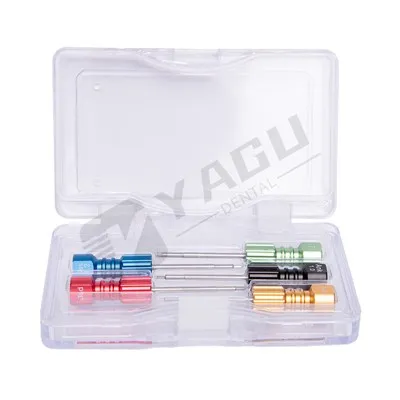
As a supplier of Castable Implant Abutments, I'm often asked about the intricate manufacturing process behind these essential dental components. In this blog post, I'll take you through the step-by-step journey of how a Castable Implant Abutment is made, from the initial design concept to the final product ready for use in dental procedures.
Design and Planning
The manufacturing process of a Castable Implant Abutment begins with meticulous design and planning. Our team of experienced dental engineers and designers work closely with dental professionals to understand the specific requirements and specifications of the abutment. This involves considering factors such as the patient's oral anatomy, the type of implant system being used, and the desired aesthetic outcome.


Using advanced computer-aided design (CAD) software, we create a detailed 3D model of the abutment. This model allows us to visualize the final product and make any necessary adjustments before moving on to the manufacturing stage. We also ensure that the design complies with all relevant industry standards and regulations to guarantee the safety and effectiveness of the abutment.
Material Selection
Once the design is finalized, the next step is to select the appropriate material for the abutment. Castable Implant Abutments are typically made from high-quality metals such as titanium or zirconia. These materials are chosen for their excellent biocompatibility, strength, and corrosion resistance, which are essential for long-term use in the oral cavity.
Titanium is a popular choice for abutments due to its lightweight nature and ability to integrate well with the surrounding bone tissue. It is also highly resistant to corrosion, making it suitable for use in the moist environment of the mouth. Zirconia, on the other hand, is known for its aesthetic appeal and high strength. It can be customized to match the color of the patient's natural teeth, providing a more natural-looking result.
Wax Pattern Creation
After the material has been selected, the next step is to create a wax pattern of the abutment. This is done by using a specialized wax carving tool to shape the wax into the desired form based on the 3D design model. The wax pattern serves as a template for the casting process and allows us to make any final adjustments to the shape and size of the abutment.
During the wax pattern creation process, we pay close attention to detail to ensure that the pattern accurately reflects the design specifications. We also take into account the shrinkage factor that occurs during the casting process to ensure that the final abutment will have the correct dimensions.
Investment and Casting
Once the wax pattern is complete, it is placed in a special investment material, which is a mixture of plaster and other ceramic materials. The investment material is then heated to a high temperature to remove the wax and create a mold of the abutment. This process is known as investment casting.
After the mold has been created, it is filled with the molten metal using a casting machine. The metal is poured into the mold under high pressure to ensure that it fills all the details of the mold and forms a precise replica of the wax pattern. Once the metal has cooled and solidified, the mold is broken away to reveal the cast abutment.
Finishing and Polishing
After the casting process is complete, the abutment undergoes a series of finishing and polishing operations to remove any rough edges or imperfections. This is done using a variety of tools and techniques, including grinding, sanding, and buffing. The goal is to achieve a smooth and polished surface that is comfortable for the patient and reduces the risk of bacterial adhesion.
In addition to the surface finishing, the abutment may also undergo a heat treatment process to improve its mechanical properties. This involves heating the abutment to a specific temperature and then cooling it slowly to increase its strength and hardness.
Quality Control
Before the abutment is ready for use, it undergoes a rigorous quality control process to ensure that it meets all the required standards and specifications. This includes a visual inspection to check for any surface defects, dimensional measurements to ensure that the abutment has the correct size and shape, and a mechanical testing to evaluate its strength and durability.
We also perform a biocompatibility test to ensure that the abutment is safe for use in the oral cavity. This involves exposing the abutment to a simulated oral environment and monitoring its interaction with the surrounding tissues. Only abutments that pass all the quality control tests are approved for sale.
Assembly and Packaging
Once the abutment has passed the quality control process, it is ready to be assembled with other components, such as the Dentium Lab Model Analog or the Dentium Abutment Screw. The assembly process is carried out in a clean and controlled environment to ensure the sterility of the final product.
After the assembly is complete, the abutment is carefully packaged in a sterile container to protect it from contamination during transportation and storage. The packaging also includes detailed instructions for use and any necessary warnings or precautions.
Conclusion
The manufacturing process of a Castable Implant Abutment is a complex and precise process that requires a high level of skill and expertise. From the initial design concept to the final product, every step is carefully monitored and controlled to ensure the quality and safety of the abutment.
As a supplier of Castable Implant Abutments, we are committed to providing our customers with the highest quality products at competitive prices. If you are interested in learning more about our products or would like to discuss your specific requirements, please don't hesitate to contact us. We look forward to working with you to meet your dental implant needs.
References
- "Dental Implant Abutments: Types, Materials, and Clinical Considerations." Journal of Oral Implantology.
- "Investment Casting: Principles and Practice." ASM International.
- "Biocompatibility of Dental Materials." Dental Materials Journal.