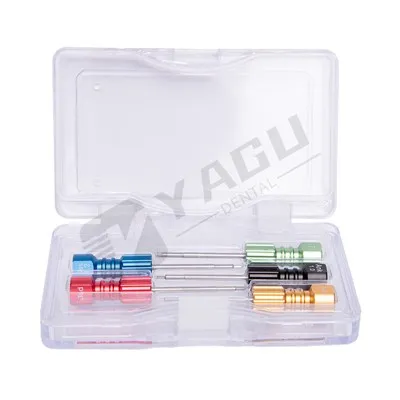
As a supplier of Osstem Temporary Abutment, I am often asked about the hardness of this essential dental component. In the field of dental implants, understanding the hardness of an abutment is crucial as it directly impacts its performance, durability, and overall success in the oral cavity.
What is Hardness in the Context of Dental Abutments?
Hardness, in materials science, refers to a material's resistance to local deformation, typically by indentation or scratching. In the case of dental abutments, hardness is a measure of how well the abutment can withstand the mechanical stresses it will encounter during normal use, such as biting and chewing forces. A harder abutment is generally more resistant to wear and deformation, which can lead to a longer lifespan and better clinical outcomes.
The Hardness of Osstem Temporary Abutment
Osstem Temporary Abutments are made from high - quality materials that are carefully selected to provide optimal hardness. These abutments are commonly made from titanium or titanium alloys, which are well - known for their excellent mechanical properties. Titanium has a relatively high hardness, typically measured on the Rockwell hardness scale. The Rockwell hardness of titanium alloys used in dental applications usually ranges from about 30 to 40 HRC (Rockwell Hardness C scale).
This level of hardness is sufficient to withstand the forces exerted during normal chewing and biting. The hardness of the Osstem Temporary Abutment ensures that it maintains its shape and integrity over time, reducing the risk of deformation or breakage. This is particularly important in the temporary phase of dental implant restoration, where the abutment needs to support the provisional crown or bridge while the final restoration is being fabricated.
Factors Affecting the Hardness of Osstem Temporary Abutment
Several factors can affect the hardness of the Osstem Temporary Abutment. Firstly, the composition of the titanium alloy plays a significant role. Different alloying elements can be added to titanium to enhance its hardness, strength, and other mechanical properties. For example, the addition of elements such as aluminum, vanadium, or niobium can increase the hardness of the alloy.
Secondly, the manufacturing process also influences the hardness. Heat treatment is a common process used to modify the microstructure of the titanium alloy, which in turn affects its hardness. Proper heat treatment can optimize the hardness of the abutment, ensuring that it meets the required standards for dental applications.
Another factor is the surface finish of the abutment. A smooth surface finish can reduce the risk of abrasion and wear, which can indirectly affect the perceived hardness of the abutment. The surface treatment of Osstem Temporary Abutments is carefully controlled to provide a smooth and durable surface that resists wear and corrosion.
Importance of Hardness in Dental Applications
The hardness of the Osstem Temporary Abutment is of utmost importance in dental applications. A hard abutment can better withstand the forces of mastication, which helps to prevent premature wear and failure. This is essential for maintaining the stability and functionality of the dental implant restoration.


In addition, a hard abutment can provide a stable foundation for the provisional and final restorations. It ensures that the crown or bridge fits properly and does not shift or move during normal use. This is crucial for patient comfort and the long - term success of the dental implant treatment.
Moreover, the hardness of the abutment can also affect the soft tissue response around the implant. A hard and smooth surface can promote better soft tissue integration, reducing the risk of inflammation and infection. This is an important aspect of maintaining the overall health of the oral cavity.
Comparison with Other Dental Abutments
When comparing the Osstem Temporary Abutment with other dental abutments in the market, such as the Dentium Digital Analog, Dentium Multi Unit Castable Abutment, and Dentium Lab Model Analog, the hardness is one of the key factors to consider.
Dentium abutments are also made from high - quality materials, but the specific hardness may vary depending on their design and composition. Osstem Temporary Abutments, with their carefully engineered titanium alloys and manufacturing processes, offer a reliable and consistent level of hardness that is well - suited for temporary dental implant restorations.
Quality Control and Assurance of Osstem Temporary Abutment Hardness
Osstem has strict quality control measures in place to ensure the hardness of its temporary abutments meets the required standards. Every batch of abutments undergoes rigorous testing to verify their hardness and other mechanical properties. This includes both destructive and non - destructive testing methods.
Destructive testing, such as hardness testing using a Rockwell or Vickers hardness tester, is used to directly measure the hardness of the abutment. Non - destructive testing methods, such as ultrasonic testing or X - ray inspection, can be used to detect any internal defects or inhomogeneities that may affect the hardness or performance of the abutment.
These quality control measures ensure that every Osstem Temporary Abutment that reaches the market is of high quality and meets the expectations of dental professionals and patients.
Conclusion
In conclusion, the hardness of the Osstem Temporary Abutment is a critical factor in its performance and success in dental applications. Made from high - quality titanium alloys, these abutments offer a suitable level of hardness to withstand the forces of mastication, provide a stable foundation for restorations, and promote good soft tissue response.
The factors affecting the hardness, such as alloy composition, manufacturing process, and surface finish, are carefully controlled to ensure consistent quality. When compared with other dental abutments, Osstem Temporary Abutments stand out for their reliable hardness and performance.
If you are a dental professional or a distributor interested in purchasing Osstem Temporary Abutments, I encourage you to reach out for a detailed discussion about product specifications, pricing, and availability. We are committed to providing high - quality products and excellent customer service to meet your needs.
References
- "Dental Implant Materials and Technology" - A comprehensive textbook on dental implant materials, including information on the properties of titanium alloys used in abutments.
- Journal articles on dental implant research, which often discuss the mechanical properties of dental abutments and their impact on clinical outcomes.
- Manufacturer's technical documentation on Osstem Temporary Abutments, which provides detailed information on the composition, manufacturing process, and quality control measures.