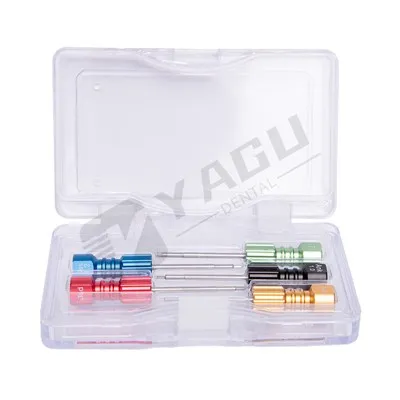
Hey there! As a supplier of Temporary Abutments, I've been getting a lot of questions lately about what goes into the design of these nifty little dental components. So, I thought I'd take a deep dive into the design principles of a temporary abutment and share some insights with you all.
Understanding the Basics
First off, let's talk about what a temporary abutment actually is. In the world of dental implants, an abutment is a connector that sits on top of the dental implant and attaches the artificial tooth (crown) to the implant. A temporary abutment, as the name suggests, is a short - term solution used during the implant restoration process. It's usually in place while the patient's gum tissue heals and adapts to the implant, and it helps in shaping the gum for a more natural - looking final restoration.
Biocompatibility
One of the most crucial design principles of a temporary abutment is biocompatibility. The material used in the abutment must be non - toxic and non - allergenic. It should not cause any adverse reactions in the patient's body. Titanium is a popular choice for temporary abutments because it's highly biocompatible. It has a long - standing history of use in dental implants and is well - tolerated by the human body. When designing a temporary abutment, we need to ensure that the surface finish and the composition of the material don't trigger any immune responses. This is not only important for the patient's comfort but also for the long - term success of the implant.
Shape and Size
The shape and size of a temporary abutment are carefully considered to meet the specific needs of each patient. The diameter of the abutment should match the implant platform. If it's too small, it may not provide enough support for the future crown, and if it's too large, it can cause problems with the gum tissue and the overall fit of the restoration.
The height of the abutment is also crucial. It needs to be adjusted based on the depth of the implant in the bone and the thickness of the gum tissue. A well - designed temporary abutment should allow for proper emergence profile, which is the way the tooth emerges from the gum. This is essential for creating a natural - looking smile and for maintaining good oral hygiene. For example, if the emergence profile is too steep, it can be difficult for the patient to clean around the tooth, leading to plaque buildup and potential gum problems.


Ease of Placement and Removal
Another important design principle is the ease of placement and removal. A temporary abutment should be easy for the dentist to install and take out. This is especially important because it may need to be replaced several times during the implant restoration process. We design our temporary abutments with features that make them user - friendly. For instance, some of our abutments have a hexagonal or octagonal connection at the base, which allows for easy attachment and detachment using a special tool. This not only saves time during the procedure but also reduces the risk of damage to the implant or the surrounding tissue.
Stability
Stability is key when it comes to a temporary abutment. It needs to stay firmly in place during the healing period. If it moves or rotates, it can disrupt the healing process and affect the final outcome of the restoration. We use advanced manufacturing techniques to ensure a tight fit between the abutment and the implant. This may involve precision machining to create a perfect interface between the two components. Additionally, some of our temporary abutments have anti - rotation features, such as grooves or ridges, which prevent the abutment from turning inside the implant.
Aesthetics
Even though a temporary abutment is a short - term solution, aesthetics still play a role in its design. It should blend in with the patient's natural teeth as much as possible. Some of our temporary abutments are available in different colors to match the shade of the patient's gums. This helps in creating a more esthetically pleasing appearance during the healing phase. After all, patients want to feel confident in their smiles, even during the treatment process.
Compatibility with Other Components
A temporary abutment needs to be compatible with other dental components that will be used in the restoration. For example, it should work well with the Castable Implant Abutment, Dentium Abutment Screw, and Casting Abutment. This means that the dimensions and the connection mechanisms should be standardized and match the specifications of these other parts. Compatibility ensures a smooth and seamless transition from the temporary to the final restoration.
Cost - effectiveness
As a supplier, we also consider cost - effectiveness in the design of our temporary abutments. We want to provide high - quality products at a reasonable price. This involves using cost - efficient manufacturing processes and materials without compromising on the quality and performance of the abutment. By keeping the costs down, we can make our products more accessible to dental practices and ultimately, to patients.
Customization
Every patient's mouth is unique, and that's why customization is an important aspect of temporary abutment design. We offer a range of options for customization, such as different shapes, sizes, and surface finishes. This allows dentists to choose the abutment that best suits the individual needs of their patients. Whether it's a complex case with unusual gum anatomy or a simple restoration, we can provide a customized temporary abutment solution.
Conclusion
In conclusion, the design of a temporary abutment is a complex process that involves considering multiple factors. From biocompatibility and shape to stability and aesthetics, every aspect is carefully thought out to ensure the best possible outcome for the patient. As a supplier, we're constantly working on improving our designs to meet the evolving needs of the dental industry.
If you're a dental professional looking for high - quality temporary abutments or have any questions about our products, I'd love to hear from you. Feel free to reach out to us to start a conversation about your procurement needs. We're here to provide you with the best solutions for your patients.
References
- Misch, C. E. (2018). Dental Implant Prosthetics. Elsevier Health Sciences.
- Tarnow, D. P., & Magner, A. W. (2003). The effect of the interimplant distance on the height of interimplant bone crest. Journal of Periodontology, 74(7), 997 - 1001.