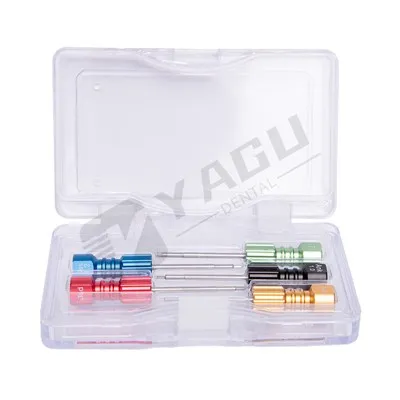
A Ti base abutment, short for titanium base abutment, is a crucial component in dental implant systems. As a supplier of Ti base abutments, I am excited to share detailed insights into what these abutments are, their functions, benefits, and why they are a top - choice in modern dentistry.
Composition and Structure
Ti base abutments are primarily made of titanium, a metal highly regarded in the medical and dental fields. Titanium is biocompatible, which means it is well - tolerated by the human body and does not trigger adverse immune responses. This property is essential as the abutment will be in direct contact with the patient's gum tissue and underlying bone.


The structure of a Ti base abutment is designed to serve multiple purposes. It typically has a threaded portion at the bottom that allows it to be securely attached to the dental implant fixture, which is surgically placed into the jawbone. Above the threaded part, there is a smooth section that interacts with the soft tissue of the gums. This smooth surface helps to create a seal between the abutment and the gum, preventing bacteria from entering the implant site and causing infections.
Functions in Dental Implants
One of the main functions of a Ti base abutment is to act as a connector between the dental implant fixture and the final dental restoration, such as a crown, bridge, or denture. It provides a stable and precise platform for the restoration to be attached to. The abutment transfers the forces generated during chewing and biting from the restoration to the implant fixture and ultimately to the jawbone. This distribution of forces is crucial for the long - term success of the dental implant, as it helps to prevent overloading of the implant and surrounding bone.
Another important function is related to soft tissue management. The shape and design of the Ti base abutment can influence the formation and maintenance of healthy gum tissue around the implant. A well - designed abutment can help to create a natural - looking gingival contour, which is aesthetically pleasing and also contributes to the overall oral health of the patient.
Benefits of Ti Base Abutments
- Biocompatibility: As mentioned earlier, titanium's biocompatibility is a major advantage. It reduces the risk of inflammation, allergic reactions, and other complications that could compromise the success of the dental implant. This means that patients are more likely to have a smooth and uneventful recovery after the implant procedure.
- Strength and Durability: Titanium is a strong and durable metal. Ti base abutments can withstand the forces of daily chewing and biting over an extended period. This durability ensures that the dental implant system remains stable and functional for many years, providing patients with a long - lasting solution to their missing tooth or teeth problem.
- Precision and Customization: Ti base abutments can be manufactured with high precision, ensuring a perfect fit between the abutment, the implant fixture, and the final restoration. Additionally, they can be customized to meet the specific needs of each patient. For example, the height, diameter, and angulation of the abutment can be adjusted according to the patient's anatomy and the requirements of the dental restoration.
Types of Ti Base Abutments
There are several types of Ti base abutments available in the market, each designed for specific applications.
- Stock Abutments: These are pre - fabricated abutments that come in standard sizes and shapes. They are a cost - effective option and are suitable for many routine dental implant cases. Stock abutments can be quickly selected and installed, reducing the treatment time.
- Custom Abutments: Custom abutments are fabricated specifically for an individual patient based on their unique oral anatomy. They are often used in more complex cases where the standard stock abutments may not provide an optimal fit. Custom abutments can be designed using advanced digital technologies, such as CAD/CAM (Computer - Aided Design/Computer - Aided Manufacturing), which allows for high precision and accuracy.
Compatibility with Other Dental Implant Parts
Ti base abutments need to be compatible with other components of the dental implant system. For example, they must be compatible with the implant fixture in terms of the thread design, diameter, and connection type. Additionally, they should be able to work well with other accessory parts, such as Osstem Healing Cap, which is used during the healing phase of the implant, and Dentium Lab Model Analog, which is used in the dental laboratory for the fabrication of the final restoration.
Another important part is the Castable Implant Abutment. In some cases, a castable abutment may be used in combination with a Ti base abutment. The castable abutment can be customized further by the dental technician to achieve the desired shape and fit for the final restoration.
Quality Control in Ti Base Abutment Production
As a supplier, quality control is of utmost importance in the production of Ti base abutments. We follow strict manufacturing processes and quality standards to ensure that each abutment meets the highest level of quality and performance. The raw materials used are carefully selected and tested to ensure their purity and quality. During the manufacturing process, multiple inspection points are in place to check for dimensional accuracy, surface finish, and mechanical properties.
We also conduct rigorous sterilization procedures to ensure that the abutments are free from any contaminants before they are shipped to our customers. This commitment to quality ensures that our customers can trust the Ti base abutments they purchase from us and provide their patients with a reliable and safe dental implant solution.
Market Demand and Trends
The demand for Ti base abutments is on the rise due to the increasing popularity of dental implant treatments. As more people become aware of the benefits of dental implants over traditional tooth replacement options, the market for dental implant components, including Ti base abutments, is expected to continue to grow.
One of the current trends in the industry is the use of digital technologies in the design and manufacturing of Ti base abutments. CAD/CAM technology allows for more precise and efficient production, reducing the margin of error and improving the overall quality of the abutments. Another trend is the development of more aesthetically pleasing abutments that can better mimic the natural appearance of teeth and gums.
Contact for Purchase and Collaboration
If you are a dental professional or a dental laboratory looking for high - quality Ti base abutments, we would be delighted to hear from you. Our team of experts is dedicated to providing you with the best products and services. We can offer a wide range of Ti base abutments to meet your specific needs and requirements. Whether you need stock abutments for routine cases or custom abutments for complex cases, we have the solution.
Please feel free to reach out to us to discuss your procurement needs. We are ready to have in - depth discussions with you about the product specifications, pricing, and delivery options. Let's work together to provide the best dental implant solutions for your patients.
References
- Misch, C. E. (2018). Dental Implant Prosthetics. Elsevier Health Sciences.
- Tarnow, D. P., et al. (2003). The effect of the abutment connection design on the health of the marginal periodontium. The International Journal of Oral & Maxillofacial Implants, 18(3), 356 - 361.
- Brånemark, P. I., et al. (1977). Osseointegrated implants in the treatment of the edentulous jaw. Experience from a 10 - year period. Scandinavian Journal of Plastic and Reconstructive Surgery and Hand Surgery, 11(Suppl 16), 1 - 132.