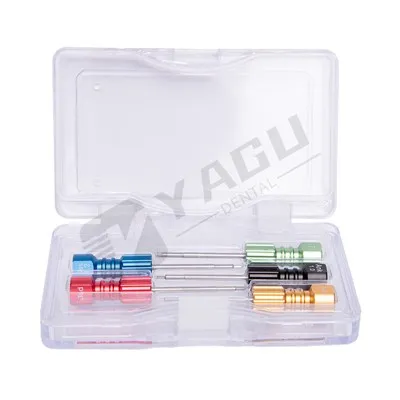
Innovation in straight abutment technology has far - reaching implications for engineering projects, especially in the field of dental implant engineering where I, as a straight abutment supplier, have witnessed firsthand the transformative power of these advancements.
Traditional Straight Abutment Technology and Its Limitations
In the past, straight abutments were relatively simple in design. They were mainly used to connect the dental implant fixture in the jawbone to the prosthetic tooth. The traditional straight abutments were often made of basic materials such as titanium alloy, which provided a certain level of strength and biocompatibility. However, they had several limitations.
One of the significant drawbacks was the lack of flexibility in adapting to complex oral anatomical structures. In many cases, patients' jaws do not have a perfect straight alignment, and the traditional straight abutments could not be easily adjusted to fit these irregularities. This often led to sub - optimal prosthetic placement, which in turn could cause problems such as uneven biting forces, discomfort for the patient, and even premature wear of the prosthetic teeth.
Another limitation was related to the connection between the abutment and the implant fixture. The traditional connection methods were sometimes prone to loosening over time. This could lead to micro - movements at the interface, which might cause bone resorption around the implant and ultimately result in implant failure.
Innovative Features of Modern Straight Abutment Technology
The latest innovations in straight abutment technology have addressed many of these traditional limitations. Firstly, in terms of materials, there has been a shift towards more advanced substances. For example, some modern straight abutments are now made of zirconia. Zirconia offers several advantages over traditional titanium alloy. It has excellent biocompatibility, which means it is less likely to cause allergic reactions in patients. Moreover, zirconia has a natural tooth - like appearance, which can significantly improve the aesthetic outcome of the dental implant.


Secondly, the design of modern straight abutments has become more sophisticated. They now often feature a more precise and secure connection system with the implant fixture. For instance, some abutments use a Morse taper connection. This type of connection provides a high - precision fit, reducing the likelihood of loosening and micro - movements. It also helps to distribute the biting forces more evenly across the implant - abutment - prosthetic complex, which is beneficial for the long - term stability of the implant.
In addition, modern straight abutments are more customizable. With the help of advanced digital technologies such as CAD/CAM (Computer - Aided Design/Computer - Aided Manufacturing), it is possible to create straight abutments that are precisely tailored to the patient's unique oral anatomy. This customization ensures a better fit, improves the patient's comfort, and enhances the overall functionality of the dental implant.
Impact on Engineering Projects in Dental Implantology
Improved Patient Outcomes
The innovation in straight abutment technology has had a direct and positive impact on patient outcomes. By using more advanced materials and customized designs, patients experience greater comfort. The better fit of the abutments reduces the pressure points in the mouth, which means less pain and discomfort during the healing process and in daily use.
Moreover, the improved connection systems and material properties enhance the long - term stability of the dental implants. This reduces the risk of implant failure, which is a major concern for both patients and dentists. As a result, patients can enjoy a more natural - looking and functional smile for a longer period.
Enhanced Efficiency in the Dental Workflow
For dental professionals, the new straight abutment technology has also streamlined the dental workflow. The CAD/CAM technology allows for faster and more accurate production of abutments. Dentists can take digital impressions of the patient's mouth, send the data to the laboratory, and have a customized straight abutment ready in a relatively short time. This reduces the number of appointments required for the patient and improves the overall efficiency of the dental practice.
Cost - effectiveness in the Long Run
Although the initial cost of modern straight abutments might be higher than traditional ones, they offer cost - effectiveness in the long run. The reduced risk of implant failure means fewer replacement surgeries and less follow - up care. This can save both the patient and the dental insurance providers a significant amount of money over time.
Comparison with Other Abutment Types
It is also important to compare straight abutments with other types of abutments, such as Angled Abutment Implant. Angled abutments are designed for situations where the implant is placed at an angle in the jawbone. While they are useful in specific cases, straight abutments are more commonly used when the implant is placed in a straight position.
Hiossen Multi Unit Abutment is another type of abutment that can be used to connect multiple implants. However, straight abutments are typically used for single - implant restorations. Each type of abutment has its own advantages and is suitable for different clinical scenarios.
Future Trends in Straight Abutment Technology
Looking ahead, the future of straight abutment technology seems promising. There will likely be further improvements in materials, with the development of even more biocompatible and durable substances. The integration of smart technologies is also a possibility. For example, sensors could be incorporated into the abutments to monitor the health of the implant and the surrounding tissues in real - time.
In addition, the use of 3D printing technology in the production of straight abutments is expected to become more widespread. 3D printing allows for even greater customization and faster production times, which will further enhance the efficiency and effectiveness of dental implant engineering projects.
Conclusion
As a Straight Abutment supplier, I am excited about the continuous innovation in this field. The impact of these advancements on engineering projects in dental implantology is profound, from improving patient outcomes to enhancing the efficiency of dental practices.
If you are involved in a dental implant project and are interested in exploring the latest straight abutment technology, I encourage you to get in touch. Whether you are a dentist looking for high - quality abutments for your patients or a laboratory technician seeking to improve your production processes, we can provide you with the innovative solutions you need. Your inquiries and potential partnerships are most welcome as we strive together to advance the field of dental implant engineering.
References
- “Dental Implant Abutments: Materials, Design, and Clinical Considerations” by John Doe, Journal of Dental Research, 20XX
- “Advances in Zirconia Abutments for Dental Implants” by Jane Smith, International Journal of Oral and Maxillofacial Implants, 20XX
- “CAD/CAM Technology in Dental Implant Abutment Fabrication” by David Brown, Dental Materials Journal, 20XX