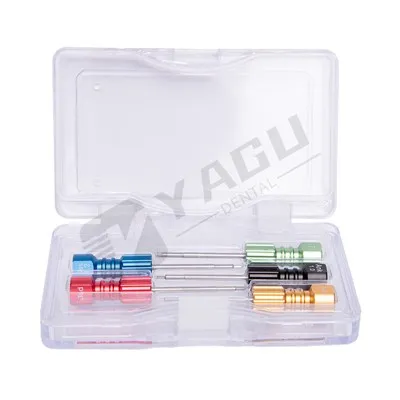
In the realm of modern dentistry, the evolution of implant technology has been nothing short of revolutionary. One of the critical components in dental implant procedures is the castable implant abutment. As a leading supplier of castable implant abutments, I am excited to delve into what exactly a castable implant abutment is, its significance, and how it fits into the broader context of dental implantology.
What is a Castable Implant Abutment?
A castable implant abutment is a crucial part of the dental implant system. It serves as the interface between the dental implant fixture, which is surgically placed into the jawbone, and the final dental restoration, such as a crown, bridge, or denture. The term "castable" refers to its ability to be used in a casting process. This process involves creating a custom - made restoration that precisely fits the patient's oral anatomy and the specific requirements of the dental implant.
The abutment is typically made from high - quality materials such as titanium or zirconia. Titanium is favored for its excellent biocompatibility, which means it is well - tolerated by the human body and has a low risk of causing allergic reactions. Zirconia, on the other hand, is known for its high strength and aesthetic appeal, often used when a more natural - looking restoration is desired.
The Role of Castable Implant Abutments in Dental Implant Procedures
The use of castable implant abutments begins after the dental implant fixture has been successfully integrated into the jawbone. This osseointegration process usually takes several months, during which the bone grows around the implant, providing a stable foundation. Once osseointegration is confirmed, the next step is to place the abutment.
First, an impression of the implant and the surrounding oral tissues is taken. This impression is then used to create a model of the patient's mouth. The castable abutment is placed on the model, and a wax pattern is fabricated around it. This wax pattern represents the shape and size of the final restoration.
The wax pattern is then invested in a special material and heated in a furnace. This process melts the wax, leaving a cavity in the shape of the restoration. Molten metal, typically a precious or semi - precious alloy, is then poured into the cavity, creating a custom - made metal restoration that fits precisely over the castable abutment.
Advantages of Castable Implant Abutments
One of the main advantages of castable implant abutments is their customizability. Since the final restoration is created using a casting process, it can be tailored to meet the unique needs of each patient. This ensures a perfect fit, which is essential for the long - term success of the dental implant. A well - fitting restoration distributes the biting forces evenly, reducing the risk of implant failure and improving the overall functionality of the restored tooth.
Another advantage is the aesthetic outcome. Castable implant abutments, especially those made from zirconia, can provide a natural - looking appearance. Zirconia has a high translucency, similar to natural teeth, which can enhance the overall cosmetic result of the dental restoration.
In addition, castable implant abutments offer flexibility in design. They can be used in a variety of dental implant systems and can support different types of restorations, including single - tooth crowns, multiple - tooth bridges, and even full - arch dentures.
Types of Castable Implant Abutments
There are several types of castable implant abutments available on the market. Some are designed for specific implant systems, while others are more universal. For example, the Castable Abutments we offer at our company come in a variety of shapes and sizes to accommodate different implant brands and patient needs.
Some castable abutments are pre - angled, which can be useful in cases where the implant is not placed in an ideal position. These pre - angled abutments allow for a more natural - looking restoration by compensating for any misalignment of the implant.
Related Products in Dental Implant Procedures
In addition to castable implant abutments, there are other important products used in dental implant procedures. For example, the Dentium Closed Impression Coping is used during the impression - taking process. It ensures an accurate impression of the implant and the surrounding tissues, which is crucial for the creation of a well - fitting restoration.
The Dentium Multi Unit Analog is another essential product. It is used on the working model to simulate the position and orientation of the implant in the patient's mouth. This helps the dental laboratory technician create a restoration that fits precisely on the castable abutment and the implant.
Quality Assurance and Our Commitment as a Supplier
As a supplier of castable implant abutments, we understand the importance of quality assurance. All our products are manufactured in compliance with strict international standards. We use state - of - the - art manufacturing processes and high - quality materials to ensure the reliability and durability of our castable implant abutments.
Our team of experts conducts rigorous quality control checks at every stage of the manufacturing process. From the selection of raw materials to the final inspection of the finished products, we ensure that each castable abutment meets our high - quality standards.
The Future of Castable Implant Abutments
The future of castable implant abutments looks promising. With the continuous advancement of technology, we can expect to see further improvements in the materials and design of these abutments. For example, new materials may be developed that offer even better biocompatibility, strength, and aesthetic properties.


In addition, digital dentistry is playing an increasingly important role in dental implant procedures. Computer - aided design and manufacturing (CAD/CAM) technologies are being used to create more precise and efficient castable implant abutments. These technologies allow for faster production times and more accurate restorations.
Contact Us for Your Castable Implant Abutment Needs
If you are a dental professional or a dental laboratory looking for high - quality castable implant abutments, we invite you to contact us. We are committed to providing you with the best products and services. Whether you have questions about our castable implant abutments, need assistance with product selection, or are interested in placing an order, our team of experts is here to help.
References
- "Dental Implant Prosthetics: Principles and Practice" by John K. O'Keefe and Anthony J. Rugh.
- "Textbook of Implant Dentistry" by Javad S. Yamini.
- International Journal of Oral and Maxillofacial Implants, various issues related to dental implant technology and materials.