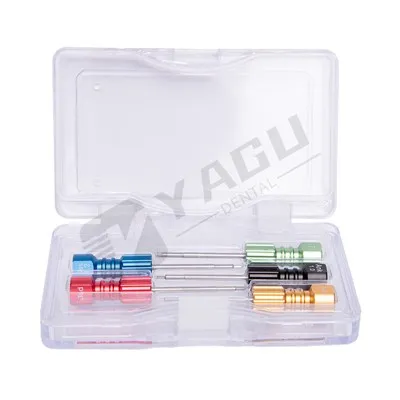
Hey there! As a supplier of Straight Abutments, I've had my fair share of dealing with different types of abutments. And let me tell you, the differences between straight abutments and other types are pretty significant. So, I thought I'd take a few minutes to break it all down for you.
First off, let's talk about what an abutment is. In the dental world, an abutment is a crucial component that connects the dental implant (which is placed in the jawbone) to the dental restoration, like a crown, bridge, or denture. It's like the middleman that makes sure everything fits together nicely and functions properly.
Now, straight abutments are exactly what they sound like - they're straight! They have a simple, linear design that runs straight from the implant to the restoration. This straightforward design makes them super versatile and easy to work with. They're often used when the implant is placed in an ideal position, and there's no need for any angulation or special adjustments.
One of the biggest advantages of straight abutments is their simplicity. Because they have a basic design, they're generally less expensive to manufacture and purchase. This can be a huge plus for patients and dental professionals who are looking to keep costs down. Plus, their simplicity also means they're easier to install and maintain. There are fewer parts to worry about, and they're less likely to cause complications during the treatment process.
Another great thing about straight abutments is their stability. Since they're straight, they provide a direct and stable connection between the implant and the restoration. This helps to distribute the forces evenly during chewing and biting, which can reduce the risk of implant failure and other issues. They're also less likely to loosen or shift over time, which means the restoration will stay in place and function properly for longer.
But straight abutments aren't the only game in town. There are other types of abutments out there, each with their own unique features and benefits. One of the most common alternatives is the Multi Unit Abutment. Unlike straight abutments, multi unit abutments are designed to connect multiple implants together. They have a more complex design that allows them to be adjusted and angled to fit the specific needs of the patient.
Multi unit abutments are often used when multiple implants are placed in different positions in the mouth. They can help to create a more natural-looking and functional restoration by allowing the dentist to adjust the angle and height of each individual abutment. This can be especially useful in cases where the implants are not perfectly aligned or where there are anatomical limitations.
However, multi unit abutments also have some drawbacks. Because they're more complex, they're generally more expensive than straight abutments. They also require more skill and expertise to install, which can add to the overall cost of the treatment. Additionally, their complexity means there are more parts that can potentially fail or cause problems, which can increase the risk of complications.


Another type of abutment that you might come across is the Straumann Multi Unit Abutment. Straumann is a well-known brand in the dental industry, and their multi unit abutments are designed to provide a high level of precision and reliability. They have a unique design that allows for easy connection and disconnection of the restoration, which can make the maintenance and replacement process much easier.
Straumann multi unit abutments are also known for their excellent fit and stability. They're designed to work seamlessly with Straumann implants, which can help to ensure a successful treatment outcome. However, like other multi unit abutments, they can be more expensive than straight abutments and may require more skill and expertise to install.
So, how do you decide which type of abutment is right for you? Well, it really depends on your individual needs and circumstances. If you're getting a single implant in an ideal position, a Straight Abutment might be the best choice. They're simple, affordable, and provide a stable connection. On the other hand, if you're getting multiple implants or if there are anatomical limitations, a multi unit abutment might be a better option. They can provide more flexibility and allow for a more customized restoration.
Ultimately, the decision should be made in consultation with your dentist or dental professional. They'll be able to evaluate your specific situation and recommend the best type of abutment for you. They'll also be able to explain the pros and cons of each option in more detail and answer any questions you might have.
As a supplier of straight abutments, I'm always happy to help dental professionals and patients make the right choice. If you're interested in learning more about our straight abutments or if you have any questions about the differences between straight abutments and other types, please don't hesitate to reach out. We're here to provide you with the information and support you need to make an informed decision.
In conclusion, straight abutments and other types of abutments each have their own unique features and benefits. Straight abutments are simple, affordable, and stable, making them a great choice for many patients. However, multi unit abutments and other alternatives can provide more flexibility and customization in certain situations. By understanding the differences between these types of abutments, you can work with your dental professional to choose the option that's right for you.
If you're interested in purchasing straight abutments or if you'd like to discuss your options further, please contact us. We'd be happy to have a chat and help you find the best solution for your needs.
References
- Various dental textbooks and industry resources on implant dentistry