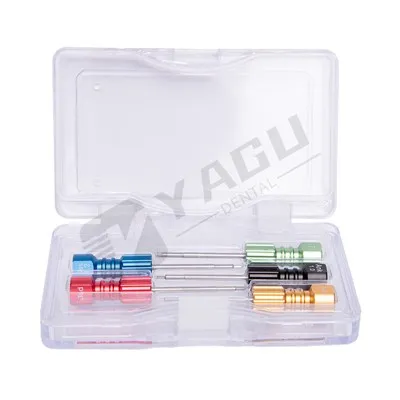
Straight abutments are crucial components in dental implant systems, serving as the connection between dental implants and prosthetic restorations. As a leading straight abutment supplier, we understand the diverse needs of dental professionals and patients. This blog will explore the various customization options available for straight abutments, highlighting how these options can enhance the functionality, aesthetics, and overall success of dental implant procedures.


Material Selection
The choice of material for a straight abutment is fundamental, as it impacts the abutment's durability, biocompatibility, and aesthetic appeal. Different materials offer unique properties that can be tailored to specific clinical requirements.
- Titanium Abutments: Titanium is one of the most commonly used materials for straight abutments due to its excellent biocompatibility, strength, and corrosion resistance. It integrates well with the surrounding tissues, reducing the risk of allergic reactions. Titanium abutments are suitable for most dental implant cases, especially those where long - term stability is crucial.
- Zirconia Abutments: Zirconia has gained popularity in recent years for its superior aesthetic properties. It has a natural tooth - like appearance, making it an ideal choice for patients who require a more esthetic result, particularly in the anterior region of the mouth. Zirconia is also highly biocompatible and has good mechanical strength, although it may be more brittle than titanium in some cases.
- Gold - Alloy Abutments: Gold - alloy abutments offer high strength and excellent corrosion resistance. They are often used in cases where a high - quality, long - lasting solution is needed. Gold - alloy abutments can be easily adjusted and modified during the restoration process, providing flexibility for the dental professional.
Abutment Height and Diameter
Customizing the height and diameter of a straight abutment is essential to ensure a proper fit between the dental implant and the prosthetic restoration.
- Height: The height of the abutment must be carefully selected to ensure that the prosthetic restoration is at the correct occlusal level. This requires accurate measurement of the soft tissue thickness and the vertical dimension of the edentulous space. Different patients may have varying soft tissue profiles, and a customized abutment height can help to achieve optimal esthetics and function.
- Diameter: The diameter of the straight abutment should match the diameter of the dental implant and the prosthetic restoration. A proper diameter match ensures a stable connection between the components and distributes the occlusal forces evenly. Incorrect diameter selection can lead to complications such as micromovement, screw loosening, and premature wear of the restoration.
Connector Design
The connector design of a straight abutment plays a vital role in the stability and function of the dental implant system.
- Internal vs. External Connection: Internal connection abutments have the connection mechanism inside the implant body, which provides a more stable and esthetic solution. They reduce the risk of crestal bone loss and have less micromovement compared to external connection abutments. External connection abutments, on the other hand, are easier to place and may be more suitable for some clinical situations, such as in areas with limited access.
- Conical vs. Cylindrical Connection: Conical connections offer a self - centering and tight fit between the abutment and the implant, enhancing the stability of the system. Cylindrical connections are simpler in design and may be more cost - effective, but they may require additional measures to ensure proper alignment.
Surface Treatment
Surface treatment can significantly improve the performance of straight abutments.
- Sandblasting and Acid - Etching: This treatment creates a rough surface on the abutment, which can enhance the adhesion of the prosthetic restoration. It also promotes better tissue integration, reducing the risk of peri - implantitis.
- Hydrophilic Treatment: Hydrophilic surfaces have better wettability, which can improve the interaction between the abutment and the surrounding tissues. This can lead to faster tissue healing and better long - term stability.
Custom Aesthetic Features
In addition to the basic customization options, there are also aesthetic features that can be tailored to meet the patient's specific needs.
- Color Matching: Zirconia abutments can be color - matched to the patient's natural teeth, providing a more seamless and esthetic result. This is particularly important for anterior restorations, where the appearance of the teeth is a major concern.
- Anatomical Shape: Some straight abutments can be customized to mimic the natural shape of the tooth root and the surrounding soft tissues. This can improve the overall esthetics of the restoration and enhance the patient's confidence.
Comparison with Other Abutment Types
It's also important to understand how straight abutments compare with other types of abutments, such as angled and multi - unit abutments.
- Osstem Angled Abutment: Osstem Angled Abutment is designed for cases where the implant is placed at an angle. Unlike straight abutments, angled abutments can correct the angulation of the implant, allowing for a more natural - looking and functional restoration. However, they may be more complex to place and require more precise planning.
- Hiossen Multi Unit Abutment: Hiossen Multi Unit Abutment is used when multiple implants need to be connected to a single prosthetic restoration. This type of abutment provides increased stability and support for large - span restorations. Straight abutments, on the other hand, are typically used for single - tooth restorations.
- Angled Abutment Straumann: Angled Abutment Straumann is another example of an angled abutment from a well - known manufacturer. Similar to other angled abutments, it offers solutions for implant angulation issues, while straight abutments are more suitable for implants placed in a straight orientation.
Why Choose Our Straight Abutments
As a trusted straight abutment supplier, we offer high - quality products with a wide range of customization options. Our team of experts is dedicated to providing personalized solutions to meet the specific needs of dental professionals and their patients. We use the latest manufacturing techniques and materials to ensure the durability, biocompatibility, and esthetics of our straight abutments.
Contact Us for Procurement
If you are interested in our straight abutment products or would like to discuss your specific requirements, please feel free to contact us. We look forward to the opportunity to work with you and provide the best solutions for your dental implant cases.
References
- Misch, C. E. (2018). Contemporary Implant Dentistry. Quintessence Publishing.
- Tarnow, D. P., & Cho, S. C. (2019). Dental Implant Prosthetics. Elsevier.
- Buser, D., Martin, W., & Belser, U. C. (2020). Oral Implantology: Principles and Practice. Wiley - Blackwell.