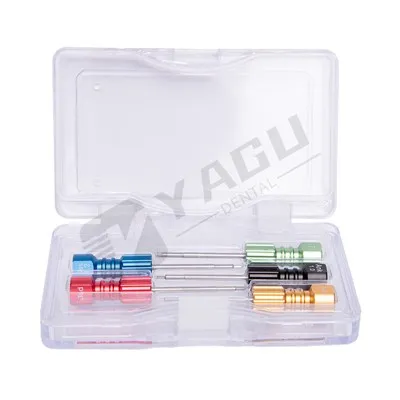
Hey there! As a supplier of Multi Unit Abutments, I've been getting a lot of questions about the biomechanical properties of these nifty dental components. So, I thought I'd take a few minutes to break it all down for you.
Let's start with the basics. Multi Unit Abutments are essential parts in dental implant systems. They act as the connection between the dental implant, which is placed in the jawbone, and the dental prosthesis, like a crown or a bridge. The biomechanical properties of these abutments play a crucial role in the long - term success of the dental implant treatment.
1. Material Properties
Most Multi Unit Abutments are made from titanium or its alloys. Titanium is a popular choice because of its excellent biocompatibility. It doesn't cause any adverse reactions in the human body, which is super important when you're dealing with something that's going to be inside your mouth for a long time.
In terms of mechanical properties, titanium has a high strength - to - weight ratio. This means it can withstand a significant amount of force without being too heavy. For example, when you chew your food, your teeth experience a lot of pressure. The Multi Unit Abutment needs to be able to handle this pressure so that the dental implant and prosthesis remain stable.
Titanium also has good corrosion resistance. The oral environment is full of saliva, food particles, and bacteria, which can be quite corrosive. Abutments made of titanium can resist this corrosion, ensuring their durability over time.
2. Fit and Stability
One of the key biomechanical aspects of Multi Unit Abutments is their fit with the dental implant. A proper fit is essential for the stability of the entire dental restoration. When the abutment fits snugly onto the implant, it distributes the forces evenly across the implant - bone interface.
If the fit is poor, it can lead to a phenomenon called micromotion. Micromotion is the small, unwanted movement between the abutment and the implant. This can cause stress concentration at the implant - bone interface, which may lead to bone resorption over time. Bone resorption is not good because it can weaken the support for the dental implant and eventually cause the implant to fail.
To ensure a good fit, manufacturers use advanced manufacturing techniques. They make sure that the dimensions of the abutment are precise, matching the specifications of the dental implant. This way, the Multi Unit Abutment can provide a stable foundation for the dental prosthesis.
3. Force Distribution
When you bite down, the forces are transmitted from the dental prosthesis through the Multi Unit Abutment to the implant and then to the surrounding bone. The way these forces are distributed is crucial for the health of the bone and the longevity of the implant.
Multi Unit Abutments are designed to distribute the forces in a way that mimics the natural tooth. Natural teeth have a complex structure that allows them to absorb and distribute forces effectively. Similarly, the design of the abutment aims to transfer the forces in a more physiological manner.
For example, some Multi Unit Abutments have a tapered shape. This shape helps to direct the forces towards the apex of the implant, where the bone is usually stronger. By doing so, it reduces the stress on the marginal bone, which is more prone to resorption.
4. Angulation
Angled Multi Unit Abutments, like the ones you can find here, are very useful in cases where the dental implant is not placed in an ideal position. Sometimes, due to anatomical limitations or patient - specific factors, the implant may be placed at an angle.
Angled abutments allow the dental prosthesis to be aligned properly with the adjacent teeth. However, the angulation also affects the biomechanical properties of the abutment. When the abutment is angled, the forces are not transmitted in a straight line. This can create additional stress on the implant - abutment connection and the surrounding bone.
Manufacturers take this into account when designing angled abutments. They use materials and designs that can handle these non - linear forces. For example, Angled Abutment Straumann and Angled Abutment Implant are designed to optimize force distribution even in angled situations.
5. Fatigue Resistance
Over time, the Multi Unit Abutment is subjected to repeated loading and unloading cycles. This is similar to how a car's engine parts are constantly under stress as the car is driven. The ability of the abutment to withstand these repeated cycles without failing is called fatigue resistance.
The design and material of the abutment play a role in its fatigue resistance. A well - designed abutment with proper material selection can endure a large number of cycles without developing cracks or fractures. This is important because if the abutment fails due to fatigue, it can lead to the failure of the entire dental restoration.
Why Choose Our Multi Unit Abutments?
As a supplier, we understand the importance of these biomechanical properties. Our Multi Unit Abutments are made from high - quality titanium alloys, ensuring excellent biocompatibility, strength, and corrosion resistance.
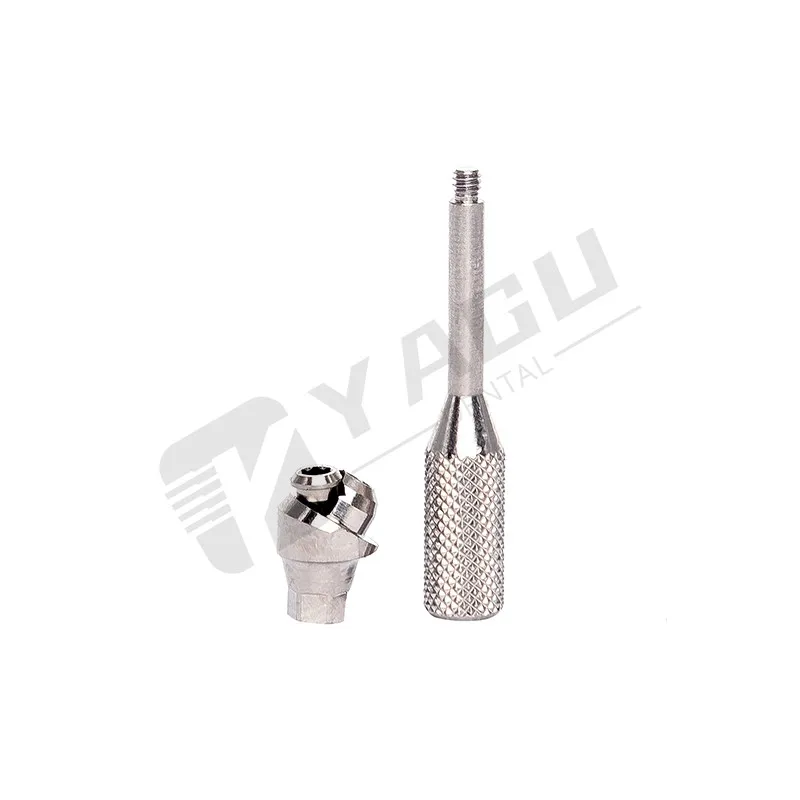
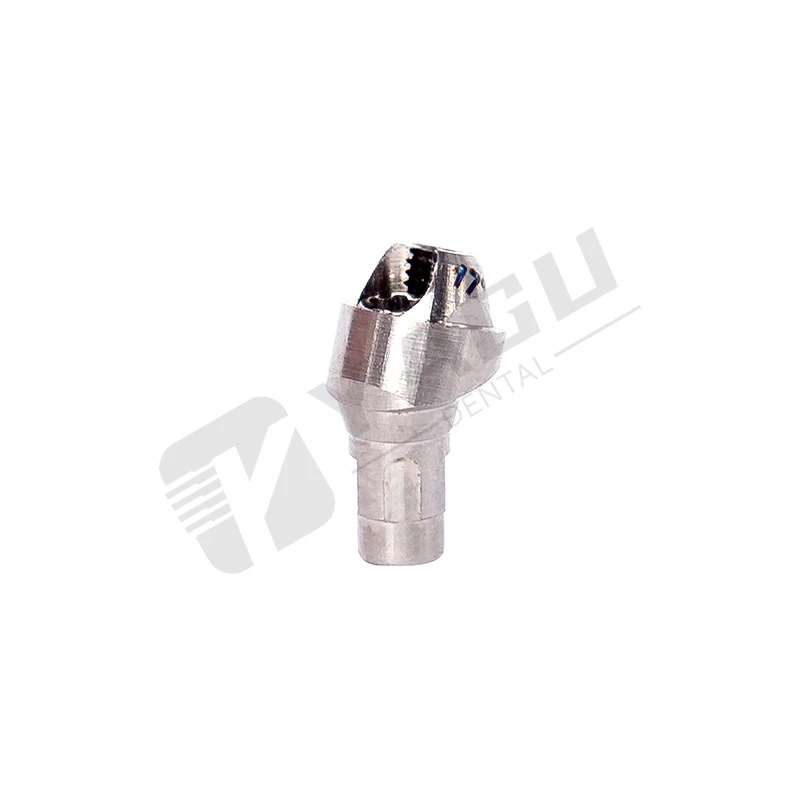
We use state - of - the - art manufacturing processes to guarantee a precise fit with the dental implants. This reduces the risk of micromotion and ensures long - term stability. Our angled abutments are designed to handle the complex forces associated with non - ideal implant placements.
If you're in the dental industry and are looking for reliable Multi Unit Abutments, we'd love to have a chat with you. Whether you're a dentist, a dental lab technician, or a distributor, we can provide you with the products you need. Contact us to start a discussion about your requirements and how our products can meet them. Let's work together to provide the best dental solutions for your patients.
References
- Misch, C. E. (2010). Dental Implant Prosthetics. Mosby.
- Brånemark, P. I., Zarb, G. A., & Albrektsson, T. (1985). Tissue - Integrated Prostheses: Osseointegration in Clinical Dentistry. Quintessence Publishing.