Hey there! As a supplier of Multi Unit Abutments, I've been getting a lot of questions lately about whether these little wonders are suitable for all patients. So, I thought I'd sit down and have a good old chat with you about it.
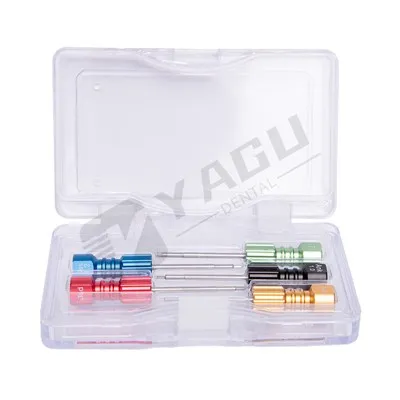
First off, let's quickly go over what Multi Unit Abutments are. They're basically components used in dental implant procedures. They connect the dental implant (that's the part that's placed in the jawbone) to the dental restoration, like a crown or a bridge. They come in different shapes and sizes, and some even have angles to fit specific dental needs. For example, you can check out Angled Abutment Dental Implant, Angled Multi Unit Abutments, and Multi Angled Abutment on our website to see the variety.
Now, let's get to the big question: Are Multi Unit Abutments suitable for all patients? Well, the short answer is no. But let's dig deeper into the reasons why.
Patient's Oral Health
One of the most important factors is the patient's oral health. If a patient has a lot of gum disease or bone loss in the jaw, it can be a problem. Multi Unit Abutments rely on a stable foundation in the jawbone. If the bone is weak or has been severely damaged by gum disease, the implant might not be able to integrate properly. This means the abutment could become loose over time, and the whole dental restoration might fail.
For example, patients with advanced periodontitis often have significant bone loss. In these cases, the dentist might need to do some bone grafting first to build up the bone before considering a dental implant with a Multi Unit Abutment. And even then, there's no guarantee that it will work. So, in situations where the oral health is really poor, Multi Unit Abutments might not be the best option.
Anatomy of the Jaw and Teeth
The anatomy of the patient's jaw and teeth also plays a huge role. Everyone's mouth is different, and sometimes the natural shape and position of the teeth and jaw can make it difficult to use a Multi Unit Abutment.
For instance, if a patient has a very narrow jaw or if the teeth are crowded in a way that doesn't leave enough space for the abutment, it can be a challenge. The dentist needs to make sure that there's enough room for the abutment to be placed correctly and for the dental restoration to fit properly. If there's not enough space, the abutment might rub against the surrounding teeth or tissues, causing pain and potential damage.
Also, the angle at which the implant is placed in the jaw matters. In some cases, the natural angle of the jawbone might not be ideal for a standard Multi Unit Abutment. That's where the Angled Multi Unit Abutments come in handy. They can be adjusted to fit the specific angle of the implant, but even then, there are limits. If the angle is too extreme, it can still cause problems with the stability and function of the dental restoration.
Patient's Lifestyle and Habits
A patient's lifestyle and habits can also affect whether Multi Unit Abutments are suitable. For example, patients who grind their teeth at night (a condition called bruxism) put a lot of extra stress on their teeth and dental restorations. This constant grinding can cause the Multi Unit Abutment to wear down or become loose over time.
Smoking is another big factor. Smoking can reduce blood flow to the gums and jawbone, which can slow down the healing process after the implant surgery. It also increases the risk of infection and can make it more difficult for the implant to integrate with the bone. So, smokers might have a higher chance of implant failure when using Multi Unit Abutments.
When Multi Unit Abutments Are a Good Fit
Despite all these limitations, there are plenty of situations where Multi Unit Abutments are a great choice. For patients with good oral health, a stable jawbone, and a normal dental anatomy, they can provide a reliable and long - lasting solution for replacing missing teeth.
If a patient has lost multiple teeth in a row, a Multi Unit Abutment can be used to support a dental bridge. This can restore the patient's ability to chew properly and improve the appearance of their smile. And because the abutment is designed to connect multiple implants, it can provide better stability compared to single - unit abutments in some cases.
Also, for patients who are looking for a more natural - looking dental restoration, Multi Unit Abutments can be a great option. They can be customized to match the color and shape of the surrounding teeth, making the dental restoration blend in seamlessly.
Conclusion
So, to sum it up, Multi Unit Abutments are not suitable for all patients. The patient's oral health, anatomy of the jaw and teeth, and lifestyle habits all need to be carefully considered before deciding if they're the right choice. But for the right patients, they can be a fantastic solution for replacing missing teeth.
As a supplier, we're always here to help dentists and patients make the best decisions. We offer a wide range of Multi Unit Abutments, including the Angled Abutment Dental Implant, Angled Multi Unit Abutments, and Multi Angled Abutment, to meet different needs.
If you're a dentist or a patient interested in learning more about our products or discussing whether Multi Unit Abutments are right for you, don't hesitate to get in touch with us. We'd love to have a chat and help you find the best solution for your dental needs.


References
- Misch, C. E. (2018). Dental Implant Prosthetics. Elsevier Health Sciences.
- Tarnow, D. P., & Cho, S. C. (2017). The effect of the inter-implant distance on the height of the inter-implant bone crest. Journal of Periodontology, 66(2), 154 - 158.
- Zitzmann, N. U., & Marinello, C. P. (2008). A systematic review of the survival and complication rates of fixed partial dentures (FPDs) after an observation period of at least 5 years. Clinical Oral Implants Research, 19(S1), 22 - 34.