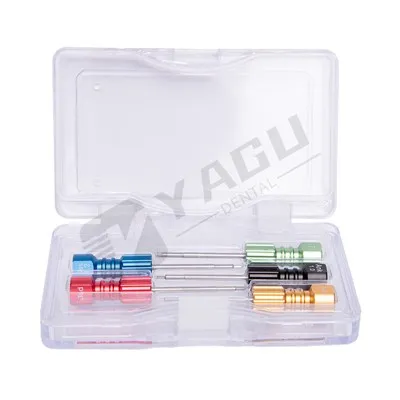
Hey there! I'm a supplier of Bone Chip Makers, and I've been in this game for quite a while. Over the years, I've learned a thing or two about how to evaluate the performance of these nifty devices. In this blog, I'm gonna share some of my insights with you.
First off, let's talk about what a Bone Chip Maker is. It's a dental tool used to harvest bone chips during dental implant procedures. These bone chips can then be used for bone grafting, which helps in the integration of the dental implant into the jawbone. You can check out our Bone Chip Maker on our website for more details.
Cutting Efficiency
One of the most important factors in evaluating the performance of a Bone Chip Maker is its cutting efficiency. A good Bone Chip Maker should be able to cut through bone smoothly and quickly, without causing excessive damage to the surrounding tissue. This is crucial because it reduces the patient's discomfort and speeds up the healing process.
To test the cutting efficiency, you can perform a simple experiment. Take a sample of bone (usually from an animal model) and use the Bone Chip Maker to cut through it. Measure the time it takes to cut through the bone and observe the quality of the cut. A sharp and efficient Bone Chip Maker will cut through the bone cleanly, with minimal debris and damage to the bone edges.
Another aspect of cutting efficiency is the size and shape of the bone chips produced. The Bone Chip Maker should be able to produce bone chips of the right size and shape for bone grafting. Generally, bone chips that are too large may not integrate well with the surrounding bone, while chips that are too small may be easily displaced.
Durability
Durability is another key factor when evaluating a Bone Chip Maker. Dental tools are subjected to a lot of wear and tear during use, so it's important that the Bone Chip Maker can withstand repeated use without losing its performance.
To assess durability, you can look at the materials used in the construction of the tool. High - quality stainless steel is a popular choice for Bone Chip Makers because it is corrosion - resistant and can maintain its sharpness over time. You can also check the design of the tool. A well - designed Bone Chip Maker will have a sturdy construction that can handle the forces exerted during cutting.
You can also perform a durability test by using the Bone Chip Maker multiple times on different bone samples. Observe if there are any signs of wear, such as dulling of the cutting edge or loosening of the parts. If the tool starts to show signs of wear after only a few uses, it may not be a very durable option.
Ease of Use
A Bone Chip Maker should be easy to use, both for the dentist and the assistant. This includes factors such as the grip of the tool, its weight, and its maneuverability.
The grip of the Bone Chip Maker is crucial for maintaining control during the cutting process. A tool with a comfortable and non - slip grip will reduce the risk of accidental slips and improve the accuracy of the cut. You can try holding the tool in your hand and see how it feels. Does it fit comfortably? Can you easily apply the necessary pressure without your hand getting tired?


The weight of the tool also matters. A tool that is too heavy can cause fatigue during long procedures, while a tool that is too light may not have enough power to cut through the bone effectively. Look for a Bone Chip Maker that has a balanced weight.
Maneuverability is another important aspect. The tool should be able to reach different areas of the mouth easily, especially in hard - to - reach places. A flexible and well - designed Bone Chip Maker will allow the dentist to perform the procedure with greater ease and precision.
Compatibility with Other Tools
In a dental implant procedure, the Bone Chip Maker often works in conjunction with other tools, such as Implant Screw Drivers and Dental Implant Screwdrivers. Therefore, it's important that the Bone Chip Maker is compatible with these other tools.
For example, the size and shape of the bone chips produced by the Bone Chip Maker should be compatible with the bone grafting techniques used with the implant screw drivers. If the bone chips are not the right size or shape, they may not work well with the other tools, which can affect the success of the dental implant procedure.
You can also check if the Bone Chip Maker can be easily integrated into the existing dental equipment setup. It should be able to connect to the power source or handpiece without any issues.
Cleaning and Maintenance
Proper cleaning and maintenance are essential for the performance and longevity of a Bone Chip Maker. A good Bone Chip Maker should be easy to clean and sterilize.
The tool should be designed in such a way that there are no hard - to - reach areas where debris can accumulate. Smooth surfaces and removable parts make it easier to clean the tool thoroughly. You can check the manufacturer's instructions for cleaning and maintenance procedures.
Regular maintenance, such as sharpening the cutting edge and lubricating the moving parts, can also extend the life of the Bone Chip Maker. Make sure that the tool comes with clear instructions on how to perform these maintenance tasks.
Cost - Effectiveness
Finally, cost - effectiveness is an important consideration. While you don't want to compromise on quality, you also want to get the best value for your money.
Compare the prices of different Bone Chip Makers on the market. Consider the features, performance, and durability of each tool in relation to its price. A more expensive tool may offer better performance and durability, but it may not always be necessary depending on your specific needs.
You can also look for tools that come with a warranty or after - sales support. This can give you some peace of mind knowing that you're covered in case there are any issues with the tool.
Conclusion
Evaluating the performance of a Bone Chip Maker involves considering several factors, including cutting efficiency, durability, ease of use, compatibility with other tools, cleaning and maintenance, and cost - effectiveness. By taking the time to assess these factors, you can choose a Bone Chip Maker that will meet your needs and help you perform successful dental implant procedures.
If you're interested in learning more about our Bone Chip Makers or are looking to make a purchase, feel free to reach out for a procurement discussion. We're always happy to help you find the right tool for your practice.
References
- Dental Implantology Textbooks
- Journal of Oral and Maxillofacial Surgery
- Industry Reports on Dental Tools and Equipment