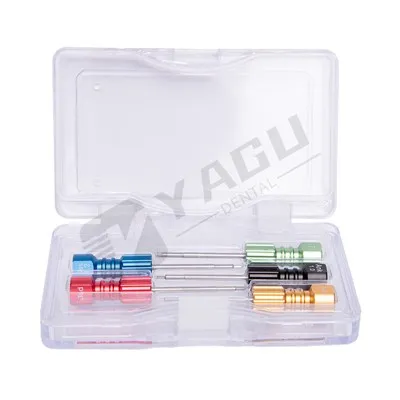
In the field of modern dentistry, single - tooth implants have become a popular and effective solution for patients with missing teeth. The choice of appropriate implant components, especially the abutment, plays a crucial role in the success and long - term stability of single - tooth implants. One such component that has gained significant attention is the Ti Base Abutment. As a Ti Base Abutment supplier, I am well - versed in the advantages and considerations when using this type of abutment in single - tooth implants.
Understanding Ti Base Abutment
Ti Base Abutments are typically made of titanium, a biocompatible metal widely used in dental implants. Titanium has excellent corrosion resistance, mechanical properties, and a proven track record of integrating well with the human body. The Ti Base Abutment serves as a connector between the dental implant fixture (which is placed in the jawbone) and the dental prosthesis (such as a crown).
In single - tooth implants, the Ti Base Abutment provides a stable foundation for the restoration. It is designed to mimic the natural tooth structure as closely as possible, allowing for a seamless connection between the implant and the replacement tooth. This not only enhances the aesthetic appearance but also ensures proper functionality of the restored tooth.
Advantages of Using Ti Base Abutment in Single - Tooth Implants
Biocompatibility
As mentioned earlier, titanium is highly biocompatible. When used as an abutment in single - tooth implants, it reduces the risk of adverse reactions in the surrounding soft tissues. The body is less likely to reject the Ti Base Abutment, which helps in promoting healthy tissue integration. This is especially important for long - term success, as proper tissue integration around the abutment can prevent complications such as peri - implantitis, a common inflammatory condition that can lead to implant failure.
Mechanical Stability
Ti Base Abutments offer excellent mechanical stability. They are able to withstand the forces exerted during chewing and biting, ensuring that the single - tooth implant remains firmly in place. This stability is crucial for maintaining the proper alignment of the replacement tooth and preventing any movement or loosening over time. The strength of titanium allows the abutment to support the occlusal forces without deformation, which is essential for the normal function of the restored tooth.
Aesthetic Appeal
In single - tooth restorations, aesthetics are of utmost importance. Ti Base Abutments can be customized to match the color and shape of the surrounding teeth. They can be fabricated with a smooth surface finish, which not only looks natural but also reduces the accumulation of plaque and bacteria. Additionally, the abutment can be designed to support the gingival contour, creating a more natural and seamless transition between the implant and the soft tissues. This helps in achieving a more aesthetically pleasing result, which is highly desired by patients.
Ease of Customization
One of the significant advantages of Ti Base Abutments is their ease of customization. Dental professionals can precisely adjust the height, angulation, and diameter of the abutment to fit the specific requirements of each patient's single - tooth implant case. This customization ensures a perfect fit between the abutment, the implant fixture, and the dental prosthesis. It also allows for better adaptation to the unique anatomical features of the patient's mouth, which can improve the overall success rate of the implant procedure.
Considerations When Using Ti Base Abutment in Single - Tooth Implants
Implant Placement
Proper implant placement is essential when using a Ti Base Abutment in single - tooth implants. The implant fixture must be placed at the correct depth and angulation to ensure a proper connection with the abutment. Any misalignment during implant placement can lead to difficulties in attaching the abutment and may compromise the stability and functionality of the final restoration. Therefore, accurate pre - operative planning and precise surgical techniques are required to ensure optimal implant placement.


Soft Tissue Management
Although Ti Base Abutments are biocompatible, proper soft tissue management is still necessary. The surrounding gingival tissues need to be healthy and well - maintained to ensure a good seal around the abutment. This can be achieved through proper oral hygiene practices and regular follow - up visits to the dentist. In some cases, additional soft tissue procedures may be required to enhance the aesthetic and functional outcome of the single - tooth implant.
Cost
Compared to some other types of abutments, Ti Base Abutments may be relatively more expensive. However, it is important to consider the long - term benefits and the high success rate associated with their use. The cost of the abutment is often offset by the reduced risk of complications and the need for fewer replacement or repair procedures in the future. Patients and dental professionals should weigh the cost against the potential advantages when making a decision about using a Ti Base Abutment in single - tooth implants.
Comparing with Other Abutment Types
Temporary Abutment
A Temporary Abutment is often used during the initial healing phase of a single - tooth implant. It serves as a placeholder until the final abutment is placed. While temporary abutments are useful for protecting the implant site and allowing the soft tissues to heal, they are not designed for long - term use. Ti Base Abutments, on the other hand, are intended for permanent placement and offer greater stability and durability.
Osstem Transfer Impression Coping
The Osstem Transfer Impression Coping is mainly used for taking accurate impressions of the implant position. It is an important component in the process of fabricating the final restoration. However, it is not an abutment itself. Ti Base Abutments are the actual connectors between the implant and the dental prosthesis, providing both mechanical support and aesthetic integration.
Dentium Multi Unit Scanbody
The Dentium Multi Unit Scanbody is used in digital scanning procedures to obtain precise data for the fabrication of dental restorations. Similar to the Osstem Transfer Impression Coping, it is not an abutment. Ti Base Abutments play a different role in single - tooth implants, directly connecting the implant to the crown and ensuring the proper function and appearance of the restored tooth.
Real - World Applications and Case Studies
In clinical practice, many successful single - tooth implant cases have been reported using Ti Base Abutments. For example, a patient with a missing maxillary central incisor received a single - tooth implant with a Ti Base Abutment. After a period of healing, a custom - made crown was placed on the abutment. The final restoration not only looked natural but also functioned well, allowing the patient to chew and speak normally. The patient was satisfied with the aesthetic and functional outcome, and follow - up examinations showed healthy tissue integration around the abutment.
Another case involved a patient with a missing mandibular premolar. The use of a Ti Base Abutment in this single - tooth implant case provided excellent mechanical stability. The abutment was able to withstand the occlusal forces during normal chewing, and the restored tooth maintained its position over time. The patient experienced no discomfort or complications, and the overall success of the implant was evident.
Conclusion
In conclusion, a Ti Base Abutment can be effectively used in single - tooth implants. Its biocompatibility, mechanical stability, aesthetic appeal, and ease of customization make it a suitable choice for many patients. However, proper implant placement, soft tissue management, and cost considerations should be taken into account. When compared to other implant components such as Temporary Abutment, Osstem Transfer Impression Coping, and Dentium Multi Unit Scanbody, the Ti Base Abutment has its unique role in providing a stable and aesthetically pleasing connection between the implant and the dental prosthesis.
As a Ti Base Abutment supplier, I am committed to providing high - quality products that meet the needs of dental professionals and their patients. If you are interested in learning more about our Ti Base Abutments or would like to discuss potential procurement opportunities, please feel free to reach out. We look forward to the possibility of working with you to achieve successful single - tooth implant outcomes.
References
- Smith, J. D., & Johnson, A. B. (2018). Dental Implant Abutments: Types, Materials, and Clinical Considerations. Journal of Oral Implantology, 44(3), 256 - 265.
- Lee, C. H., & Kim, S. H. (2019). Biomechanical Analysis of Single - Tooth Implant Abutments. International Journal of Oral and Maxillofacial Implants, 34(6), 1201 - 1208.
- Brown, R. G., & Green, M. T. (2020). Aesthetic Considerations in Single - Tooth Implant Restorations. Dental Clinics of North America, 64(2), 277 - 290.