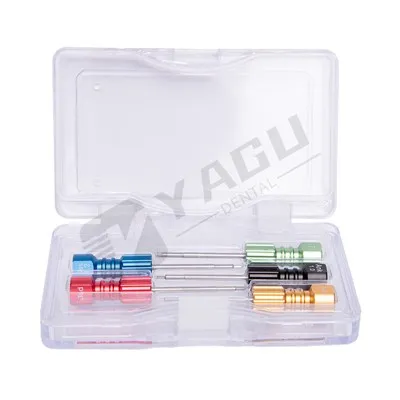
When it comes to dental implants, multi unit abutments play a crucial role in ensuring the success and functionality of the restoration. As a leading supplier of [Multi Unit Abutment], I have witnessed firsthand the impact that the size of these abutments can have in different clinical cases. In this blog post, I will delve into the significance of multi unit abutment size and how it matters in various scenarios.
Understanding Multi Unit Abutments
Before we discuss the importance of size, let's briefly understand what multi unit abutments are. Multi unit abutments are components used in dental implant restorations to connect multiple implant fixtures to a single prosthetic restoration. They provide flexibility in the design and placement of the final restoration, allowing for a more customized and functional solution.
Multi unit abutments come in various sizes, shapes, and materials to accommodate different patient needs and clinical situations. The size of a multi unit abutment refers to its diameter, height, and angulation, which can significantly affect the fit, stability, and aesthetics of the final restoration.
Importance of Size in Different Cases
1. Anterior Region
In the anterior region of the mouth, aesthetics are of utmost importance. The size of the multi unit abutment can greatly influence the appearance of the final restoration. A properly sized abutment will ensure that the prosthetic tooth aligns correctly with the surrounding natural teeth, creating a seamless and natural-looking smile.
For example, if the abutment is too large, it may cause the prosthetic tooth to appear bulky and out of proportion with the adjacent teeth. On the other hand, if the abutment is too small, it may result in a gap between the prosthetic tooth and the gum tissue, leading to an unaesthetic appearance. Therefore, selecting the appropriate size of the multi unit abutment is crucial for achieving optimal aesthetics in the anterior region.
Moreover, the size of the abutment can also affect the stability of the restoration. In the anterior region, where the teeth are subjected to significant forces during biting and chewing, a well-fitting abutment is essential to prevent movement or loosening of the prosthetic tooth. A properly sized abutment will provide adequate support and stability, ensuring the long-term success of the restoration.
2. Posterior Region
In the posterior region of the mouth, functionality is the primary concern. The size of the multi unit abutment can impact the occlusal forces and the distribution of stress on the implant and surrounding tissues. A larger abutment may distribute the forces more evenly, reducing the risk of implant overload and bone resorption.
For instance, in cases where the patient has a high occlusal force or a bruxism habit, a larger multi unit abutment may be recommended to withstand the increased stress. On the other hand, a smaller abutment may be suitable for patients with limited space or a lower occlusal force.
In addition, the size of the abutment can also affect the ease of placement and the accuracy of the restoration. A well-fitting abutment will ensure a precise connection between the implant and the prosthetic tooth, minimizing the risk of complications such as screw loosening or cement washout.
3. Implant Density
The density of implants in a given area can also influence the choice of multi unit abutment size. In cases where multiple implants are placed in close proximity, a smaller abutment may be preferred to avoid interference between the abutments and to ensure proper alignment of the prosthetic restoration.
Conversely, in cases where the implants are more widely spaced, a larger abutment may be used to provide sufficient support and stability for the restoration. The size of the abutment should be carefully selected to optimize the fit and function of the multi unit restoration, taking into account the implant density and the specific requirements of the patient.
4. Bone Quality and Quantity
The quality and quantity of the bone at the implant site are important factors to consider when selecting the size of the multi unit abutment. In cases where the bone is of poor quality or there is limited bone quantity, a smaller abutment may be more appropriate to minimize the stress on the implant and the surrounding bone.
On the other hand, in cases where the bone is of good quality and there is sufficient bone quantity, a larger abutment may be used to provide greater stability and support for the restoration. The size of the abutment should be chosen based on a thorough assessment of the bone condition, taking into account factors such as bone density, bone height, and bone width.
Choosing the Right Size
Selecting the appropriate size of the multi unit abutment requires a comprehensive evaluation of the patient's oral condition, including the anatomy of the jaw, the position and orientation of the implants, the occlusal forces, and the aesthetic requirements. A detailed treatment plan should be developed in collaboration with the dentist, prosthodontist, and implant surgeon to ensure the best possible outcome.
In addition to the clinical factors, it is also important to consider the availability of different sizes and types of multi unit abutments. As a [Multi Unit Abutment] supplier, we offer a wide range of abutments in various sizes, shapes, and materials to meet the diverse needs of our customers. Our products are designed to provide a precise fit, excellent stability, and optimal aesthetics, ensuring the success of the dental implant restoration.
Conclusion
In conclusion, the size of the multi unit abutment matters significantly in different clinical cases. It can affect the aesthetics, functionality, stability, and long-term success of the dental implant restoration. By carefully considering the patient's specific needs and the clinical factors, and by choosing the appropriate size of the abutment, we can achieve optimal results and improve the quality of life for our patients.
If you are a dentist, prosthodontist, or implant surgeon looking for high-quality multi unit abutments, we invite you to [contact us for procurement and negotiation]. Our team of experts is dedicated to providing you with the best products and services to meet your needs.


References
- Misch, C. E. (2018). Contemporary Implant Dentistry. Elsevier.
- Tarnow, D. P., & Cho, S. C. (2019). The Biology of the Peri-implant Soft Tissues. Quintessence Publishing.
- Zarb, G. A., Bolender, C. L., & Hickey, J. C. (2019). Prosthodontic Treatment for Edentulous Patients: Complete Dentures and Implant-Supported Prostheses. Elsevier.