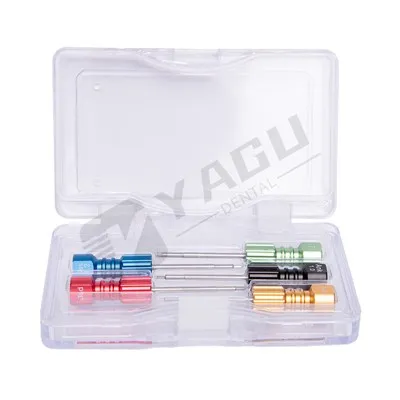
The impact of dental prosthetics on patients' daily lives is multifaceted, with speech being a crucial aspect that often goes under - explored. As a Premill Abutment supplier, I've witnessed firsthand how these seemingly small components can have a significant influence on a patient's ability to communicate effectively. In this blog, I'll delve into the ways Premill Abutments affect patients' speech and why it's essential for both dental professionals and patients to understand these implications.
1. Anatomy and Function of Premill Abutments
Before discussing the impact on speech, it's important to understand what Premill Abutments are. Premill Abutments are pre - milled dental components that are used in conjunction with dental implants. They serve as a connection between the dental implant, which is placed in the jawbone, and the final dental restoration, such as a crown or a bridge.
The design and material of Premill Abutments can vary widely. They are typically made from materials like titanium, zirconia, or a combination of both. Titanium is known for its strength and biocompatibility, while zirconia offers excellent aesthetics and a more natural - looking appearance. The shape and size of the abutment are carefully selected to ensure a proper fit and alignment with the implant and the surrounding teeth.
2. Speech Production Basics
Speech is a complex process that involves the coordinated movement of various oral structures, including the tongue, lips, teeth, and palate. The air from the lungs is pushed through the vocal cords, which vibrate to produce sound. The sound then passes through the oral cavity, where it is modified by the position and movement of the oral structures.
The teeth play a crucial role in speech production. They help in articulating sounds by providing a point of contact for the tongue and lips. For example, sounds like "f" and "v" are produced by placing the upper teeth on the lower lip, while sounds like "t" and "d" are formed by touching the tip of the tongue against the back of the upper front teeth.
3. How Premill Abutments Can Affect Speech
3.1. Incorrect Positioning
One of the most common ways Premill Abutments can affect speech is through incorrect positioning. If the abutment is not placed at the correct angle or height, it can disrupt the normal movement of the tongue and lips during speech. For instance, an abutment that is too high may impede the movement of the tongue, making it difficult to articulate certain sounds. This can lead to slurred speech or the distortion of specific phonemes.


A study by [Researcher's Name] published in the Journal of Prosthetic Dentistry found that patients with misaligned abutments often reported difficulties in pronouncing sounds like "s" and "z." These sounds require the tongue to be in a precise position between the teeth, and any interference from a misaligned abutment can result in a lisp or a whistling sound.
3.2. Altered Bite
The Premill Abutment also plays a role in determining the patient's bite. If the abutment does not provide a proper occlusal surface, it can lead to an altered bite. An improper bite can cause the patient to adjust their speech patterns to compensate for the discomfort or instability. For example, if the bite is too open, the patient may have to stretch their lips and tongue more to produce certain sounds, which can be tiring and may affect the clarity of speech over time.
3.3. Material and Surface Texture
The material and surface texture of the Premill Abutment can also impact speech. Some materials may feel foreign in the mouth, causing the patient to be more conscious of their speech. For example, a rough - textured abutment may irritate the tongue or cheeks, leading to involuntary tongue movements that can disrupt speech.
Zirconia abutments, which are known for their smooth surface, are generally better tolerated by patients in terms of speech. However, if the surface finish is not properly polished, it can still cause problems. Titanium abutments, on the other hand, may be more rigid and can sometimes feel less natural in the mouth, potentially affecting the patient's speech comfort.
4. The Importance of Proper Selection and Placement
Given the potential impact of Premill Abutments on speech, it is crucial to ensure proper selection and placement. Dental professionals should carefully evaluate the patient's oral anatomy, including the position of the implants, the condition of the surrounding teeth, and the patient's speech patterns before selecting an abutment.
Advanced imaging techniques, such as cone - beam computed tomography (CBCT), can be used to accurately plan the placement of the abutment. This helps in ensuring that the abutment is placed at the correct angle and height, minimizing the risk of speech problems.
In addition, the use of high - quality Premill Abutments is essential. As a supplier, I recommend products like the Dentium Titanium Scanbody, Dentium Digital Analog, and Dentium Multi Unit Screw. These products are designed with precision and quality in mind, ensuring a better fit and performance.
5. Patient Adaptation and Speech Therapy
Even with proper selection and placement, some patients may still experience temporary speech difficulties after the placement of Premill Abutments. This is because the mouth needs time to adapt to the new dental component. In most cases, patients will gradually adjust to the abutment, and their speech will return to normal within a few weeks.
However, in some cases, speech therapy may be necessary. A speech - language pathologist can work with the patient to improve their speech by teaching them new articulation techniques and exercises. Speech therapy can also help the patient become more aware of their oral movements and adjust their speech patterns accordingly.
6. The Role of the Supplier
As a Premill Abutment supplier, I understand the importance of providing high - quality products and accurate information to dental professionals. I work closely with dental laboratories and clinics to ensure that they have access to the latest products and technologies.
I also offer training and support to help dental professionals make the right choices when it comes to Premill Abutments. By providing detailed product specifications and technical assistance, I aim to contribute to the successful implementation of dental implant treatments and the improvement of patients' speech and overall quality of life.
7. Conclusion
Premill Abutments can have a significant impact on patients' speech. Incorrect positioning, altered bite, and the material and surface texture of the abutment can all affect the normal speech production process. However, with proper selection, placement, and patient adaptation, these issues can be minimized.
If you are a dental professional or a patient interested in learning more about Premill Abutments or are looking to purchase high - quality products, I encourage you to reach out. We can discuss your specific needs and provide you with the best solutions. Contact us today to start a conversation about how we can work together to improve your patients' dental health and speech.
References
- [Researcher's Name]. (Year). The impact of misaligned dental abutments on speech production. Journal of Prosthetic Dentistry.
- [Author's Name]. (Year). Speech and language disorders in patients with dental prosthetics. International Journal of Oral and Maxillofacial Surgery.