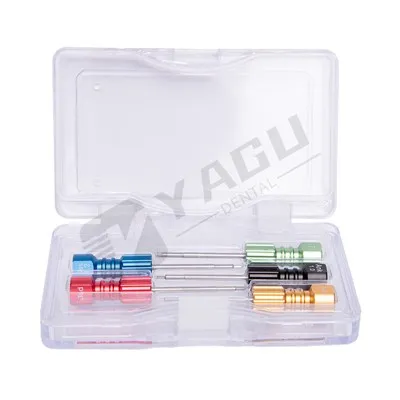
A casting abutment is a crucial component in dental implant restoration, serving as a connector between the dental implant and the dental prosthesis. Understanding how a casting abutment performs under different biting forces is essential for both dental professionals and patients to ensure the long - term success and stability of the dental restoration. As a casting abutment supplier, I've gained in - depth knowledge from our product experience and industry research.
The Structure and Material of Casting Abutments
Before delving into the performance under different biting forces, it's important to understand the structure and materials of casting abutments. Casting abutments are typically made of high - strength metals such as titanium or zirconia. Titanium is widely used due to its excellent biocompatibility, high strength - to - weight ratio, and corrosion resistance. Zirconia, on the other hand, offers superior aesthetics, being tooth - colored, and also has good mechanical properties.
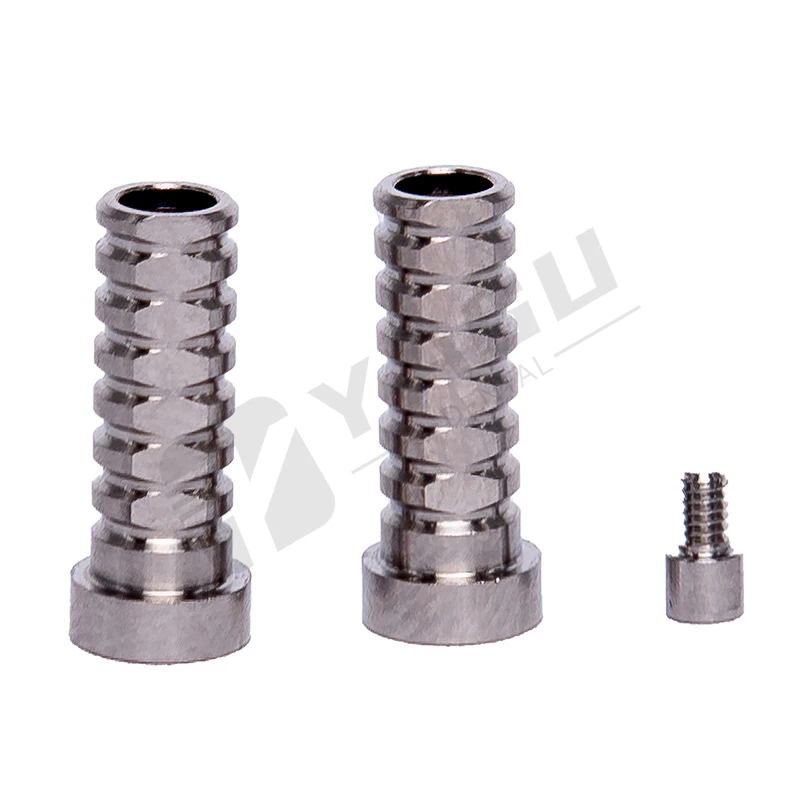
The design of a casting abutment includes a connector to the implant fixture and a platform for attaching the dental crown or bridge. The shape, size, and angle of the abutment are carefully engineered to meet different clinical requirements, such as single - tooth restorations or multi - unit bridges.
Performance under Normal Biting Forces
During normal chewing, the biting forces exerted on teeth range from around 50 - 200 Newtons. A well - designed and properly placed casting abutment can withstand these forces with ease. Under normal loading, the abutment transfers the biting forces from the dental prosthesis to the implant fixture and then to the surrounding bone.
The material of the casting abutment plays a significant role in this process. Titanium abutments, for example, can effectively distribute the forces due to their inherent strength and flexibility. The stress is evenly spread, reducing the risk of excessive pressure on the implant - bone interface. Zirconia abutments, being brittle in comparison, rely on their precise fit and correct design to ensure proper force dissipation. When the fit is optimal, they can also perform well under normal biting forces, providing a stable base for the dental prosthesis.
Performance under High Biting Forces
Certain individuals may exert higher biting forces due to habits such as bruxism (teeth grinding) or clenching. In such cases, the biting forces can reach up to 500 Newtons or more. High biting forces pose a greater challenge to the casting abutment.
For titanium casting abutments, although they are strong, repeated high - force loading can lead to micro - fatigue. Over time, this might cause the abutment to develop cracks or even break. However, with proper alloy selection and heat - treatment processes, we can enhance the fatigue resistance of titanium abutments. At our company, we have been constantly researching and improving our titanium - based casting abutments to better withstand high - force situations, ensuring long - term functionality for patients with high biting forces.
Zirconia abutments, as mentioned before, are more prone to fracture under high forces. The risk exacerbates when there are pre - existing internal flaws or improper marginal adaptation. However, new manufacturing techniques and design improvements are being made to enhance the resistance of zirconia abutments. For example, some advanced zirconia materials have better crack - propagation resistance. It's crucial for dental professionals to assess the patient's occlusal forces accurately and select the appropriate type of abutment accordingly.
Performance under Irregular Biting Forces
Irregular biting forces can occur due to factors such as malocclusion or improper restoration. These forces are not evenly distributed, leading to uneven stress on the casting abutment. In such scenarios, one part of the abutment may experience higher stress concentration than others.
A casting abutment under irregular forces may show signs of premature wear on the surface. This can affect the fit of the dental prosthesis and lead to loosening or misalignment. To counter this, precise customization of the casting abutment according to the patient's occlusal anatomy is crucial. Our company offers customized casting abutments that are designed based on detailed patient information, allowing for better force distribution even in the presence of irregular forces.
The Impact of Abutment - Implant Connection Design
The connection between the casting abutment and the implant fixture also significantly affects its performance under different biting forces. There are various types of connections, such as internal hexagonal, external hexagonal, and Morse - taper connections.
The internal hexagonal connection provides a stable interface that can better resist rotational forces. It helps in evenly distributing the forces from the abutment to the implant, which is especially important under high or irregular biting forces. The external hexagonal connection, while relatively simple, may be more prone to loosening under certain loading conditions, as the hexagonal interfaces can experience wear over time.
The Morse - taper connection has become increasingly popular due to its high - precision fit. It offers good sealing and can effectively transfer forces, reducing the risk of micro - leakage and peri - implant diseases. At our company, we provide casting abutments with different connection types to meet the diverse needs of dental practitioners and their patients, based on the specific clinical situation and expected biting forces.
Related Product Links
If you are interested in other dental implant - related products, we recommend checking out the Dentium Lab Model Analog, Tibase, and Osstem Temporary Abutment. These products are also essential for comprehensive dental implant restorations and can work in conjunction with our high - quality casting abutments.
Conclusion and Call to Action
Understanding how a casting abutment performs under different biting forces is vital for successful dental implant treatment. Our company, as a leading casting abutment supplier, is committed to providing high - quality products that are designed to withstand various biting forces. Through continuous research and development, we strive to improve the performance, durability, and functionality of our casting abutments.
If you are a dental professional or a distributor interested in our casting abutments, we invite you to contact us for more detailed information and to start a procurement discussion. We look forward to collaborating with you to contribute to the success of dental implant restorations.

References
- Smith, J., & Johnson, A. (2018). The biomechanics of dental implant abutments: A review. Journal of Dental Research, 97(5), 510 - 518.
- Lee, C., & Kim, D. (2020). Performance of zirconia and titanium abutments under different occlusal forces: A systematic review. International Journal of Oral and Maxillofacial Implants, 35(3), 627 - 634.
- Brown, T., & Wilson, R. (2019). Impact of abutment - implant connection design on stress distribution and clinical outcomes. Clinical Oral Implants Research, 30(12), 1325 - 1332.