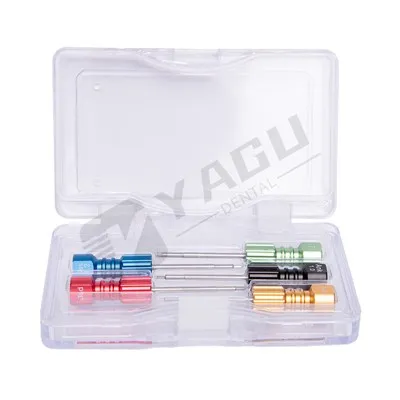
As a dedicated supplier of Multi Angled Abutments, I've witnessed firsthand the transformative impact these dental components can have in various oral environments. In this blog, I'll delve into how multi angled abutments perform across different scenarios, drawing on both industry knowledge and real - world experiences.
Understanding Multi Angled Abutments
Multi angled abutments are crucial components in dental implantology. They serve as the connection between the dental implant fixture in the jawbone and the dental prosthesis, such as a crown or bridge. Their unique feature is the ability to be angled, which allows for greater flexibility in restoring teeth in complex anatomical situations.
Performance in Normal Oral Environments
In a normal oral environment, where the bone quality is good, the soft tissues are healthy, and the implant placement is relatively straightforward, multi angled abutments perform excellently. The proper angulation provided by these abutments ensures a precise fit between the implant and the prosthesis. This leads to optimal stress distribution, which is essential for the long - term success of the dental implant.
For example, when a patient has a single tooth implant, a multi angled abutment can be adjusted to align with the natural tooth position and occlusion. This not only enhances the aesthetic appearance but also improves the functionality of the restored tooth. The smooth surface of high - quality multi angled abutments also promotes good soft - tissue integration, reducing the risk of inflammation and peri - implant diseases.
Performance in Compromised Bone Quality
In cases where the bone quality is compromised, such as in patients with osteoporosis or those who have experienced significant bone resorption, multi angled abutments face unique challenges. However, they can still play a vital role.
When the bone is of poor quality, the implant may not have the ideal primary stability. The angled design of multi angled abutments can help to compensate for this by providing a more favorable load - transfer path. By adjusting the angle of the abutment, the forces exerted on the implant during chewing can be redirected to areas of better - quality bone.
Moreover, multi angled abutments can be used in combination with bone - grafting techniques. For instance, in a situation where there is insufficient bone height in the posterior region, a bone graft can be placed, and a multi angled abutment can be used to connect the implant to the prosthesis once the graft has healed. This approach allows for successful dental restoration even in challenging bone conditions.
Performance in Complex Anatomical Situations
The true strength of multi angled abutments becomes evident in complex anatomical situations. These include cases where the implant is placed at an unfavorable angle due to anatomical limitations, such as the proximity of nerves, sinuses, or other vital structures.
In the maxillary sinus area, for example, implants may need to be placed at an angle to avoid sinus perforation. A multi angled abutment can then be used to correct the angle and ensure proper alignment of the prosthesis with the adjacent teeth. This not only restores the patient's ability to chew effectively but also maintains the aesthetic balance of the smile.
Similarly, in the mandibular region, where the inferior alveolar nerve runs close to the implant site, multi angled abutments can be adjusted to accommodate the implant's position and prevent nerve damage. This flexibility in design makes them an indispensable tool for dentists dealing with complex oral anatomies.
Comparison with Other Abutment Types
When compared to straight abutments, multi angled abutments offer distinct advantages. Straight abutments are limited in their ability to adapt to non - ideal implant positions. In contrast, multi angled abutments can be customized to fit a wide range of implant - to - prosthesis relationships.
For instance, in a case where an implant is placed at an angle due to a patient's pre - existing dental condition, a straight abutment may not provide a proper fit, leading to aesthetic and functional problems. A multi angled abutment, on the other hand, can be adjusted to achieve the desired alignment, ensuring a seamless restoration.
The Role of Material Quality
The performance of multi angled abutments is also highly dependent on the material quality. Titanium is one of the most commonly used materials for multi angled abutments due to its excellent biocompatibility, strength, and corrosion resistance. High - grade titanium abutments can withstand the mechanical stresses of chewing and maintain their integrity over time.
Zirconia is another material that is gaining popularity for multi angled abutments. It offers superior aesthetic properties, especially in the anterior region, as it closely mimics the natural tooth color. Zirconia abutments also have good biocompatibility and are less likely to cause allergic reactions.
Real - World Case Studies
Let's look at a few real - world case studies to illustrate the performance of multi angled abutments in different oral environments.
Case 1: A patient with a single - tooth implant in the maxillary anterior region. The implant was placed at a slight angle due to a pre - existing bone defect. A multi angled titanium abutment was used to correct the angle and connect the implant to a porcelain crown. After a year of follow - up, the patient reported excellent aesthetic and functional results, with no signs of implant failure or soft - tissue problems.
Case 2: In a patient with compromised bone quality in the mandibular posterior region, a bone graft was performed, followed by the placement of an implant. A multi angled zirconia abutment was used to connect the implant to a bridge. The patient was able to chew normally, and the aesthetic appearance of the restoration was satisfactory.
Industry Standards and Regulations
As a supplier, we are committed to ensuring that our multi angled abutments meet the highest industry standards and regulations. These standards govern aspects such as material quality, manufacturing processes, and sterilization procedures.
Compliance with standards such as ISO 13485 (Medical devices - Quality management systems - Requirements for regulatory purposes) and CE marking (Conformité Européene) is essential to guarantee the safety and effectiveness of our products. We work closely with regulatory bodies to ensure that our multi angled abutments are of the highest quality and can be trusted by dental professionals worldwide.
Conclusion and Call to Action
In conclusion, multi angled abutments are versatile and essential components in modern dental implantology. Their ability to perform well in different oral environments, from normal to complex and compromised situations, makes them a valuable asset for dental restorations.


Whether you are a dental surgeon looking for reliable multi angled abutments for your patients or a dental clinic manager in charge of procurement, we are here to provide you with high - quality products. Our multi angled abutments are designed to meet the diverse needs of the dental industry, and we are committed to offering excellent customer service.
If you are interested in learning more about our Multi Angled Abutments or would like to start a procurement discussion, please reach out to us. We look forward to partnering with you to achieve the best possible dental outcomes for your patients.
For more information on specific angled abutment products, you can visit the following links:
Osstem Angled Abutment
Angled Abutment Straumann
Angled Abutment Implant
References
- Misch, C. E. (2010). Dental Implant Prosthetics. Mosby.
- Buser, D., Martin, W., & Belser, U. C. (2004). Optimizing esthetics for implant restorations in the anterior maxilla: Anatomic and surgical considerations. The International Journal of Oral & Maxillofacial Implants, 19(Suppl), 43 - 61.
- Tarnow, D. P., & Cho, S. C. (2000). Biologic width and the single - tooth implant. The International Journal of Oral & Maxillofacial Implants, 15(2), 193 - 197.