As a supplier of implant abutments, evaluating the quality of these crucial dental components is a multi - faceted process that combines scientific knowledge, industry experience, and a commitment to meeting the highest standards. In this blog, I'll share my insights on how I approach the evaluation of implant abutment quality.
Material Quality
The first and perhaps most fundamental aspect of evaluating an implant abutment is the material it's made from. Titanium is the gold standard in the dental implant industry due to its biocompatibility, strength, and corrosion resistance. When assessing the material of an abutment, I look for the purity of the titanium. High - grade titanium, typically Ti6Al4V (titanium alloy with 6% aluminum and 4% vanadium), offers excellent mechanical properties and is less likely to cause adverse reactions in the patient's body.
I also consider the manufacturing process of the titanium. Precision machining is essential to ensure that the abutment has a smooth surface finish. A rough surface can lead to plaque accumulation, which may cause inflammation and other oral health issues. Moreover, a well - machined abutment will fit precisely with the implant, reducing the risk of micro - movements that can compromise the long - term stability of the dental restoration.
Design and Fit
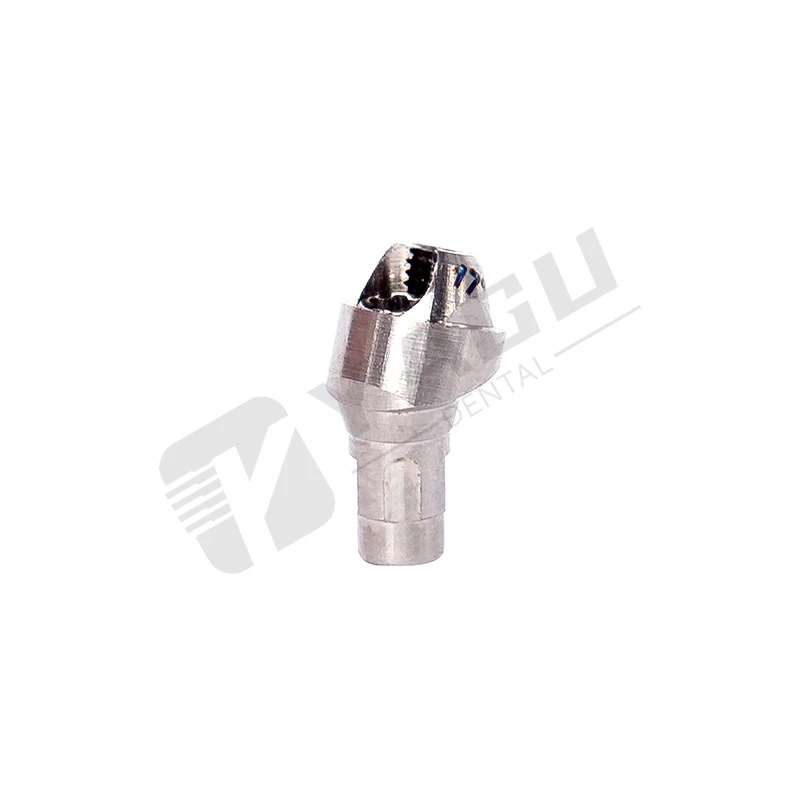
The design of an implant abutment plays a significant role in its functionality and quality. There are various types of abutments available, such as Angled Abutment Implant, which are designed to accommodate angled implants and provide a more natural - looking restoration. The Angled Abutment Straumann is a popular choice in the market, known for its high - quality design and compatibility with Straumann implants.
When evaluating the design, I focus on the connection between the abutment and the implant. A proper connection is crucial for stability and load distribution. The abutment should have a tight fit with the implant to prevent bacteria from entering the space between them, which could lead to peri - implantitis. I also consider the emergence profile of the abutment. A well - designed emergence profile will mimic the natural contour of the tooth, providing better aesthetics and easier oral hygiene for the patient.
In addition, the Nobel Multi Unit Abutment offers flexibility in multiple - tooth restorations. Its design allows for easy adjustment and connection to different types of prosthetics. The ability to customize the abutment according to the patient's specific needs is an important factor in evaluating its quality.

Surface Treatment
Surface treatment of implant abutments can enhance their performance and biocompatibility. One common surface treatment is anodization, which creates a thin oxide layer on the titanium surface. This layer can improve the corrosion resistance of the abutment and also promote better soft tissue attachment. A well - anodized abutment will have a uniform color and texture, indicating a consistent and high - quality treatment process.
Another surface treatment option is the application of bioactive coatings. These coatings can release substances that promote osseointegration and soft tissue healing. When evaluating an abutment with a bioactive coating, I look for evidence of proper coating thickness and adhesion. A coating that is too thick or poorly adhered may flake off, leading to potential complications.
Compatibility with Implants and Prosthetics
An implant abutment must be compatible with both the implant and the prosthetic restoration. Compatibility with the implant is determined by the connection type, such as internal or external hexagon, Morse taper, etc. The abutment should match the implant's connection precisely to ensure a stable and secure fit.
When it comes to compatibility with prosthetics, the abutment should be able to support the chosen type of crown, bridge, or denture. The shape, size, and surface characteristics of the abutment should be suitable for the prosthetic material. For example, if a porcelain - fused - to - metal crown is to be used, the abutment should provide a good base for the porcelain layer to bond to, without causing cracking or chipping.
Quality Control and Certification
As a supplier, I rely on strict quality control measures during the manufacturing process. This includes in - process inspections, where samples are taken at various stages of production to check for dimensional accuracy, surface finish, and material properties. Final inspections are also conducted before the abutments are shipped to ensure that they meet all the specified requirements.
Certifications are another important aspect of evaluating the quality of implant abutments. Look for products that are certified by recognized regulatory bodies, such as the FDA (Food and Drug Administration) in the United States or the CE (Conformité Européene) mark in Europe. These certifications indicate that the abutments have undergone rigorous testing and meet the necessary safety and quality standards.
Clinical Performance and Long - Term Durability
While laboratory tests and certifications are important, the ultimate measure of an implant abutment's quality is its clinical performance. I pay close attention to feedback from dental professionals who have used our abutments in real - world cases. Reports of successful restorations, minimal complications, and long - term stability are strong indicators of high - quality abutments.
Long - term durability is also a key factor. An abutment should be able to withstand the forces of mastication and oral environment over an extended period. This requires a combination of high - quality materials, proper design, and effective surface treatments. Abutments that show signs of wear, corrosion, or mechanical failure after a short period are clearly of lower quality.
Cost - Benefit Analysis
In the dental industry, cost is always a consideration. However, when evaluating the quality of an implant abutment, it's important to conduct a cost - benefit analysis. A higher - quality abutment may have a higher upfront cost, but it can save money in the long run by reducing the risk of complications, revision surgeries, and patient dissatisfaction.
As a supplier, I strive to offer a range of abutments at different price points to meet the diverse needs of dental practices. But I always emphasize the importance of quality over price alone. By providing high - quality abutments, we can help our customers achieve better treatment outcomes and build long - term relationships with their patients.
Conclusion
Evaluating the quality of an implant abutment is a comprehensive process that involves assessing the material, design, surface treatment, compatibility, quality control, clinical performance, and cost - benefit ratio. As a supplier, I am committed to providing the highest - quality abutments to the dental industry. Our products, including Angled Abutment Implant, Angled Abutment Straumann, and Nobel Multi Unit Abutment, are carefully evaluated at every stage of production to ensure they meet the strictest quality standards.
If you are in the market for high - quality implant abutments, I encourage you to contact us for a detailed discussion about your specific needs. Our team of experts is ready to assist you in finding the best solutions for your dental practice. We look forward to the opportunity to work with you and contribute to the success of your dental restorations.
References
- Misch CE. Contemporary Implant Dentistry. Mosby; 1999.
- Brånemark PI, Zarb GA, Albrektsson T, eds. Tissue - Integrated Prostheses: Osseointegration in Clinical Dentistry. Quintessence; 1985.
- Tarnow DP, Magner AW, Fletcher P. The effect of the distance from the contact point to the crest of bone on the presence or absence of the interproximal dental papilla. J Periodontol. 1992;63(12):995 - 996.