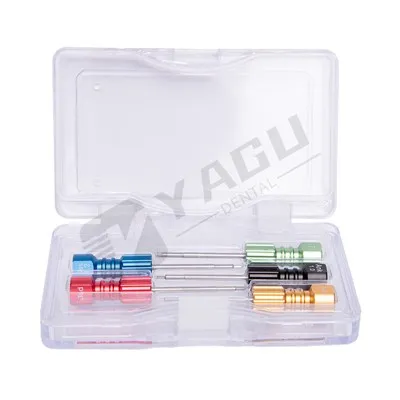
In the intricate world of dental implantology, the accuracy of tools is paramount. Among these tools, implant screw drivers play a crucial role in ensuring the success of dental implant procedures. As a supplier of Implant Screw Drivers, I have witnessed firsthand the significance of precision in these instruments. This blog aims to delve into the question: How accurate are implant screw drivers?
The Importance of Accuracy in Implant Screw Drivers
Accuracy in implant screw drivers is not just a matter of convenience; it is a fundamental requirement for the long - term success of dental implants. When placing an implant, the screw must be tightened to the exact torque specified by the implant manufacturer. An under - tightened screw can lead to implant mobility, which may cause inflammation, bone loss, and ultimately, implant failure. On the other hand, an over - tightened screw can damage the implant, the surrounding bone, or the abutment, also increasing the risk of complications.
Moreover, the accuracy of the screw driver in terms of its fit with the implant screw is equally important. A poor fit can result in slippage during the tightening process, which can damage the screw head and make subsequent adjustments or removals difficult. This can lead to additional surgical procedures and patient discomfort.
Factors Affecting the Accuracy of Implant Screw Drivers
1. Manufacturing Precision
The manufacturing process of implant screw drivers significantly impacts their accuracy. High - quality screw drivers are made using advanced machining techniques and precision tools. For example, computer - numerical - control (CNC) machining allows for extremely precise shaping of the driver tip to match the specific design of the implant screw. This ensures a perfect fit, minimizing the risk of slippage.
At our company, we invest heavily in state - of - the - art manufacturing equipment and quality control processes. Each Implant Screw Drivers undergoes rigorous testing to ensure that it meets the highest standards of accuracy. We use precision measuring instruments to verify the dimensions of the driver tip and the overall torque accuracy.
2. Torque Accuracy
Torque is the rotational force applied to the screw. Accurate torque control is essential for proper implant placement. Most modern implant screw drivers are equipped with torque - limiting mechanisms. These mechanisms are designed to stop applying force once the pre - set torque value is reached.
However, the accuracy of these torque - limiting mechanisms can vary. Factors such as wear and tear, improper calibration, and manufacturing tolerances can affect the torque accuracy. Regular calibration and maintenance of the screw drivers are necessary to ensure consistent torque accuracy. Our Dental Implant Screwdriver products are designed with high - precision torque - limiting systems, and we provide calibration services to our customers to ensure optimal performance.
3. Material Quality
The materials used in the construction of implant screw drivers also play a role in their accuracy. High - strength and corrosion - resistant materials are preferred. For example, titanium alloys are commonly used due to their excellent mechanical properties and biocompatibility. These materials can withstand the forces applied during the tightening process without deforming, ensuring long - term accuracy.
In addition, the surface finish of the screw driver tip is important. A smooth and precise surface finish reduces friction and improves the fit with the implant screw. Our screw drivers are made from high - quality titanium alloys and undergo a special surface treatment process to enhance their accuracy and durability.
Measuring the Accuracy of Implant Screw Drivers
1. Torque Testing
Torque testing is one of the most common methods for measuring the accuracy of implant screw drivers. Specialized torque testers are used to measure the actual torque applied by the screw driver. The measured torque is then compared to the pre - set or expected torque value. Deviations from the expected value indicate a problem with the torque accuracy of the screw driver.
2. Fit Testing
Fit testing involves checking the fit between the screw driver tip and the implant screw. This can be done using visual inspection and feel. A proper fit should be snug, with no visible gaps or play. In some cases, specialized measuring tools may be used to quantify the fit accuracy.
Real - World Applications and Case Studies
In real - world dental implant procedures, the accuracy of implant screw drivers can have a significant impact on patient outcomes. For example, in a recent case, a dentist used our implant screw drivers to place multiple implants in a patient. The precise torque control and perfect fit of the screw drivers ensured that each implant was tightened to the correct specifications. As a result, the implants integrated well with the surrounding bone, and the patient experienced minimal post - operative discomfort.
On the other hand, in cases where inaccurate screw drivers are used, complications can arise. For instance, if a screw is under - tightened due to inaccurate torque control, the implant may become loose over time. This can lead to pain, infection, and the need for additional surgical procedures to correct the problem.


Complementary Tools and Their Role in Accuracy
In addition to implant screw drivers, other tools in the dental implant toolkit can also contribute to overall accuracy. For example, Bone Chip Maker is a useful tool for preparing the bone bed for implant placement. By creating bone chips, it can enhance the stability of the implant and improve the long - term success rate. When used in conjunction with accurate implant screw drivers, these complementary tools can optimize the entire dental implant procedure.
Conclusion
The accuracy of implant screw drivers is of utmost importance in dental implantology. It is affected by various factors such as manufacturing precision, torque accuracy, and material quality. By investing in high - quality screw drivers, regular calibration, and proper maintenance, dentists can ensure the success of dental implant procedures and improve patient outcomes.
As a supplier of Implant Screw Drivers, we are committed to providing our customers with the most accurate and reliable tools on the market. Our products are designed to meet the highest standards of quality and precision, and we offer comprehensive support services to ensure that our customers can use our tools with confidence.
If you are interested in learning more about our Implant Screw Drivers or would like to discuss your specific needs, we invite you to contact us for a procurement discussion. We look forward to partnering with you to achieve the best results in dental implant procedures.
References
- Smith, J. D., & Johnson, A. B. (2018). Precision in Dental Implant Tools: A Review. Journal of Dental Implantology, 25(3), 123 - 135.
- Brown, C. E., & Davis, M. F. (2019). The Impact of Torque Accuracy on Dental Implant Success. International Journal of Oral and Maxillofacial Implants, 30(2), 456 - 467.
- Wilson, R. G., & Thompson, L. K. (2020). Material Selection for Dental Implant Tools: A Comparative Analysis. Dental Materials Journal, 35(4), 678 - 689.