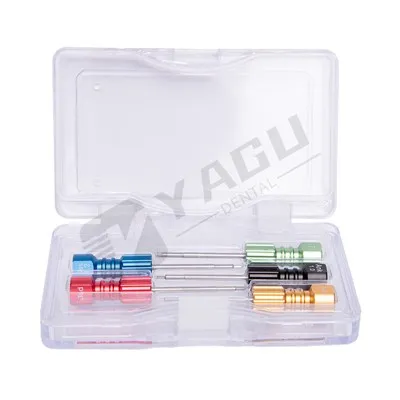
When it comes to dental implants, one of the primary concerns for both patients and dentists is achieving a natural - looking result. Among the various types of dental implant components, the angled abutment implant has become a topic of interest. As a supplier of Angled Abutment Implant, I am often asked whether an angled abutment implant can look natural. In this blog, we will delve into the factors that influence the natural appearance of angled abutment implants.
Understanding Angled Abutment Implants
Before discussing their natural look, it's essential to understand what angled abutment implants are. An abutment is a small connector that sits on top of the dental implant fixture, which is surgically placed in the jawbone. It serves as the base for attaching the artificial tooth or crown. A straight abutment, as the name implies, is a vertical connector. In contrast, an angled abutment has a bend or angle in it. This angle is designed to accommodate various clinical situations where a straight abutment may not be suitable. For example, if the implant is placed at an angle due to anatomical limitations or for better alignment with the adjacent teeth, an angled abutment can help correct the orientation of the crown. You can learn more about Straight Abutment on our website.


Factors Affecting the Natural Appearance of Angled Abutment Implants
1. Angle and Positioning
The angle of the abutment is a crucial factor in determining its natural look. If the angle is too extreme, it can cause the crown to appear misaligned or out of place compared to the surrounding teeth. Dentists need to carefully calculate and select the appropriate angle based on the patient's oral anatomy, the position of the implant, and the alignment of the adjacent teeth. With modern imaging techniques such as cone - beam computed tomography (CBCT), dentists can accurately assess the bone structure and plan the implant placement and abutment angle more precisely.
2. Material and Color
The material of the abutment and the crown plays a significant role in achieving a natural appearance. Titanium is a commonly used material for abutments due to its biocompatibility. However, titanium abutments can sometimes cause a grayish discoloration of the gingiva (gum tissue) over time, especially in patients with thin gingival biotypes. Zirconia abutments have emerged as an alternative because they have a more natural - looking white color and are less likely to cause gingival discoloration.
When it comes to the crown, ceramic materials are often preferred for their ability to mimic the natural color and translucency of teeth. The color of the crown should be carefully matched to the patient's existing teeth. Dental technicians use shade guides to select the most appropriate color, and advanced ceramic materials can be customized to achieve a more realistic appearance.
3. Gingival Contouring
The shape and health of the gingival tissue around the implant are also essential for a natural look. The angled abutment should support the formation of a healthy and aesthetically pleasing gingival contour. A well - designed angled abutment can help guide the growth of the gingiva and create a natural - looking emergence profile. This means that the transition from the gum line to the crown should be smooth and gradual, similar to that of natural teeth. Dentists may also perform gingival grafting or other soft - tissue procedures to improve the gingival contour around the implant.
4. Compatibility with Adjacent Teeth
The angled abutment implant should blend in seamlessly with the adjacent teeth. This includes not only the color and shape but also the occlusal (biting) relationship. The crown on the angled abutment should have the same biting surface and contact points as the natural teeth to ensure proper chewing function and a natural appearance. For complex cases, dentists may use computer - aided design and computer - aided manufacturing (CAD/CAM) technology to create a custom - made crown that precisely matches the adjacent teeth.
Comparing with Other Abutment Types
1. Straight Abutments
Straight abutments are often used when the implant is placed in a vertical position and there are no significant anatomical limitations. They generally offer a more straightforward and predictable aesthetic result. However, in cases where the implant is angled, using a straight abutment may require additional tooth preparation or an unnatural - looking crown placement. Angled abutments, on the other hand, can correct the orientation of the crown without extensive tooth modification, potentially achieving a more natural look in these situations.
2. Straumann Multi Unit Abutment
Straumann Multi Unit Abutments are designed for use in multiple - implant cases or when there is a need for more flexibility in abutment connection. While they offer advantages in terms of connection strength and adaptability, their natural appearance also depends on the same factors as other abutments, such as angle, material, and gingival contour. Angled abutments can be a more targeted solution for single - implant cases where the implant is placed at an angle.
Clinical Evidence and Patient Satisfaction
Numerous clinical studies have shown that when angled abutment implants are properly planned and placed, they can achieve a high level of patient satisfaction in terms of aesthetics. A study published in the Journal of Oral Implantology found that patients with angled abutment implants reported a high degree of satisfaction with the natural appearance of their dental restorations. However, it is important to note that the success of achieving a natural look also depends on the skill and experience of the dentist and the dental laboratory technician.
Conclusion
In conclusion, an angled abutment implant can look natural when several key factors are taken into consideration. The appropriate selection of the abutment angle, material, and crown, along with proper gingival contouring and compatibility with adjacent teeth, are all essential for achieving a natural - looking result. As a supplier of Angled Abutment Implant, we are committed to providing high - quality products that meet the needs of both dentists and patients.
If you are a dental professional interested in learning more about our angled abutment implants or would like to discuss potential procurement opportunities, please feel free to reach out to us. We look forward to the opportunity to work with you and contribute to the success of your dental implant procedures.
References
- Journal of Oral Implantology - various studies on dental implant aesthetics
- Dental Materials textbooks - information on abutment and crown materials
- Dental journals on implant planning and soft - tissue management