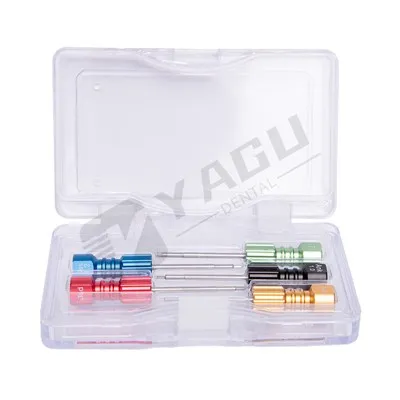
In the realm of modern dentistry, single - tooth restorations have witnessed remarkable advancements over the years. One of the key components in these restorations is the abutment, which serves as a connector between the dental implant and the final restoration. Among the various types of abutments available, pre - milled abutments have emerged as a popular choice. As a supplier of pre - milled abutments, I am frequently asked the question: "Can pre - milled abutments be used in single - tooth restorations?" In this blog post, I will delve into this topic, exploring the advantages, limitations, and considerations of using pre - milled abutments in single - tooth restorations.
Advantages of Pre - Milled Abutments in Single - Tooth Restorations
1. Time - Efficiency
One of the most significant advantages of pre - milled abutments is their time - saving nature. In a single - tooth restoration case, the dentist can select a pre - milled abutment that closely matches the patient's requirements from a range of pre - fabricated options. This eliminates the need for the time - consuming process of custom - making an abutment from scratch. For instance, in a busy dental practice, where time is of the essence, using a pre - milled abutment can significantly reduce the chair - side time for the patient. The dentist can quickly install the pre - milled abutment and proceed with the final restoration, minimizing the number of appointments required for the patient.
2. Cost - Effectiveness
Pre - milled abutments are generally more cost - effective than custom - made abutments. Since they are mass - produced, the economies of scale come into play, resulting in lower production costs. These savings can be passed on to the patients, making single - tooth restorations more affordable. For dental clinics, this also means that they can offer competitive pricing for their services, attracting more patients. Moreover, the reduced need for specialized equipment and labor for custom - making abutments further contributes to the cost - effectiveness of pre - milled abutments.
3. Standardization and Quality Control
As a pre - milled abutment supplier, we adhere to strict quality control measures during the manufacturing process. This ensures that each pre - milled abutment meets the highest standards of quality and precision. The standardization of pre - milled abutments also means that dentists can expect consistent results across different cases. For example, the [Straumann Ti Base]( /implant - parts/straumann - ti - base.html) is a well - known pre - milled abutment that is manufactured with high - quality titanium and undergoes rigorous quality checks. This standardization and quality control provide dentists with confidence in using pre - milled abutments for single - tooth restorations.
4. Compatibility
Pre - milled abutments are designed to be compatible with a wide range of dental implants. This means that dentists can easily find a pre - milled abutment that fits the specific implant system used in a single - tooth restoration. Whether it is a well - established implant brand or a newer one, there is likely to be a pre - milled abutment option available. This compatibility simplifies the treatment planning process and reduces the risk of complications due to mismatched components.

Limitations of Pre - Milled Abutments in Single - Tooth Restorations
1. Limited Customization
While pre - milled abutments offer a range of options, they may not always provide the exact fit and shape required for every single - tooth restoration case. In some cases, the patient's oral anatomy may be unique, and a custom - made abutment may be necessary to achieve the optimal esthetic and functional results. For example, if the tooth position is in an area with complex soft tissue contours, a pre - milled abutment may not be able to replicate the natural emergence profile as accurately as a custom - made one.

2. Esthetic Challenges
In certain situations, achieving the desired esthetic outcome can be more challenging with pre - milled abutments. The color and texture of pre - milled abutments may not always match perfectly with the surrounding teeth and soft tissues. This can be a concern, especially in the anterior region of the mouth, where esthetics are of utmost importance. However, some pre - milled abutments are now available in different shades and finishes to address this issue to some extent.

3. Fit Precision
Although pre - milled abutments are designed to fit well with dental implants, there can still be some minor variations in the fit. These variations may be due to manufacturing tolerances or differences in the implant placement. In some cases, this can lead to micro - movements between the abutment and the implant, which may affect the long - term stability of the restoration. However, with proper selection and careful evaluation, these issues can be minimized.
Considerations for Using Pre - Milled Abutments in Single - Tooth Restorations
1. Patient Evaluation
Before deciding to use a pre - milled abutment in a single - tooth restoration, a thorough patient evaluation is essential. The dentist should assess the patient's oral anatomy, including the bone quality, soft tissue condition, and the position of the missing tooth. This evaluation will help determine whether a pre - milled abutment is suitable for the case or if a custom - made abutment is required. For example, if the patient has a thin gingival biotype, more careful consideration should be given to the esthetic aspects of the abutment.
2. Implant System Compatibility
As mentioned earlier, ensuring the compatibility between the pre - milled abutment and the dental implant system is crucial. The dentist should be familiar with the specific requirements of the implant system and select a pre - milled abutment that is designed to work seamlessly with it. This will help ensure a proper fit and optimal performance of the restoration.
3. Temporary Restoration
In some cases, a [Temporary Abutment]( /implant - parts/temporary - abutment.html) can be used initially to assess the fit and esthetics before proceeding with the final pre - milled abutment. This allows the dentist to make any necessary adjustments and ensure that the final restoration will meet the patient's expectations. The temporary abutment can also help in guiding the soft tissue healing and contouring around the implant site.

4. Laboratory Support
Working closely with a dental laboratory is important when using pre - milled abutments. The laboratory technicians can provide valuable input on the selection of the appropriate pre - milled abutment and assist in achieving the best possible esthetic and functional results. They can also perform any necessary modifications to the pre - milled abutment to improve its fit and appearance.
Conclusion
In conclusion, pre - milled abutments can be a viable option for single - tooth restorations in many cases. They offer significant advantages in terms of time - efficiency, cost - effectiveness, standardization, and compatibility. However, they also have some limitations, particularly in terms of customization and esthetics. By carefully evaluating the patient's condition, ensuring implant system compatibility, using temporary restorations when necessary, and collaborating with a dental laboratory, dentists can effectively utilize pre - milled abutments to achieve successful single - tooth restorations.
If you are a dental professional interested in exploring our range of pre - milled abutments for your single - tooth restoration cases, we invite you to contact us for a procurement discussion. We are committed to providing high - quality pre - milled abutments and excellent customer service to meet your specific needs.
References
- Brånemark PI, Zarb GA, Albrektsson T. Tissue - integrated prostheses: osseointegration in clinical dentistry. Quintessence Publishing Co, Inc; 1985.
- Misch CE. Dental implant prosthetics. Mosby; 2008.
- Tarnow DP, Magner AW, Fletcher P. The effect of the distance from the contact point to the crest of bone on the presence or absence of the interproximal dental papilla. J Periodontol. 1992;63(12):995 - 996.