In the field of dental implantology, the choice of abutment is a crucial decision that can significantly impact the success and aesthetics of the implant restoration. One of the common questions that arise is whether multi - unit abutments can be used in patients with a thick gingival biotype. As a supplier of high - quality multi - unit abutments, I'd like to delve into this topic to provide valuable insights for dental professionals.
Understanding Gingival Biotype
The gingival biotype is classified into two main types: thin and thick. A thick gingival biotype is characterized by a greater amount of keratinized gingiva, a denser connective tissue, and a more scalloped gingival margin. This type of biotype offers certain advantages, such as better resistance to recession and inflammation. However, it also presents unique challenges when it comes to implant restoration.

Advantages of Using Multi - Unit Abutments in Thick Gingival Biotype
- Flexibility in Restoration
Multi - unit abutments provide a high degree of flexibility in the restoration process. In patients with a thick gingival biotype, the additional tissue thickness can make it more challenging to achieve a proper emergence profile. Multi - unit abutments can be adjusted to accommodate the extra tissue, allowing for a more natural - looking restoration. For example, they can be used to create a more gradual transition from the implant to the crown, which is essential for maintaining the aesthetic appearance of the smile. - Improved Stress Distribution
Thick gingival tissue can exert more pressure on the implant - abutment complex. Multi - unit abutments are designed to distribute occlusal forces more evenly across the implant and the surrounding tissues. This helps to reduce the risk of overloading the implant, which is particularly important in patients with a thick gingival biotype where the increased tissue thickness may contribute to higher stress concentrations. - Enhanced Soft Tissue Management
Managing the soft tissue around the implant is crucial for long - term success. Multi - unit abutments can be used to guide the growth and contour of the gingival tissue. In patients with a thick gingival biotype, the abutment can be customized to create a favorable environment for the soft tissue to heal and adapt. This can lead to better esthetics and improved long - term stability of the restoration.
Challenges of Using Multi - Unit Abutments in Thick Gingival Biotype
- Difficulty in Placement
The thick gingival tissue can make it more difficult to place the multi - unit abutment accurately. The increased tissue density may require more force during the placement process, which can potentially damage the implant or the surrounding tissues. Dental professionals need to be extra careful and use appropriate techniques to ensure proper placement. - Aesthetic Considerations
While multi - unit abutments offer flexibility in restoration, achieving optimal aesthetics in patients with a thick gingival biotype can still be a challenge. The thick tissue may cover a significant portion of the abutment, making it more difficult to create a seamless transition between the abutment and the crown. Special attention needs to be paid to the color and contour of the restoration to ensure a natural appearance. - Maintenance
Patients with a thick gingival biotype may require more intensive maintenance to keep the implant and the surrounding tissues healthy. The thick tissue can trap plaque and debris more easily, increasing the risk of inflammation and infection. Dental professionals need to educate patients on proper oral hygiene techniques and schedule regular follow - up appointments to monitor the health of the implant.
Types of Abutments and Their Suitability
- Angled Abutment Straumann
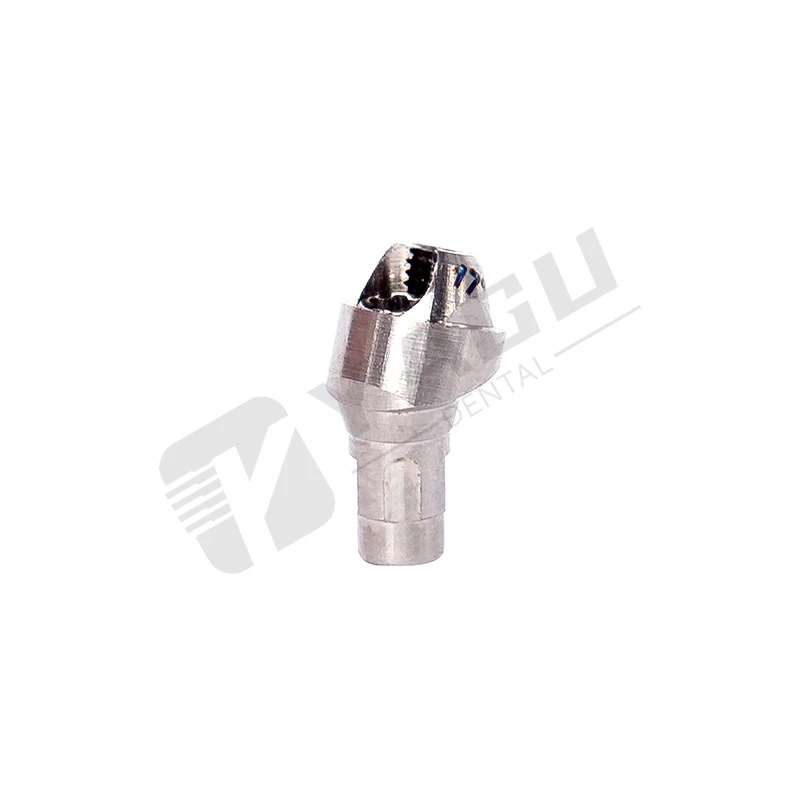
[Angled Abutment Straumann](/implant - abutment/angled - abutment - straumann.html) can be a great option in patients with a thick gingival biotype. The angled design allows for better adaptation to the natural tooth position and the soft tissue contour. It can help to create a more natural emergence profile, especially in cases where the implant is placed at an angle. This type of abutment can also improve the esthetics by hiding the abutment under the gingival tissue more effectively. - Straumann Multi Unit Abutment
[Straumann Multi Unit Abutment](/implant - abutment/straumann - multi - unit - abutment.html) is specifically designed to provide flexibility in multi - tooth restorations. In patients with a thick gingival biotype, these abutments can be used to connect multiple implants and create a stable and aesthetically pleasing restoration. They can be adjusted to accommodate the extra tissue thickness and ensure proper alignment of the crowns. - Straight Abutment
[Straight Abutment](/implant - abutment/straight - abutment.html) is a simple and straightforward option. In some cases, a straight abutment may be sufficient in patients with a thick gingival biotype, especially when the implant is placed in a straight and favorable position. However, it may not offer the same level of flexibility as angled or multi - unit abutments in terms of soft tissue management and esthetics.
Clinical Considerations
- Pre - operative Assessment
Before deciding to use a multi - unit abutment in a patient with a thick gingival biotype, a thorough pre - operative assessment is essential. This includes evaluating the patient's oral health, the quality and quantity of the bone, and the thickness and condition of the gingival tissue. Diagnostic tools such as X - rays and intraoral scans can provide valuable information to help plan the treatment. - Surgical Technique
The surgical technique used for implant placement and abutment installation is crucial. In patients with a thick gingival biotype, a flapless or minimally invasive approach may be preferred to reduce trauma to the soft tissue. Proper handling of the abutment during placement is also important to ensure a tight fit and proper alignment. - Restorative Phase
During the restorative phase, close communication between the dentist and the dental laboratory is necessary. The laboratory technician needs to be aware of the patient's gingival biotype and the specific requirements of the multi - unit abutment. This will help to create a crown that fits well and has a natural appearance.
Conclusion
In conclusion, multi - unit abutments can be used in patients with a thick gingival biotype, but it requires careful consideration and proper planning. While they offer several advantages such as flexibility in restoration, improved stress distribution, and enhanced soft tissue management, there are also challenges such as difficulty in placement, aesthetic considerations, and maintenance. Dental professionals need to assess each patient individually and choose the most appropriate abutment type based on the specific clinical situation.

As a supplier of multi - unit abutments, we are committed to providing high - quality products and supporting dental professionals in their treatment decisions. If you are interested in learning more about our multi - unit abutments or would like to discuss potential procurement opportunities, please feel free to contact us for further details and to initiate a procurement negotiation.
References
- Tarnow DP, Magner AW, Fletcher P. The effect of the distance from the contact point to the crest of bone on the presence or absence of the interproximal dental papilla. J Periodontol. 1992;63(12):995 - 996.
- Cochran DL. The biology of implant - sites: wound healing, the peri - implant mucosa, and the crestal bone. In: Carlsson GE, ed. Clinical Oral Implants. Berlin, Germany: Quintessence; 2003:137 - 162.
- Zitzmann NU, Marinello CP. Soft tissue management around dental implants. Int J Oral Maxillofac Implants. 2008;23(spec issue):119 - 130.