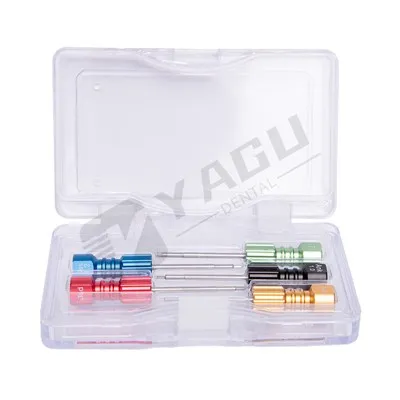
As a supplier of Bone Chip Maker, I often receive various inquiries from customers. One question that has piqued my interest recently is whether a bone chip maker can be used for processing fish bones. In this blog post, I will delve into this topic, exploring the technical aspects, potential applications, and limitations of using a bone chip maker for fish bone processing.
Understanding the Bone Chip Maker
Before we discuss its applicability to fish bones, let's first understand what a bone chip maker is. A bone chip maker is a specialized tool primarily designed for use in dental implant procedures. Its main function is to harvest bone chips from the patient's own bone, which can then be used for bone grafting. This autogenous bone grafting technique is preferred in many dental surgeries because it has a high success rate due to the compatibility of the bone with the patient's body.
The bone chip maker typically consists of a handpiece and a collection chamber. When the handpiece is used to drill into the bone, the bone chips are generated and collected in the chamber. The collected bone chips can then be used immediately in the dental procedure. The design of the bone chip maker is optimized for processing hard, dense bones such as those found in the jaw.
Technical Feasibility of Processing Fish Bones
Structural Differences between Human Bones and Fish Bones
Human bones and fish bones have significant structural differences. Human bones are generally denser and more rigid, with a well - organized structure of compact bone and spongy bone. Fish bones, on the other hand, are often thinner, more flexible, and have a different composition. They are made up of a higher proportion of collagen and a lower proportion of mineral content compared to human bones.
The design of a bone chip maker is based on the properties of human bones. The cutting edges and the drilling mechanism are calibrated to work effectively on hard, dense bone tissue. When it comes to fish bones, the thinner and more flexible nature of the bones may pose challenges. The cutting edges may not be able to grip the fish bones as effectively, and there is a risk of the bones bending or breaking rather than being cut into proper chips.
Material Compatibility
Another aspect to consider is the material compatibility. The bone chip maker is designed to work with human bone tissue, which has a specific chemical composition. Fish bones may have different chemical properties, such as a higher water content and different mineral ratios. These differences could potentially affect the performance of the bone chip maker. For example, the higher water content in fish bones may cause the bone chips to clump together or interfere with the collection mechanism of the bone chip maker.
Potential Applications of Using a Bone Chip Maker for Fish Bones
Despite the challenges, there could be some potential applications for using a bone chip maker to process fish bones.

Food Industry
In the food industry, fish bones are often a by - product that needs to be processed. If a bone chip maker can be adapted to process fish bones, it could potentially be used to create fish bone powder. Fish bone powder is a rich source of calcium and other minerals and can be used as a food additive or a nutritional supplement. By converting fish bones into powder, the food industry can reduce waste and utilize this valuable resource more effectively.
Aquaculture
In aquaculture, fish bone chips could potentially be used as a natural fertilizer or a feed additive. Fish bones contain nutrients that are beneficial for plant growth and can enhance the nutritional value of fish feed. If a bone chip maker can be used to process fish bones into suitable chips, it could provide a sustainable solution for aquaculture operations.
Limitations and Challenges
Design Adaptation
As mentioned earlier, the design of the bone chip maker is optimized for human bones. To use it for fish bones, significant design adaptations may be required. This could involve modifying the cutting edges, the drilling speed, and the collection mechanism to accommodate the unique properties of fish bones.
Hygiene and Contamination
When using a bone chip maker for fish bones, there is a risk of cross - contamination. The bone chip maker is typically used in a sterile dental environment. Processing fish bones, which may carry bacteria and other contaminants, could contaminate the tool and make it unsuitable for dental use. Therefore, strict hygiene protocols would need to be established if the bone chip maker is to be used for both human bones and fish bones.

Regulatory Considerations
In the dental industry, bone chip makers are subject to strict regulatory requirements to ensure patient safety. If the bone chip maker is to be used for fish bone processing, it may need to comply with additional regulations related to the food or aquaculture industries. This could add complexity and cost to the adaptation process.
Conclusion
In conclusion, while it is theoretically possible to use a bone chip maker for processing fish bones, there are significant technical, hygienic, and regulatory challenges that need to be addressed. The structural and material differences between human bones and fish bones pose challenges to the effectiveness of the bone chip maker. However, with proper design adaptations and strict hygiene protocols, there could be potential applications in the food industry and aquaculture.
If you are interested in exploring the possibility of using our Bone Chip Maker for fish bone processing or other applications, we would be more than happy to engage in a discussion. Our team of experts can provide more detailed information and work with you to find the best solutions. We also offer a range of other dental implant tools, such as Dental Implant Screwdriver and Implant Screw Drivers, which may be of interest to you.
If you have any questions or would like to start a procurement discussion, please feel free to reach out to us. We look forward to hearing from you and collaborating on potential projects.

References
- "Anatomy and Physiology of Bones" - Textbook on human bone structure and function.
- "Fish Bone Composition and Utilization" - Research paper on the properties and potential uses of fish bones.
- "Dental Implant Tools: Design and Function" - Technical documentation on the design and operation of dental implant tools, including bone chip makers.