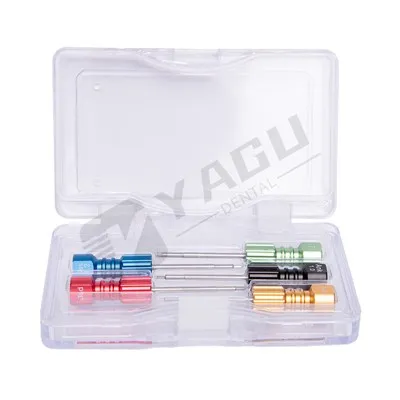
In the field of dental implantology, the use of multi angled abutments has been a topic of significant interest, especially when considering patients with bone loss. As a supplier of Multi Angled Abutment, I have witnessed firsthand the evolving discussions and applications of these products in clinical practice. This blog aims to explore the question: Can multi angled abutments be used in patients with bone loss?
Understanding Bone Loss in Dental Implant Patients
Bone loss around dental implants can occur due to various reasons. One of the primary causes is peri - implantitis, an inflammatory disease affecting the soft and hard tissues surrounding dental implants. This condition is often associated with poor oral hygiene, which leads to the accumulation of bacteria and subsequent inflammation. Over time, this inflammation can result in the resorption of the alveolar bone that supports the implant.
Another cause of bone loss can be mechanical overload. When an implant is subjected to excessive forces during chewing or biting, it can lead to micro - movements at the implant - bone interface. These micro - movements disrupt the osseointegration process and eventually cause bone resorption. Systemic factors such as osteoporosis, diabetes, and smoking can also contribute to bone loss around dental implants.
The Role of Multi Angled Abutments
Multi angled abutments are designed to provide flexibility in the restoration of dental implants. They allow for the correction of angulation discrepancies between the implant and the prosthetic crown. This is particularly useful in cases where the implant has been placed at an angle that is not ideal for a straight - abutment restoration.
In patients with bone loss, the use of multi angled abutments can offer several advantages. Firstly, they can help in achieving a more aesthetically pleasing restoration. When bone loss has occurred, the soft tissue profile may be altered, and the position of the implant may be sub - optimal. Multi angled abutments can be adjusted to align the prosthetic crown with the surrounding teeth, improving the overall appearance of the smile.
Secondly, multi angled abutments can distribute the occlusal forces more evenly. In patients with bone loss, the remaining bone may have reduced load - bearing capacity. By adjusting the angulation of the abutment, the forces applied to the implant can be directed more favorably, reducing the risk of further bone loss due to mechanical overload.
Clinical Considerations for Using Multi Angled Abutments in Patients with Bone Loss
When considering the use of multi angled abutments in patients with bone loss, several clinical factors need to be taken into account.
1. Bone Quality and Quantity
The quality and quantity of the remaining bone are crucial factors. If the bone loss is severe and the remaining bone has poor quality, the stability of the implant may be compromised. In such cases, additional bone augmentation procedures may be required before the placement of a multi angled abutment. This can involve the use of bone grafts or guided bone regeneration techniques to increase the bone volume and improve its quality.
2. Implant Position
The position of the implant in relation to the surrounding anatomical structures is also important. If the implant has been placed too close to vital structures such as nerves or blood vessels, the use of a multi angled abutment may increase the risk of damage to these structures. A detailed preoperative evaluation, including the use of cone - beam computed tomography (CBCT), is essential to assess the implant position accurately.
3. Soft Tissue Health
The health of the soft tissues around the implant is another critical factor. In patients with bone loss, the soft tissue may be thin or inflamed. Multi angled abutments should be selected and placed in a way that promotes soft tissue health. This may involve choosing an abutment with a smooth surface finish and appropriate emergence profile to minimize irritation to the soft tissues.
Comparison with Other Abutment Types
In addition to multi angled abutments, there are other types of abutments available in the market, such as Multi Unit Abutment and Straumann Multi Unit Abutment.
Multi unit abutments are typically used for multiple - implant restorations. They allow for the connection of multiple implants to a single prosthetic structure. While they also offer some degree of flexibility in terms of angulation, they may not be as versatile as multi angled abutments in correcting individual implant angulation discrepancies.
Straumann Multi Unit Abutments are a specific brand of multi unit abutments known for their high - quality materials and precise fit. However, like other multi unit abutments, they may not be the best choice for patients with single - implant restorations or those requiring significant angulation correction.
Case Studies
To illustrate the use of multi angled abutments in patients with bone loss, let's consider a few case studies.
Case 1: A 55 - year - old male patient
This patient presented with a single - tooth implant in the maxillary anterior region. There was mild bone loss around the implant due to a history of poor oral hygiene. The implant was placed at a slight angle, which made it difficult to achieve a straight - abutment restoration. A multi angled abutment was selected, and a custom - made porcelain crown was fabricated. After the restoration, the patient reported improved aesthetics and comfort. The follow - up radiographs showed stable bone levels around the implant.
Case 2: A 62 - year - old female patient
This patient had multiple missing teeth in the mandibular posterior region. She had significant bone loss due to periodontitis. Implants were placed, and multi angled abutments were used to correct the angulation discrepancies. A fixed partial denture was fabricated and attached to the multi angled abutments. Over a period of two years, the patient had no signs of further bone loss, and the restoration remained functional and aesthetically pleasing.
Conclusion
In conclusion, multi angled abutments can be a valuable treatment option for patients with bone loss. They offer flexibility in restoration, improve aesthetics, and help in distributing occlusal forces more evenly. However, their use should be carefully considered based on the individual patient's bone quality, implant position, and soft tissue health.
If you are a dental professional interested in exploring the use of multi angled abutments in your practice, I encourage you to reach out to discuss potential procurement opportunities. We are committed to providing high - quality multi angled abutments that meet the diverse needs of your patients.


References
- Albrektsson T, Zarb G A, Worthington P, Eriksson A R. The long - term efficacy of currently used dental implants: a review and proposed criteria of success. Int J Oral Maxillofac Implants. 1986;1(1):11 - 25.
- Berglundh T, Lindhe J. Peri - implant diseases: diagnosis and treatment. Periodontology 2000. 2008;47(1):133 - 146.
- Misch C E. Contemporary Implant Dentistry. 3rd ed. Mosby; 2008.
- Zitzmann N U, Marinello C P. Dental implant success, survival, and failure: the International Congress of Oral Implantologists (ICOI) Pisa Consensus Conference. Implant Dent. 2008;17(2):119 - 130.