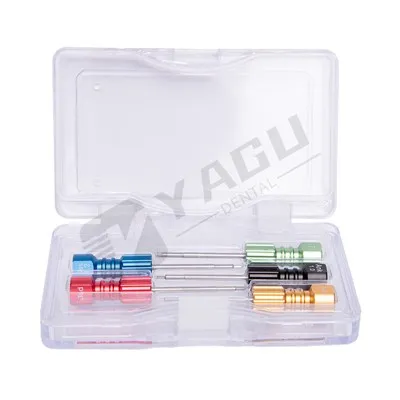
As a supplier of Megagen Ti Base, I often receive inquiries from dental professionals about the suitability of our product for patients with a history of oral surgery. This is a crucial question that requires a comprehensive understanding of both the Megagen Ti Base and the potential implications of prior oral surgical procedures. In this blog post, I will delve into the topic to provide a detailed analysis.
Understanding Megagen Ti Base
The Megagen Ti Base is a high - quality titanium abutment that plays a vital role in dental implant systems. Titanium is well - known for its biocompatibility, which means it has a low risk of causing adverse reactions when in contact with the human body. The Megagen Ti Base is designed to provide a stable connection between the dental implant and the prosthetic restoration, such as a crown or a bridge. Its precise design and manufacturing ensure a proper fit, which is essential for the long - term success of the dental implant.
The surface characteristics of the Megagen Ti Base are carefully engineered. A well - designed surface can promote better osseointegration, the process by which the implant fuses with the surrounding bone. This osseointegration is crucial for the stability of the implant and the overall success of the dental restoration. Additionally, the Megagen Ti Base comes in various shapes and sizes to meet the diverse anatomical needs of different patients.
Oral Surgery and Its Aftermath
Oral surgery encompasses a wide range of procedures, including tooth extractions, implant placements, bone grafting, and periodontal surgeries. Each of these procedures can have different effects on the oral cavity.
Tooth Extractions
Tooth extractions are one of the most common oral surgical procedures. After a tooth is extracted, the socket needs time to heal. During the healing process, there is a natural remodeling of the bone in the area. If a patient has had a recent tooth extraction, the bone may not be fully healed, and using a Megagen Ti Base might be challenging. However, if the extraction site has been allowed to heal properly, usually within 3 - 6 months depending on various factors such as the patient's age, overall health, and the location of the extraction, the use of a Megagen Ti Base can be considered.
Implant Placements
In cases where a patient has previously undergone an implant placement, the success of that initial implant is a key factor. If the previous implant has osseointegrated successfully and there are no signs of complications such as infection, peri - implantitis, or implant mobility, the addition of a Megagen Ti Base can be a straightforward process. However, if there were issues with the previous implant, such as a failed osseointegration or an infection that required the removal of the implant, a more in - depth evaluation is needed.
Bone Grafting
Bone grafting is often performed to augment the bone volume in areas where it is insufficient for implant placement. After a bone grafting procedure, the bone needs time to integrate and mature. The time required for bone graft healing can range from 4 - 12 months. During this period, the use of a Megagen Ti Base should be postponed until the bone has achieved sufficient density and stability. Once the bone graft has healed properly, the Megagen Ti Base can be used to support the dental restoration.
Periodontal Surgeries
Periodontal surgeries are aimed at treating gum diseases. After periodontal surgery, the gums need time to heal and re - attach to the teeth or implants. If there are still signs of inflammation or instability in the periodontal tissues, using a Megagen Ti Base may not be advisable as it could potentially disrupt the healing process. However, once the periodontal condition has stabilized, the Megagen Ti Base can be a suitable option.
Factors to Consider for Using Megagen Ti Base in Patients with Oral Surgery History
Time Since Surgery
As mentioned earlier, the time elapsed since the oral surgery is a critical factor. A general rule of thumb is to wait until the surgical site has fully healed. This can be determined through clinical examination, including probing depths, radiographs, and assessment of the soft tissue and bone conditions.
Patient's Overall Health
The patient's overall health also plays a significant role. Conditions such as diabetes, autoimmune diseases, and smoking can affect the healing process after oral surgery. Patients with diabetes, for example, may have a slower healing rate and an increased risk of infection. In such cases, a more cautious approach is needed when considering the use of a Megagen Ti Base.
Anatomical Changes
Oral surgery can cause anatomical changes in the oral cavity. For example, bone grafting can alter the shape and density of the bone, while periodontal surgery can change the contour of the gums. These anatomical changes need to be carefully evaluated to ensure that the Megagen Ti Base can be properly seated and provide a stable foundation for the dental restoration.
Previous Complications
If the patient had any complications during or after the previous oral surgery, such as excessive bleeding, infection, or nerve damage, these need to be taken into account. For instance, if there was an infection at the surgical site, it is essential to ensure that the infection has been completely resolved before using the Megagen Ti Base.
Compatibility with Other Dental Components
When considering the use of Megagen Ti Base in patients with a history of oral surgery, it is also important to consider its compatibility with other dental components. For example, the Dentium Abutment Screw and Osstem Lab Analog are commonly used in dental implant restorations. The Megagen Ti Base should be able to work in harmony with these components to ensure a successful dental restoration.


The Ti Base Abutment in general is designed to be a versatile component. However, the specific design and dimensions of the Megagen Ti Base need to be carefully matched with other parts of the implant system to avoid any issues such as improper fit, loosening, or excessive stress on the implant.
Conclusion
In conclusion, the use of Megagen Ti Base in patients with a history of oral surgery is possible, but it requires a thorough evaluation of multiple factors. The time since surgery, the patient's overall health, anatomical changes, and previous complications all need to be carefully considered. Dental professionals should conduct a comprehensive clinical and radiographic examination to determine the suitability of using the Megagen Ti Base.
If you are a dental professional interested in learning more about the Megagen Ti Base or would like to discuss its use in specific cases, I encourage you to reach out to me for further information and to start a procurement discussion. We are committed to providing high - quality products and excellent service to meet your dental implant needs.
References
- Albrektsson, T., & Wennerberg, A. (2004). Oral implant surfaces: Part 1 - review focusing on topographic and chemical properties of different surfaces and in vivo responses to them. International Journal of Prosthodontics, 17(5), 536 - 543.
- Misch, C. E. (2010). Dental Implant Prosthetics. Elsevier Health Sciences.
- Zitzmann, N. U., & Marinello, C. P. (2008). Oral rehabilitation with dental implants: clinical procedures and guidelines. Wiley - Blackwell.